Food
Easy Winter Dinners: 6 One-Pot Meals That Cut Down the Washing-Up

The winter dinner problem
You know the feeling. It is cold, it is dark by six, and the last thing you want to do after a long day is cook a meal that uses every pot you own. Then comes the washing-up mountain, and suddenly dinner has cost you two hours instead of one.
This is the case for one-pot cooking, and it is not complicated. Six warm, simple dinners, each one cooked in a single pot, and the whole meal comes out of the same thing it went into. Less cooking, less mess, and something hearty on the table when the weather is doing its worst outside.
None of these are chef recipes. They are honest, everyday meals with realistic estimates, and you should absolutely change them to suit what you have in the fridge. That is the whole point. Cooking should bend around your week, not the other way round.
A winter dinner does not need to be fancy to be good. It needs to be warm, filling and achievable on a weeknight, and a single pot delivers all three. If you are cooking for one or two, most of these also make enough for lunch the next day, which is really two meals for the price of one pot and barely any extra effort.
Why one pot works
There is a reason slow cooked meals taste like they have been going all day, even when they have only simmered for an hour. Cooking low and slow builds flavour in a way that fast cooking cannot, and it does something wonderful to cheaper cuts of meat, turning them tender instead of tough.
The rhythm is the same for most one-pot dinners. Brown or soften the first things in the pot, add your liquid, pop the lid on and let it simmer, then finish. That is it. You do not need special equipment, just a sturdy pot with a lid that can handle a bit of heat.
There is also the washing-up math, which is the real reason most of us reach for a one-pot recipe on a cold night. One pot, one wooden spoon, maybe a chopping board and a knife. Compare that with a stir-fry that uses a wok, a rice cooker, a chopping board and three little bowls for the sauce ingredients, and suddenly the one-pot version is saving you a whole extra trip to the sink.
If you own a slow cooker, these meals translate beautifully to it. Brown the meat in a pan first, then let the slow cooker do the long, lazy work while you get on with your day. And if you are the kind of person who eats dinner a little later in the evening, it is worth knowing which foods and drinks are best before bed for restful sleep, because a heavy meal right before sleep is never a great idea.
Dinner 1 and 2: the classic winter warmers
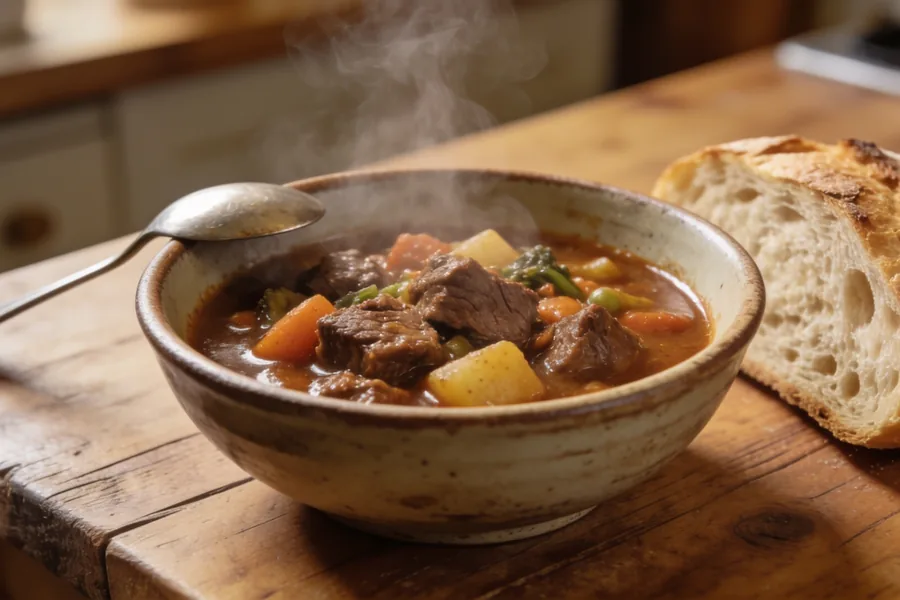
Start with the two dinners that basically define winter. A simple beef stew with carrots and potato is the first. Cut your gravy beef into chunks and brown it in the pot with a little oil. Add chopped onion, garlic, a couple of carrots and a potato or two, then pour in enough beef stock to almost cover everything. Lid on, low heat, and let it simmer for an hour and a half. The gravy beef goes beautifully tender, and you will have a dinner that tastes like it cost far more than it did.

The second is a chicken and vegetable soup with barley or pasta. Soften an onion in the pot, add chicken thighs, then whatever vegetables you have, carrots, celery, a bit of pumpkin. Add stock and a handful of barley or pasta, and simmer until the chicken is cooked through and the barley is soft. Shred the chicken, season, and serve with crusty bread. Both of these keep well, which makes them perfect for the nights you cannot be bothered cooking at all.
Do not be precious about the vegetables in either of these. A stew does not care whether it has carrots or parsnips, and a soup will happily accept whatever is wilting in your crisper drawer. That is the beauty of a one-pot dinner, it is less a precise recipe and more a reliable formula you can point at whatever needs using up.
Dinner 3 and 4: the budget-friendly, veg-heavy ones
These two stretch a small grocery shop further than you would believe. A pumpkin and chickpea curry is the first. Soften an onion with curry paste in the pot, add diced pumpkin, a tin of chickpeas and a tin of coconut milk, and let it simmer until the pumpkin is soft. Whatever veg is in the crisper can go in too, and you will end up with a rich, warming curry that costs almost nothing per serve. Serve it with rice or flatbread, and a spoonful of yoghurt on top if you have some, because it cuts through the richness nicely.
Then there is the one-pot sausage, lentil and tomato dish. Brown some sausages in the pot, then add a tin of crushed tomatoes, a cup of dried lentils and a splash of stock. Lid on, simmer for half an hour, and the lentils soak up all the flavour. It is the kind of dinner that fills the house with a smell that makes everyone ask when it will be ready.
Both of these freeze well, which is a quiet superpower. Make a double batch on the weekend and you have two future dinners waiting in the freezer for the nights when cooking is the last thing on your mind.
Dinner 5 and 6: the quicker weeknight ones
Not every winter night has time for a long simmer, so here are two one-potters that come together fast. A creamy chicken and mushroom one-pan is the first. Brown chicken thighs in the pot, add sliced mushrooms and a little garlic, then pour in some cream or a creamy sauce at the end. The trick is to add the cream near the end and keep the heat gentle, because boiling cream can make it split. Serve with pasta or rice to soak up the sauce.
The second is a simple fish chowder. Soften an onion and some potato in the pot, add stock and a little milk, and simmer until the potato is soft. Then add your fish in the last few minutes, so it cooks gently without falling apart. Any firm white fish works, and a few prawns on top feel fancy for almost no effort. These are the dinners for the nights when you want cosy but you are short on time, and both come together in about the time it takes to boil the pasta to go with them.
Leftovers, done properly
One of the best things about one-pot cooking is that most of these meals taste even better the next day, once the flavours have had a chance to mingle. But there is a right way to handle leftovers, and it is worth getting right.
Cool leftovers quickly and get them into the fridge or freezer within a couple of hours. Do not leave a pot of stew sitting on the stove overnight, no matter how tired you are. When you reheat, make sure it is steaming hot all the way through, and only reheat once. If you have made a big batch, portion it out and freeze what you will not eat soon, and label the containers with the date so you actually use them. A frozen meal with no label is a mystery you will not trust, and a mystery you will not trust tends to stay in the freezer until next winter.
If you are trying to cut down on single-use plastic, you can store and cover leftovers the eco-friendly way with safe food wrapping, using reusable covers, beeswax wraps or simply a plate on top of the bowl. Small swaps like that add up, and they keep your fridge a little kinder to the planet.
What is simmering at yours tonight?
Here is the thing about one-pot cooking. Once you have the basic rhythm, you can turn almost any recipe into a one-pot version. Brown the meat in the same pot you will cook in, add your liquid, put the lid on and let it simmer. The pot does the work while you get on with your evening, and at the end there is one pot to wash instead of five.
Start with the beef stew. It is the most forgiving dinner in this list, hard to get wrong and deeply satisfying on a cold night. Make it your own, throw in whatever veg needs using up, and do not be precious about the amounts. That is how every good cook actually cooks, and it is how you will end up with a version of the stew that is properly yours rather than a copy of someone else’s recipe.
So what is simmering at yours tonight? Whether it is the stew, the curry or a pot of soup you invented on the spot, I hope it is warm, easy and kind to your sink. Winter dinners do not need to be a production. They just need to be good, and one pot is more than enough for that.
Sources:
- Food Standards Australia New Zealand, Storing and reheating leftovers safely
- National Health and Medical Research Council, Australian Dietary Guidelines