General
Top 5 Life Skills Every Teen Should Master Before Entering Adulthood

As teens head towards adulthood, it’s essential that they have the right skills to navigate the real world. In the fast-paced and unpredictable landscape of Melbourne, Sydney, or Perth, a solid foundation in certain life skills can set them up for success. These skills are not just about schoolwork or job interviews, but are about developing the tools necessary for responsibility, emotional stability, and effective communication.
In this blog, we’ll take a look at the top 5 life skills every teen should master before stepping into adulthood. From managing money to handling emotions and mastering communication, we’ll explore why these skills are so crucial and how they can affect the trajectory of a teen’s future.
1. Basic Financial Literacy: The Key to Financial Independence
Understanding money is a crucial life skill that many teens overlook. With credit cards, loans, and the complexities of saving for the future, teens need to understand financial literacy before entering adulthood.
Why Financial Literacy is So Important:
- Personal Finance: Knowing how to budget, save, and spend money wisely can prevent financial struggles later on.
- Credit and Debt: Teens should understand how credit cards work, the importance of paying bills on time, and how debt affects their financial future.
- Saving for the Future: Getting into the habit of saving money for short-term and long-term goals will set teens up for future financial security.
Key Financial Skills to Teach:
- Creating a Budget: Understanding how to manage money by creating a basic budget for income and expenses.
- Saving and Investing: Learning how to save money and explore basic investment strategies for future growth.
- Managing Debt: Educating teens on how to handle debt responsibly, including student loans, credit cards, and personal loans.
Tips for Parents and Educators:
- Encourage teens to open a savings account and make regular deposits.
- Use apps or websites to help track spending and savings goals.
- Teach them to make smarter spending choices by comparing prices and looking for deals.
2. Emotional Regulation: Mastering the Art of Self-Control
One of the most important life skills for teens is emotional regulation. It’s about managing emotions, especially in stressful or conflict situations. With the pressures of school, social life, and family, emotional control is essential for mental well-being.
Why Emotional Regulation is Critical:
- Stress Management: Teenagers experience various stressors, and learning how to handle stress in healthy ways can reduce anxiety and depression.
- Conflict Resolution: Learning how to control emotions in conflicts allows teens to resolve issues without escalating tension.
- Relationship Building: Emotional regulation helps build and maintain healthy relationships with peers, family, and colleagues.
Key Skills in Emotional Regulation:
- Mindfulness: Teens should learn how to be present in the moment, reducing impulsive reactions and emotional outbursts.
- Self-Reflection: Encouraging teens to reflect on their feelings and why they react the way they do can help improve self-awareness.
- Coping Strategies: Teaching teens practical ways to cope with emotions like deep breathing, exercise, and journaling can help them handle challenges more effectively.
Tips for Parents and Educators:
- Help teens identify triggers that cause emotional reactions and create plans to manage them.
- Practice mindfulness techniques together, such as deep breathing or guided meditation.
- Encourage physical activity as a natural way to release stress and boost mood.
3. Responsibility: Being Accountable for Actions
Responsibility goes beyond just doing chores or homework—it’s about accountability for one’s actions and making mature decisions. It’s a life skill that teens need to master to be independent adults who can manage their own lives and actions.
Why Responsibility is Essential:
- Taking Ownership: Teens must learn that their actions have consequences, whether they’re good or bad. Taking ownership of mistakes is a key part of growth.
- Work Ethic: Responsibility in a job or school setting sets teens up for success later on. Being reliable and accountable is valued in any workplace.
- Self-Management: From managing schoolwork to personal commitments, taking responsibility teaches teens how to organise and prioritise.
Key Skills to Teach:
- Time Management: Teens need to understand the importance of prioritising tasks and staying organised to balance school, social activities, and hobbies.
- Setting Goals: Encourage teens to set realistic and achievable goals, helping them stay on track and take responsibility for their success.
- Problem-Solving: Teach teens to take responsibility for solving problems on their own before seeking outside help.
Tips for Parents and Educators:
- Allow teens to make decisions and experience consequences, both positive and negative, to learn accountability.
- Set expectations for homework, chores, and other responsibilities.
- Praise responsibility when it’s demonstrated, reinforcing the importance of being proactive and reliable.
4. Effective Communication: The Power of Clear Expression
Whether it’s speaking to peers, family, or colleagues, effective communication is a skill that all teens need to master. It allows them to express their ideas clearly, ask for help when needed, and build positive relationships.
Why Communication Skills Matter:
- Social Skills: Communication is key for forming friendships and resolving conflicts in both school and work settings.
- Career Success: Being able to speak clearly and present ideas confidently is essential for interviews, networking, and team projects in a professional setting.
- Self-Advocacy: Effective communication helps teens express their needs and advocate for themselves in personal and academic situations.
Key Communication Skills:
- Listening: Active listening is just as important as speaking. Teaching teens to really listen to others improves understanding and reduces conflicts.
- Non-Verbal Communication: Encourage teens to be mindful of their body language, facial expressions, and tone of voice.
- Public Speaking: Practicing clear speech and presentation skills can give teens confidence in formal settings, such as class presentations or interviews.
Tips for Parents and Educators:
- Encourage teens to engage in discussions with adults, peers, and teachers to build confidence in their communication skills.
- Help them develop active listening by asking questions and making eye contact during conversations.
- Organise public speaking opportunities, such as family gatherings or school clubs, to practice clear communication.
5. Adaptability: Flexibility in an Ever-Changing World
In today’s world, things move fast. Adaptability is the ability to adjust to new situations, whether it’s a change in school curriculum, moving to a new city, or adapting to a new job.
Why Adaptability is Vital:
- Personal Growth: Teens who can adapt to change and face challenges head-on are more likely to succeed in both school and work.
- Problem-Solving: Life is unpredictable, and the ability to adapt allows teens to think on their feet and come up with creative solutions when needed.
- Resilience: Adaptable teens are more resilient in the face of setbacks, helping them overcome obstacles with a positive mindset.
Key Adaptability Skills:
- Being Open to Change: Encourage teens to stay open to new experiences and learn to embrace change rather than fear it.
- Dealing with Uncertainty: Life is full of unknowns, and teens should learn to deal with uncertainty and make the most of any situation.
- Learning from Mistakes: When things don’t go according to plan, help teens view mistakes as learning opportunities rather than failures.
Tips for Parents and Educators:
- Teach teens that failure is part of learning. Encourage them to take risks and learn from their experiences.
- Expose them to new situations—whether it’s a new hobby, different social settings, or travel—to help them adapt.
- Praise creative problem-solving when they adapt well to challenging situations.
The Key Life Skills Every Teen Should Master
| Life Skill | Importance | How to Develop |
| Financial Literacy | Ensures teens manage money wisely and plan for the future | Budgeting, saving, and learning about credit |
| Emotional Regulation | Helps manage stress, anxiety, and relationship challenges | Mindfulness, deep breathing, and self-reflection |
| Responsibility | Encourages accountability and strong work ethic | Setting goals, time management, and self-discipline |
| Effective Communication | Key for success in personal and professional settings | Active listening, public speaking, and positive body language |
| Adaptability | Ensures teens thrive in a constantly changing world | Learning from mistakes and embracing new challenges |
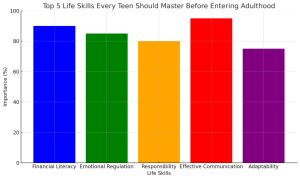

Here is the bar graph displaying the importance of the Top 5 Life Skills every teen should master before entering adulthood. The graph highlights the key skills such as Financial Literacy, Emotional Regulation, Responsibility, Effective Communication, and Adaptability, showing their significance in setting teens up for success.
Conclusion: Why Mastering These Life Skills Will Set Teens Up for Success
In a world where change is constant, the skills that teens develop now will shape their future. From financial literacy to emotional regulation and communication skills, these key life skills will set them on a path to success in school, work, and life.
Encourage your teens to develop these skills early on, and watch them become more confident, responsible, and adaptable as they navigate the world ahead. Remember, it’s not just about surviving adolescence – it’s about thriving in adulthood.
Sources: