Healthcare
Toothache: What Actually Helps Tonight, and What Cannot Wait

- A toothache is a symptom, not a diagnosis, and the same ache can come from decay, an infection, a cracked tooth, the gum, a wisdom tooth with nowhere to go, or a tooth that has simply had enough of cold drinks.
- What genuinely helps tonight is short and unglamorous. What gets passed around the internet instead is longer, and most of it does nothing.
- Two things matter more than any home remedy: knowing the signs that mean you should not wait, and being able to describe the pain clearly to a dentist.
- The aim tonight is to get you to the dentist’s chair comfortably. You cannot fix the tooth at home, and nobody expects you to.
It is late, it hurts, and the earliest appointment you could get is Thursday. If that is you, take a breath. There is a surprising amount you can do tonight, and an honest amount you cannot, and knowing which is which makes the wait easier. If you are reading this at two in the morning with the screen dimmed, you are in very common company. A toothache is one of those things that feels bigger in the dark, so let us go through what it might be saying, what actually helps, and the few signs that mean you should not be waiting at all.
What an aching tooth is usually telling you
A toothache is a symptom, not a diagnosis. The same kind of ache can come from several different places, and they do not all need the same answer. Knowing the possibilities will not change what you do tonight, but it will change what you say when you ring.
Decay is the most common reason a tooth aches. It often starts quietly, as a sensitivity you notice and forget, and healthdirect describes early decay that has not formed a hole yet as treatable by a dental professional, with fluoride paste or varnish and some changes to what you eat and drink. Once a cavity has formed, a filling is usually the answer.
An abscess is an infection, and it is the case where the pain tends to change character. It can throb, it can make the tooth feel like it is sitting differently, and there may be swelling. This one needs treatment rather than time, and healthdirect is clear about why: an untreated infection can spread beyond the tooth and the jaw.
A cracked or broken tooth often hurts most when you bite. The pain is sharp and specific to one spot, and it can come and go for weeks before it settles into something more constant.
Gum disease can make a tooth ache even though the tooth itself is not the problem, which is one of the reasons guessing at home is a poor game.
A wisdom tooth with nowhere to go is another common one. It can ache on its own or push against the tooth in front of it, and the pain often comes in waves rather than sitting still.
And sensitivity is its own thing: short, sharp, gone in seconds. It is a different conversation from a throbbing ache, and usually a more hopeful one.
The honest line under all of that is simple. This article can help you describe what you have, and it can help you get through the night. Only a dentist looking in your mouth can say which of these it is, and that is not a failing of yours.
What actually helps while you wait
This is the part to read twice, because this is the part that gets you some sleep.
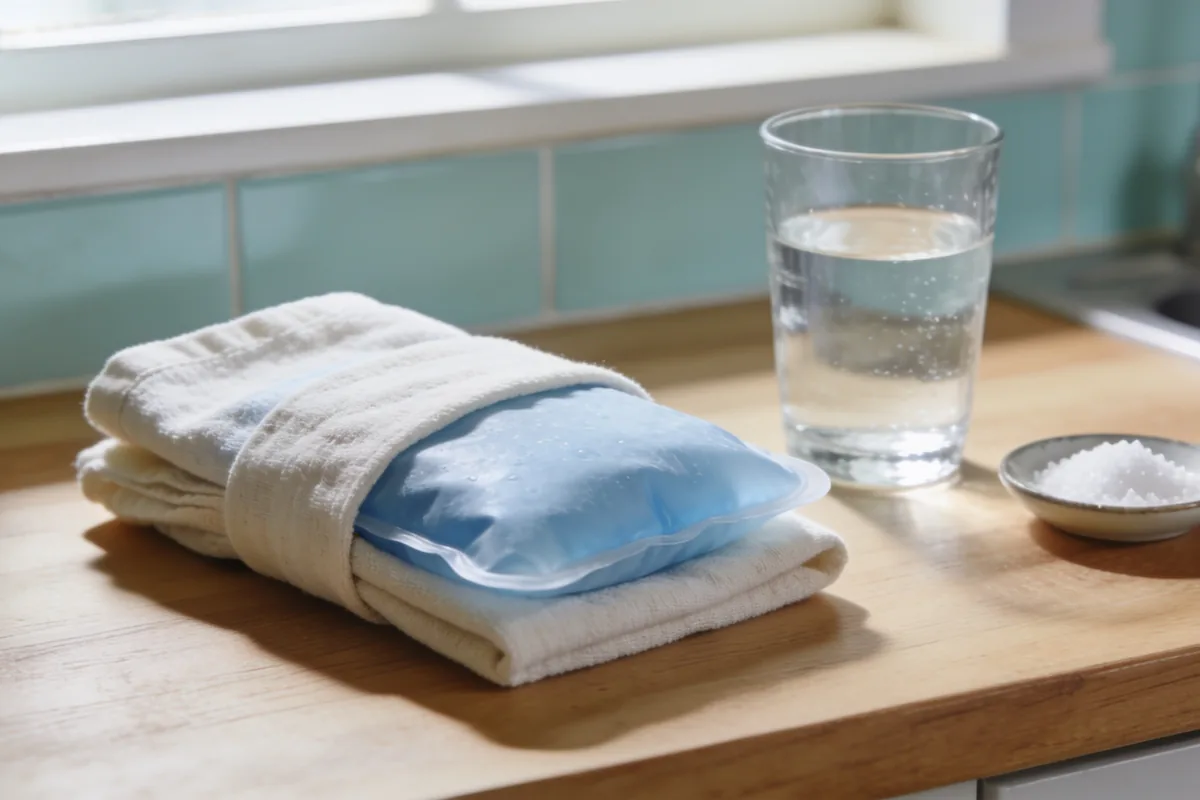
A salt water rinse is the gentlest thing you can do. A mouth kept clean is a mouth that is less irritated, and it costs nothing. A cold compress on the outside of your face can help with swelling and with the ache itself, but keep it on the outside, and never put anything frozen directly on the tooth or the gum. None of this treats the tooth. What it does is buy you a comfortable night, and that is exactly what it is for.
Keep drinking water, and eat on the other side if you eat at all. Cold, very sweet or very hot things tend to make an angry tooth angrier, so give it the quiet option tonight.
Sleep with your head slightly raised if lying flat makes the throbbing worse. A couple of extra pillows does more than a lot of more inventive advice.
For pain relief, ask a pharmacist, or the healthdirect helpline, rather than a search engine. The right answer depends on you, your other medicines and your health, and this article will not name a medicine or a dose, because that is a conversation for someone who can ask you the questions. A pharmacist can have it with you tonight, without an appointment.

And the call that helps the most. Ring the dentist’s rooms and describe what the pain is doing, rather than asking for a general appointment. Most practices keep some space for pain and will tell you whether you need to be seen today, and that is the kind of call a dental practice at Coolalinga that sees families from Darwin and Palmerston takes every week. Describing the pain, instead of just reporting it, is how the person on the phone works out how soon you need to be in.
What does not help, and why people try it anyway
None of this is here to make anyone feel silly. It is here because a hurting person will try what is in front of them, and some of it makes things worse.
Do not put a painkiller tablet against the gum. It does not get to the tooth, and it can burn the gum, which turns one problem into two. The same goes for aspirin placed on the gum. This is one of the most common things people try, and one of the most common minor injuries dentists see.
Home remedies that circulate widely, like clove oil, garlic, salt pressed onto the tooth, or whisky, are either untested, or help for a few minutes, or irritate the tissue they touch. There is a reason oil of cloves has a reputation: it can numb for a short while. It does not treat anything, and using too much of it can burn.
A warm compress is the wrong direction when there is swelling, because the swelling is infection, and heat is not what infection needs.
Waiting it out is the one to be careful with, because it produces the quietest trap of the lot. A tooth that has stopped hurting has not necessarily healed. Sometimes the nerve has simply given up, and the infection is still there, doing its work without the alarm bell. A tooth that goes quiet after days of noise is worth a phone call, not a celebration.
The signs that mean you should not wait
Most toothaches can wait for an appointment. These cannot, and none of them is an overreaction. Ring for an urgent appointment, or seek urgent care, if any of this is happening:
- Swelling in your face, jaw, or under your eye.
- A fever, or feeling generally unwell, along with the tooth pain.
- Pain that has spread to your ear, your jaw, or your neck.
- Difficulty swallowing or breathing.
- A swelling that is closing your eye or pressing on your throat.
- An injury that has knocked a tooth out or broken it.
- Bleeding that will not stop.
The reason this list exists is that an untreated infection can spread beyond the tooth and the jaw, and in rare cases it becomes life threatening. The risk of waiting is not the pain. It is the spread. And nobody is being dramatic by ringing about swelling, so if that is what you are doing, you are doing the right thing. If you are unsure whether what you have is on this list, ring anyway. Asking is free. For a genuine emergency out of hours, the routes are a hospital emergency department or your state’s after-hours arrangements, and a call to the healthdirect helpline can point you to the right one tonight.
What the dentist will actually do
The fear underneath most toothache searches is not the pain. It is the drill. So here is what actually happens, and it is calmer than the version in your head.
The dentist examines the tooth, but also your face and neck, because they are checking whether anything has spread. They may test how the tooth responds to hot, cold or pressure, and if there is an infection they may take a swab of the area. There is no trick to it. It is looking, asking and sometimes a small test, and it is over faster than the drive there. None of it is painful in the way people fear.
Then the treatment follows from what they find. A cavity usually means a filling. An abscess caused by decay or a cracked tooth means treatment of the tooth itself, which usually means a root canal treatment or the tooth’s removal, and if the cause is gum disease, the treatment is cleaning around the tooth and the gum. Depending on the practice and the case, the person treating you might be a dentist, a doctor, or an endodontist, which is a dentist who works on the inside of teeth.
If the words root canal treatment made your shoulders stiffen, that is worth knowing about properly rather than dreading by rumour. The site’s 5 common myths about root canal treatment debunked takes that fear apart in detail, and it is a friendlier read than most search results.
And the most reassuring sentence in this whole article: healthdirect says people usually start to feel better within two to three days of treatment starting. If you do not, that does not mean nothing can be done. It means the treatment needs another look, and that is a normal part of the process rather than a verdict.
Why it happened, and how to lower the odds of the next one
Once the pain is dealt with, this part is worth five quiet minutes, because it is the part that lowers the odds of doing this again.
The advice is short, and it comes from the Australian Dental Association’s guidance as healthdirect carries it. Brush twice a day with fluoride toothpaste. Clean between your teeth every day with floss or interdental brushes. Eat a diet low in added sugar. Keep up with regular check-ups. That is the whole list.
Two details people get wrong are worth fixing tonight. Spit out the leftover toothpaste after brushing and do not rinse with water, so the fluoride stays on your teeth doing its work. And most Australian tap water has fluoride added, which means the water you drink is already helping, without you doing anything.
If the sweet drinks are the hardest habit to shift, the site’s soft drinks and their impact on your health: why they should be avoided makes that case better than a single line in this article could. For the grooves of healthy teeth, a dental professional may also recommend a sealant, and that is the kind of thing they raise at a check-up rather than something to chase on your own.
And one last thing, because teeth have a way of collecting shame they do not deserve. Teeth are not a moral test. Nobody gets through life with a perfect record. The first four items on that list are cheap, ordinary things, and they are the ones that do most of the work.
What to do tonight, and what to do next
For tonight, keep it simple. Rinse with salt water, use a cold compress on the outside of your face if there is swelling, keep the mouth clean, drink water, and let a pharmacist or the healthdirect helpline guide you on pain relief. Do not put a tablet against the gum. Sleep with your head raised a little.
Tomorrow, ring and describe what the pain is doing. Write the words down first if it helps: where it hurts, what it does when you bite, what makes it worse, and when it started. If any of the signs from the earlier list are happening, do not wait for tomorrow: seek urgent care now. And when the ache is gone and life moves on, book the check-up that stops the next one.
Your tooth is not going to tell you what is wrong with it. But the description you give a dentist, in your own words, gets you most of the way there, and that is more useful than any remedy in this article.
Sources consulted: healthdirect information on tooth decay, tooth abscess and gum disease.