General
Is Storing Rainwater a Smart Move? What You Need to Know

With Melbourne’s unpredictable weather and Perth’s sunny spells, Aussies are getting smarter about water use. Rainwater harvesting — collecting and storing rainwater — has become a go-to method for reducing water bills and conserving this precious resource. But is it really a smart and safe choice? Let’s unpack what you need to know about storing rainwater and whether it’s right for your home.
Why Store Rainwater?
Rainwater storage isn’t just for the bush or off-grid homes anymore. It’s becoming increasingly popular in cities like Melbourne and Perth for several good reasons.
Conserves Water — Because Every Drop Counts
- Rainwater can be used for watering gardens, lawns, and washing cars.
- This saves precious tap water for essential needs like drinking and cooking.
- In cities with water restrictions (Melbourne, we’re looking at you), it helps you stay green and legal.
- Australia has one of the highest per capita water consumption rates globally, so every litre saved helps.
Eco-Friendly — Helping the Environment
- Using rainwater reduces demand on municipal water supplies.
- It also lowers stormwater runoff, which can carry pollutants into local waterways.
- This helps protect fragile ecosystems in urban rivers and bays, like Melbourne’s Yarra River and Perth’s Swan River.
- Rainwater harvesting aligns with Australia’s national water strategy focusing on sustainability.
Cost-Effective — Saving You a Buck or Two
- After the initial setup, rainwater is free.
- Cuts down on water bills, especially during dry spells when usage spikes.
- You can even qualify for rebates or incentives in some states for installing rainwater tanks.
- According to the Australian Government’s water efficiency guidelines, households can save up to 30% on their water bills by using rainwater.
How Safe Is Stored Rainwater?
Rainwater is naturally soft and clean when it falls from the sky, but once it hits your roof and gutters, things get a little trickier.
What Can Pollute Your Stored Rainwater?
- Dirt, dust, and leaves from your roof.
- Bird and possum droppings — Melbourne’s wildlife loves rooftops.
- Bacteria and microorganisms, including E. coli and Legionella.
- Chemical residues from roofing materials.
- Heavy metals, especially if you live in an industrial area or near busy roads.
Is It Safe to Drink?
- Generally, no. Stored rainwater should not be used for drinking without treatment.
- Drinking untreated rainwater risks infections and illnesses.
- However, with proper filtration and disinfection, it can be made safe.
- Treatment options include filtration systems, UV sterilisation, chlorination, and boiling.
- Many households use rainwater for non-potable purposes only to avoid health risks.
Australian Standards and Regulations
- The Australian Drinking Water Guidelines recommend that rainwater not be used as a sole source of drinking water without treatment.
- Some local councils regulate rainwater tank installation and use.
- It’s essential to check your local regulations in Melbourne or Perth before installing tanks for potable use.
How to Store Rainwater Safely
To get the most out of your rainwater system, follow these tips for safe storage and use.
Choose the Right Tank
- Tanks come in various sizes from 500 litres to 50,000 litres.
- Popular materials include polyethylene, stainless steel, and concrete.
- In Perth, stainless steel tanks are common due to UV resistance.
- Ensure your tank is opaque to prevent algae growth.
Maintain Your Roof and Gutters
- Keep gutters clean and free of debris.
- Install leaf guards and first flush diverters to divert dirty water.
- Regularly inspect your roof for contaminants.
Use Proper Filtration
- Install filters to remove dirt and sediments before water enters the tank.
- Fine mesh screens keep out insects and larger debris.
- For potable use, consider multi-stage filtration systems.
Treat Your Water
- UV sterilisation units are effective against bacteria.
- Chlorination or ozone treatment adds another layer of protection.
- Boiling water before drinking is the simplest method if unsure.
Regular Maintenance
- Clean tanks annually to prevent sediment build-up.
- Inspect pipes and fittings for leaks or contamination.
- Monitor water quality periodically, especially if using it indoors.
Rainwater Storage in Melbourne and Perth — Local Considerations
Melbourne
- Melbourne’s rainfall averages 650mm per year but is seasonal and variable.
- Summer droughts mean stored rainwater helps keep gardens green without extra water bills.
- Many homes use rainwater tanks for outdoor use due to city regulations on potable rainwater.
Perth
- Perth averages 730mm of rain per year, mostly in winter.
- Hot, dry summers make rainwater tanks essential for water-wise gardening.
- Large tanks are popular to store winter rain for summer use.
- The City of Perth offers rebates for rainwater tanks as part of water conservation initiatives.
Bar Graph: Average Rainfall vs Water Usage Savings
Here’s a rough idea of how average rainfall in Melbourne and Perth compares with typical water savings from rainwater tanks.
| City | Average Annual Rainfall (mm) | Average Water Bill Savings (%) |
| Melbourne | 650 | 20-30 |
| Perth | 730 | 25-35 |
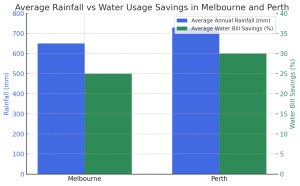

Here is the bar graph comparing average annual rainfall and average water bill savings in Melbourne and Perth. Rainfall is shown in blue (mm), and average water bill savings are in green (%).
Is It Worth Installing a Rainwater Tank?
Pros
- Reduces reliance on mains water supply.
- Helps during water restrictions.
- Good for the environment.
- Potential financial savings on water bills.
- Adds value to your property.
Cons
- Initial cost of installation (from $1,500 to $5,000+ depending on size and system).
- Requires regular maintenance.
- Not always suitable for drinking water without treatment.
- Limited rainfall means tanks may not fill fully in dry years.
Aussie Humour Moment: The Rainwater Tank Chronicles
- “Waiting for the rain to fill the tank is like waiting for a snail to win the Melbourne Cup.”
- “Installed a 5,000-litre tank, but after a dry summer, it’s more of a 500-litre tank — still saving every drop though!”
- “Nothing teaches patience like watching your garden thirst while staring at your empty rainwater tank.”
Final Thoughts
Storing rainwater is a smart move for many Aussie households, especially in Melbourne and Perth where water conservation is crucial. It saves money, protects the environment, and gives you some independence from municipal water supply.
However, rainwater tanks need proper setup, maintenance, and understanding of their limits. Using stored rainwater for non-drinking purposes is generally safe and effective, but if you want to drink it, treat it properly.
So, if you’re keen on saving water and cutting bills, installing a rainwater tank is worth serious consideration. Just don’t expect it to fill overnight — patience is key, mate!