Sports
Pickleball in Australia: How to Start Playing and Why Everyone Is Giving It a Go

Why everyone is suddenly talking about it
Picture the local rec centre on a Saturday morning. A court full of players, and they are not all the same age. There is a teenager warming up next to a grandparent, a couple of mates who look like they just rolled out of bed, and a group of women who have clearly been playing for years. Nobody is sprinting. Everyone is laughing. And you are standing on the sideline thinking, what exactly is this game?
That scene is repeating across Australia, and if you have felt the pull to find out what the fuss is about, you are not alone. This is a plain guide to pickleball: what it is, why it has taken off so quickly, and exactly how you can try it this week without any fuss. No club membership required, no special talent needed, and no gear to buy before you have even hit a ball.
What pickleball actually is
Pickleball is a paddle sport that sits somewhere between tennis, badminton and table tennis. You have probably seen the pictures: a court about a third of the size of a tennis court, a low net, solid paddles that look like oversized table tennis bats, and a plastic ball full of holes.
The ball is the thing people notice first. It is light, perforated and slower than a tennis ball, which is exactly why the game feels so forgiving. You have time to reach the ball, time to set your feet, time to actually think about where you are hitting it.
You can play singles or doubles, though doubles is where most people start and where most of the social fun happens. The court fits neatly into spaces that are too small for tennis, which is why so many councils have squeezed courts into existing parks and rec centres. And because the ball is light and the court is small, it works indoors and outdoors. Rainy day? Find an indoor court. Sunny Sunday? Head to the outdoor one. The game does not care.
If you are not a natural athlete, do not let that put you off. Pickleball rewards timing and placement over power, and a player who can place the ball calmly will beat a stronger player who swings wildly. That is part of why it appeals to such a wide mix of people. You do not need to be fit, young or coordinated to have a good game.
Why it got so popular, so fast
The growth has been hard to miss. Hundreds of thousands of Australians have now tried pickleball, and the participation surveys back up what your eyes are telling you at the local courts. But the real question is why it spread so fast, and the answer is simpler than the sport’s fans make it sound.
It is easy to learn. Most people can rally in their first session. Not play well, but play, which is a completely different thing and a much more enjoyable entry point. You are not spending your first month chasing the ball into the fence.
It is gentle on the body. There is far less running and impact than tennis, which makes it attractive to older players, people with dodgy knees, and anyone who has not exercised in a while. That low-impact quality is also why it suits people coming back from an injury and starting gently.
The games are short. A typical game runs to maybe twenty minutes, so you can play several in a session, have a chat between games, and still be home by lunchtime. Short games mean beginners are not stuck in a forty-minute slog with people far better than them.
And it is genuinely social. The court is small, the games are quick and the gaps between points are full of chatter. People talk to each other in a way they simply do not on a full-size tennis court. That social pull is the real engine of the sport’s growth, and it is the reason so many people come for the exercise and stay for the company.
The rules in plain words
The rules sound complicated until someone says them out loud, so here is the plain version. They vary slightly by venue, and the official rule book is the place to check details, but casual games are forgiving and nobody is going to referee you into the ground.
Serve underhand and diagonally. The serve has to go cross-court, like in tennis, and it must be hit underhand.
Then comes the two-bounce rule. After the serve, the ball has to bounce once on each side before anyone can volley it. So the receiver lets it bounce, returns it, the serving side lets that bounce, and only then can players start hitting the ball out of the air.
Stay out of the kitchen. The “kitchen” is the non-volley zone, the seven-foot area on each side of the net. You cannot step into it and volley the ball out of the air. You can stand in it, and you can hit the ball after it bounces, but no smashing it from close range.
The two-bounce rule exists for a reason. Without it, the serving team could rush the net and smash every return, and the game would be over in about four shots. Forcing the ball to bounce first gives the receiver time to get into the rally, which is why pickleball rallies last longer than you expect and why beginners get to actually play rather than just watch.
First to eleven wins, and you have to win by two. Simple as that.
That is the whole game. If you forget the details, the other players will remind you, cheerfully, because everyone was a beginner once and everyone remembers how it felt.
What you need to start (and what it costs)
Here is the best news in this whole guide. You need three things: a paddle, a ball and comfortable shoes. That is it.
A paddle. Solid, lightweight and smaller than you expect. Paddles range from around $40 for a basic one up to a few hundred for the fancy carbon models, but a mid-range paddle in the $80 to $150 area will serve a beginner brilliantly for a long time. Do not buy the most expensive one on day one.
A ball. A few dollars. There are indoor balls and outdoor balls, and they behave slightly differently, but for your first game any proper pickleball will do.
Comfortable shoes. Not special pickleball shoes, just shoes you can move in. Court shoes or cross-trainers are ideal because they grip well and support sideways movement, but if you only have running shoes, wear those. You can upgrade later.

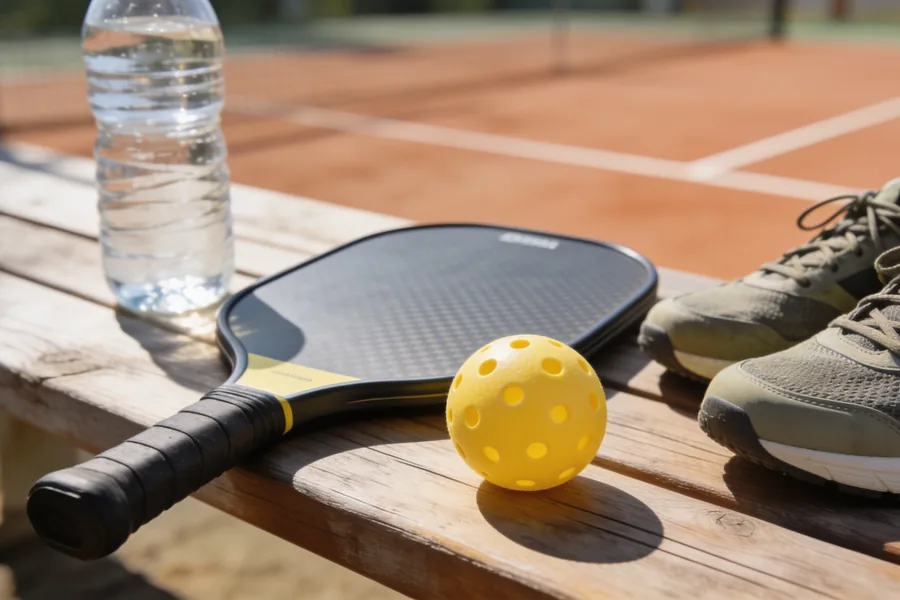
Here is the part most beginners do not know. Many venues lend paddles and balls for a first session, so you can try the sport before you spend a cent. That means your first game can cost nothing but your time, which removes every excuse. If you decide you love it, then you buy your own gear. If you do not, you have lost nothing.
How to find your first game
Finding a game is easier than you think, because the sport has spread through exactly the kind of places that are easy to find.
Check your state or territory association’s court finder. Pickleball associations across Australia keep lists of where the courts are and which venues run social sessions. A quick search will show you what is within a reasonable drive.
Ask your local rec centre or council. Community centres, leisure centres and councils have been among the fastest to add courts, and the staff will know whether there is a regular session and how to join.
Look for beginner nights. Most areas now run social sessions aimed squarely at newcomers, often in the evening or on weekends. These are the perfect entry point because everyone there is learning, and the regulars genuinely enjoy showing new people the game.
A couple of practical notes for your first visit. Many council courts are free to use if you bring your own gear, while rec-centre sessions usually charge a small fee that covers equipment hire. Wear something you can move in and bring a water bottle. Arrive a few minutes early so you can watch a game first and get a feel for the pace. And do not be shy about saying you are new. Every single player on that court had a first game, and the culture of the sport is built on welcoming the next beginner through the gate.
If it has been a while since you were active, or you are managing an old injury, start gently. A beginner session moves at a friendly pace, but your body still needs to adjust to a new sport. Mention that you are new and let the session leader know if you have any niggles. People are remarkably accommodating, because most of them were in your shoes not long ago.
One session is all it takes
Here is the honest truth about pickleball. One session is usually all it takes to decide whether it is for you, and for most people the answer is yes.
There is something about the combination, the easy learning curve, the short games, the chatter between points, that hooks people in a way other sports do not. You are not committing to a season or a membership. You are trying one Saturday morning, and letting the game make its own case.
And if it does hook you, you have just found a hobby that counts as the kind of small daily activity that boosts your mood and energy. Regular movement, a bit of competition and a social group all in one package is a rare combination, and it is exactly why the sport has stopped being a curiosity and started being a habit for so many Australians.
So do this. Find the nearest court, check for a beginner session, and book one game. Not a lesson plan, not a new outfit, just one game. Bring comfortable shoes and an open mind. If you are like most people who try it, you will be back the following week, and you will finally understand what all the fuss was about.
Sources:
- Pickleball Australia Association, Getting started and rules
- Australian Sports Commission, AusPlay, Sport participation
- Australian Institute of Sport, Being active at any age