Eco Friendly
Food Waste in Australia: Why Your Veggies Die Early and How to Stop It

The Saturday clean-out
It is the same scene most Saturdays. You open the fridge to make lunch and the bag of spinach has turned to green slime, the half onion has grown a personality, and the bread you bought five days ago could double as a doorstop. There is a small wave of guilt, then the bin, then the same question. Why do I keep doing this?
Stop right there. This is not a discipline problem. It is a storage and planning problem, and it is fixable this week with zero dollars and about ten minutes of attention. This article explains why fresh food dies early in an Australian kitchen and the cheap fixes that keep it alive. No shame, and no lectures about your bin. You will not find a complicated system here, just the causes in plain terms and the fix that goes with each one.
How much we actually throw away
Australia wastes a shocking share of the food it produces. The commonly cited national figure sits around 7.6 million tonnes a year, which is roughly a third of everything grown or made for us to eat, and households are a large slice of that total. Dollar estimates per household range widely, and some families land in the thousands every year, depending on who is counting and how they count it.
For your wallet the simpler point is this. The food you bin is money you already spent, and it leaks out a little every week. It belongs to the same quiet family as the money mistakes that quietly cost you, which I have covered before. Unlike most bills, though, this one shrinks with a few habits rather than a budget.
Why food goes off before you can use it
Blame the usual suspects rather than yourself. Most fresh food does not die because you are lazy. It dies for five reasons, and every one of them has a fix.
A fridge that is warmer than it should be. Yours should sit between about 1 and 4 degrees, and many run warmer than that, especially when they are packed full or the door seal is tired.
Food stored in the wrong zone. The door is the warmest part of the fridge and the bottom shelf is the coldest, and where you put things decides how long they last.
Trapped moisture. Salad bags sweat, the leaves sit in water, and the rot starts at the bottom before you have opened the bag once.
Ethylene gas. Apples, bananas and tomatoes give off a gas that ripens everything around them. That is good news for a fruit bowl and bad news for the broccoli sitting next to it.
Overbuying. You cannot store food well when you bought twice as much as you will eat, and the crisper fills past the point where air can move around it.
Understand those five and the fixes below stop feeling like random tips.
Store vegetables so they last
Here is the core of it. Seven changes, each with the reason attached.
- Set the crisper drawer properly. It has a humidity slider for a reason. High keeps leafy greens and herbs crisp, and low suits fruit. Get this right and the drawer does the work for you.
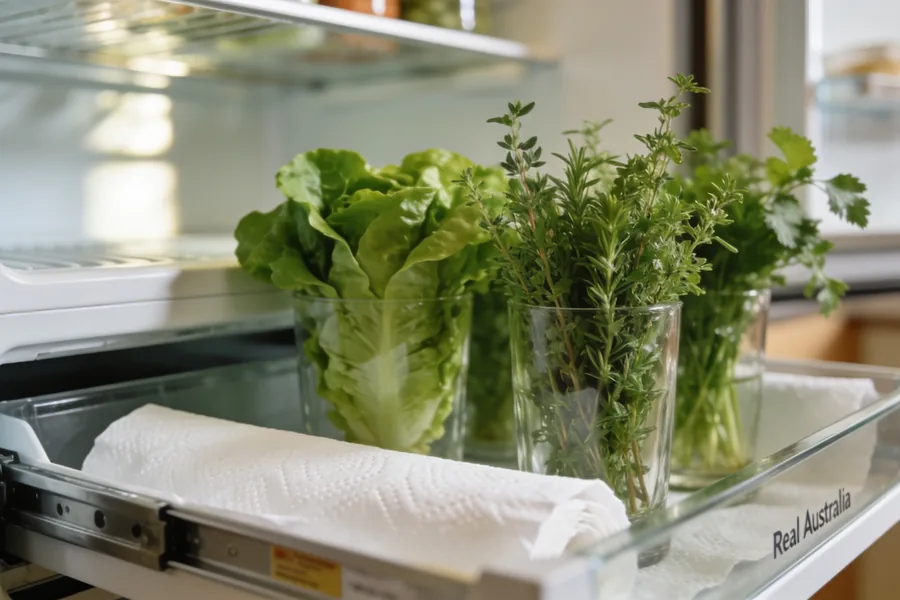
- Line the salad container with paper towel. It soaks up the moisture that makes leaves rot, and you swap it out when it is wet. That one change keeps a bag of spinach alive for days longer.

- Keep potatoes and onions apart, and keep both away from the fruit bowl. Onions make potatoes sprout, and fruit ripens anything stored near it. Separate corners of the pantry, not the same basket.
- Stand herbs in a glass of water like a bunch of flowers, or wrap them in a damp tea towel in the fridge. Coriander and parsley especially last about twice as long.
- Revive limp celery, carrots and asparagus in a jar of cold water for an hour. They crisp straight back up. It is not magic, it is replacing the moisture they lost.
- Freeze things before they turn, not after. Overripe bananas, herbs in oil, leftover sauce and bread going stale all belong in the freezer. Think of the freezer as a pause button rather than a last resort.
- Keep a list of what you throw away for one week. It sounds tedious, but a single honest list shows you exactly which items you overbuy, and those are the ones you can actually fix.
Know your fridge zones
Think of the fridge as a set of zones running from warm to cold.
The door is the warmest spot. It is fine for condiments, jam and juice, but not for milk or eggs, which is exactly where most people put them. The bottom shelf is the coldest, so meat, fish and dairy live there. The middle shelves hold leftovers and anything ready to eat. The crisper, as covered above, is for produce.
Then add one simple rule on top: first in, first out. New things go to the back and older things come to the front, so you reach for whatever will turn first. If you adopt a single rule from this article, make it that one. The same habit works in the pantry with tins and jars, not just in the fridge.
And if you want the habit that beats them all, give yourself a use-it-up shelf. Take one shelf in the fridge or the pantry and decide that everything on it gets eaten before the next shop. It sounds too small to matter. It saves more food than any fancy container you can buy.
Read the dates, then trust your nose
Here is the label secret most people never learn.
Best-before is a quality guide, not a safety switch. It tells you when the food is at its peak, and after that date the food is still safe to eat if it looks, smells and tastes fine. Use-by is the safety line. Once that date passes, do not risk it, particularly with meat and dairy.
Most items can outlive a best-before date without any trouble. Eggs are the common exception to treat carefully, and the official food safety guidance is the place to check the current advice. Yoghurt is the classic example. A week past its best-before with no mould and a normal smell is almost always fine. A surprising amount of perfectly good food reaches the bin because people confuse the two labels.
The sniff test is not reckless. Your nose evolved to spot food that has turned, and for most items it is a more reliable guide than a printed date.
Shop to what you will eat
The waste battle is mostly won in the shop, not the kitchen.
Write the list from a quick pantry check so you do not come home with a second jar of something you already have. Buy loose where you can, so you take three carrots instead of a bag of nine. And plan two or three meals for the week rather than a fantasy menu that assumes you will cook something ambitious every single night.
Smaller, more frequent shops beat one giant weekly shop for fresh food, because you are not trying to keep five days of spinach alive in a crisper that was never that cold. When vegetables do need using, cook around them. The one-pot dinner habit is built for exactly this, and my guide to easy winter dinners that cut down the washing-up is where leftover vegetables go to be useful. A list written from what you already have is the cheapest meal plan you will ever make.
Start a scraps habit
Not everything has to be eaten to avoid the bin.
A countertop scrap bowl can feed a compost bin or a worm farm, and a bag in the freezer can hold vegetable scraps until you have enough to make stock. Carrot peelings, onion skins, celery ends and herb stalks all count. Boil them for an hour and you have free stock and very little waste.
It does not need to be fancy. A takeaway container on the bench works fine. For the wrapping and storage side of keeping food fresh without single-use plastic, the eco-friendly food wrapping guide is the companion piece to this one.
Start with one shelf
Here is the honest part. You do not need all of these at once.
Pick one change. The use-it-up shelf, the paper towel in the salad container, or the crisper drawer set to the right humidity. Start there this week and let it become the habit the other changes hang off. That is the whole method: one change, repeated until it is automatic, then the next.
The guilt at the Saturday clean-out is wasted energy. The food was never going to save itself. It needed a colder shelf, a drier bag or a plan made on Sunday. Give it those and you will throw away less, spend less and eat better, without turning into the kind of person who lectures other people about their bin.
Sources:
- End Food Waste Australia – national food waste research
- Planet Ark – fridge and food storage guidance
- Love Food Hate Waste (state environment programs) – date labels and meal planning