
Healthcare
The Role of Medium Term Accommodation in Hospital Discharge Planning

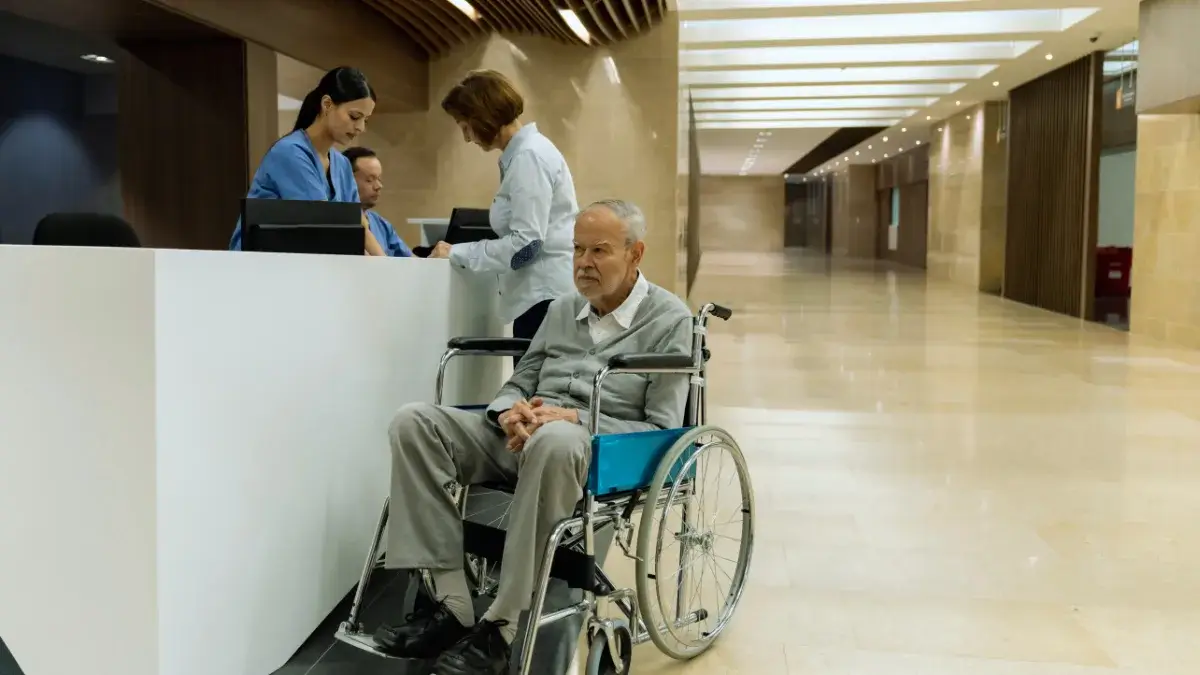
Getting out of hospital is usually good news, but it can also be the moment a family realises home is not ready. A patient may still need nursing care, or a home may not be set up for someone in a wheelchair, or the person recovering may simply not be safe on their own yet. When going straight home is not an option, Medium Term Accommodation, or MTA, can fill the gap.
MTA is one of the quieter parts of the health system, but for the people who use it, it can be the difference between a safe recovery and a rushed return to hospital. Here is how it works and why it matters in discharge planning.
What Medium Term Accommodation is
Medium Term Accommodation is temporary, supported housing for people who need care or supervision for a period of weeks to a few months while they recover or wait for a longer term arrangement. It sits between a hospital bed and independent living, and it is not the same as permanent residential care.
The key features are the support and the accessibility. MTA properties are set up for people with care needs, with room for visiting health professionals and modifications such as ramps and handrails. Residents get help with daily living where they need it, but the goal is to build independence rather than to provide full-time care. It is a staging point on the way home, not a destination.
MTA is perhaps best known as an NDIS support, and many of the people using it are NDIS participants. It is also relevant to older Australians and anyone leaving hospital whose home is not ready or safe for them. Eligibility and funding depend on the person’s situation, which is why discharge planning matters.
Why it matters for hospital discharge
Hospitals are for acute care. Once a patient is medically stable, the system wants them home, because staying in a hospital bed slows recovery and is expensive for everyone. But discharging someone to a home that cannot support them simply moves the problem.
MTA supports safe discharge in several ways. It reduces the risk of readmission, because the patient still has monitoring and support while they build strength. It keeps rehabilitation going, since many MTA arrangements include access to physiotherapy, occupational therapy and nursing visits. It provides a safe, accessible space for someone with mobility limits, with the ramps, rails and layout a regular home may lack. And it lets independence return gradually, so the person practices cooking, showering and moving around while support is still close by.
There is a family benefit too. Carers get time to adapt the home, arrange equipment and prepare for the person’s return, instead of being thrust into a full-time caring role the day after discharge.
Who benefits from MTA
The people who benefit most are those whose recovery needs more time and support than a standard hospital stay allows but who do not need permanent care.
That includes people recovering from surgery or a serious illness, patients with temporary mobility restrictions, older adults whose homes are not yet set up for them, NDIS participants waiting for their long term housing to be arranged, and anyone whose family needs time to prepare for them to come home. For these groups, MTA provides a supported middle step that makes the eventual return home safer and more successful.
It is also worth saying what MTA is not. It is not a holiday, and it is not a permanent home. Residents are there to recover, which means the focus stays on therapy, rest and the skills needed to manage at home. Keeping that purpose clear helps families choose the right arrangement rather than simply the closest one.
How to access it
Access to MTA usually starts with the people already involved in the discharge, and the most important step is raising it early.
Hospital discharge planners and social workers coordinate the move out of hospital, and they are the first people to talk to if you think MTA might be needed. They can assess whether the patient qualifies, what level of support is required and which providers have availability. Healthcare and allied health teams feed into that assessment, because the type of care needed shapes the type of accommodation. Funding bodies then come into the picture, with NDIS funding covering eligible participants and other arrangements applying outside the NDIS.
The timing matters. MTA places are not unlimited, and arranging one takes planning. A patient who raises the question days before discharge has far fewer options than one whose team started looking earlier. The assessment also needs to be thorough, because a mismatch between the person’s needs and the accommodation’s support level can undo the benefits.
A good question to ask the discharge team is what the accommodation actually provides day to day. Meals, transport to appointments, help with showering and medication reminders can all be part of the package or arranged separately, and knowing which avoids surprises once the person has moved in.
Raise MTA early in the discharge conversation
Medium Term Accommodation is easy to overlook in the busy lead-up to discharge, but it plays a real role in whether a recovery goes smoothly. It gives people a safe place to rebuild their strength, keeps therapy going and gives families the time they need to get the home ready.
If you or someone you care for is facing a discharge that feels rushed, or a home that is not ready, ask the discharge team about MTA early. The sooner it is part of the conversation, the more options there are. A planned discharge through supported accommodation is usually a safer one, and it gives everyone involved the best chance of a recovery that sticks.




- A plan reassessment is not the same thing as a plan variation, and knowing which one you are in changes everything about what happens next.
- It can be started by the scheme or asked for by you, but there is one rule almost nobody knows: a provider cannot ask for it on your behalf.
- The evidence has rules. What it has to show, and how recent it has to be, is where most of the preparation is won or lost.
- This article explains the process as the NDIS publishes it. It cannot tell you what your funding will be, and nobody honestly can.
You have a date and a knot in your stomach. The plan reassessment is coming, you have been told what time it is, and nobody has told you what actually happens in the room, what you are expected to bring, or what happens if you get it wrong. So let us walk through it, in order, from the point the reassessment starts to the point a decision comes back. Read it once before the meeting and a lot of the fear turns into a list.
First, which of the two things is happening
Before anything else, it is worth checking which process you are actually in, because the words sound similar and the paths are different.
A plan reassessment is what happens when your situation has significantly changed and you need a new plan with different supports. It ends in a new plan, and it is the bigger of the two paths.
A plan variation is the lighter mechanism. It is for changing something inside the plan you already have, without rebuilding the whole thing. It is a different request, made a different way.
And the third one, which people most often confuse with the other two, is the check-in. A check-in is a conversation, not a decision. It is how the scheme finds out how the plan is going, and we will come back to it later, because it is the step most people do not see coming.
Why does the distinction matter so much? Because the wrong request gets returned, or gets you told you are in the wrong process, and that costs you a month you did not have to lose. It is worth one call to your my NDIS contact to confirm which process you are in.
What triggers one, and who is allowed to ask
The scheme’s own pages say a reassessment can start from either side.
It can be triggered by the scheme when you are coming to the end of a plan and significant changes to your supports are needed, or when the scheme has information that your support needs have changed. And it can be requested by you, when your situation has significantly changed and your current plan no longer fits it.
Now the rule that this article exists to carry, because it surprises almost everyone. If you are asking for the reassessment, the plan reassessment request form has to be completed by you, by your plan nominee, or by a child representative. Consent cannot be given to someone else, such as a provider, to ask for a reassessment on your behalf. Not because the scheme is being difficult, but because the request is yours to make.
It reframes what a provider is for in this process. It is not a piece of red tape to be worked around. It is the reason a good provider helps you build the case and then stands back while you make it, instead of offering to make it for you. If someone offers to “handle the whole application” on your behalf, that is your cue to ask exactly what they mean, because the form itself cannot be lodged that way.
The scheme does provide help with the form. Your my NDIS contact can talk you through it and answer questions while you complete it. That is a normal part of the process, and using it costs nothing.
The evidence is the whole case
This is the section to read carefully, because the evidence is where reassessments are won and lost. Everything else is process; this is the argument.
What the evidence has to do is show a significant change to your ongoing support needs. That phrase is doing a lot of work. It is not a wish list, and it is not a description of a hard year. It is an argument with dates on it, and the elements of it are specific.
What counts as evidence? Assessments, reports or other evidence from your treating health professionals, your therapists, or your support workers. In practice, the strongest sets tend to have the same shape: a recent assessment, a therapist’s recommendation that names the support being asked for, and a support worker’s record of what is actually happening week to week. That last one shows the pattern rather than the moment.
Then the recency rule, which is the one that catches out well-prepared people. The evidence has to be recent, which the scheme describes as usually within four months of the request, and dated after your current plan was approved. Evidence that is thorough but dated before the last plan was made does not do the job, however good it is.

There are two jobs the evidence has to do, and people usually only prepare for one of them. The first is to show why the current funding is not meeting your needs. The second, just as important and much more often forgotten, is to show why what is already in your plan should stay. A reassessment is not only a pitch for more. It is also a review of what exists, and the parts that are working deserve a sentence of their own.
What a good evidence set looks like in shape, then: recent, from the right people, specific about the change, and honest about what should stay. Nobody else can write it for you. But you can make sure the record exists before it is needed, and that is a conversation worth having with your provider long before a reassessment date appears.
One more thing about the paperwork trail: what supports cost and how they are billed is its own conversation, and if that is the part you are trying to get straight, the site’s How much do NDIS providers get paid? answers it without dragging a pricing table through a reassessment.
The check-in, and the three-year question
The step most people do not see coming is the check-in, and knowing about it turns a surprise into an advantage.
About two to three months before your current plan’s reassessment date, your my NDIS contact gets in touch to check in. The check-in is where you are asked how the plan is going and whether anything has changed. If the situation has significantly changed, the scheme will start the reassessment process from there. If nothing has changed, you have had a useful conversation, and that is that.
The preparation the scheme asks for here is broader than most people expect. You will be asked about expected life changes over the next three years, which is the scheme’s horizon. Things like leaving school, starting or leaving work, or a change in where you live all belong in that picture.
You will also be asked about your connection with social and community supports, about your goals, and about your preference for how long the plan should run. That last one is worth thinking about in advance, because plan duration is a choice you have a say in.
The check-in is the cheapest opportunity in the whole cycle. It happens before positions harden, before forms are lodged, and while a conversation can still change the shape of what follows. If you get the call, treat it as the useful thing it is.
Getting the paperwork in
Getting the evidence to the scheme is simpler than people fear, as long as the details are right.
The complete form and the evidence can be sent through the service hub, by mail, or in person. The scheme’s own summary of what makes a valid request is worth reading twice: the request can only be considered if it arrives on the right form, includes evidence, and comes from the right person. Those three conditions are the whole checklist.
The practical habits that save stress later: keep a copy of everything you submit, along with the date it went in. Put the evidence in the order the argument needs rather than the order it arrived in your inbox. And if the scheme comes back asking for more information before accepting the request, read that as a request rather than a refusal. It usually is one.
What happens after you press send
Once the request is in, an NDIA planner reviews the information and evidence. There is a person on the other end working through what you sent. Expect to be asked questions, and to ask your own.
The honest expectations are these. The outcome is a decision about supports, not a verdict on your need, and the two are easy to confuse when you are the one waiting. A reassessment can result in more, less, or different supports, which is what the scheme says a reassessment is for. It is not a one-way ratchet, and knowing that in advance makes the conversation easier rather than harder.
If you disagree with a decision that comes back, there is a route: the scheme’s decision review process. Knowing that route exists is enough for this article. What it involves, the time limits and the prospects are things to go through with someone who can look at your actual decision.
And one practical note worth acting on: you can bring someone to the meeting. The reassessment is a conversation with a decision attached, and having a second set of ears in the room is allowed, sensible, and more common than you would think.
What a provider can and cannot do for you
This is the boundary that lets the most people down.
What a good provider does. It keeps records that show what support is actually being delivered and why, so the evidence trail exists when the time comes. It keeps assessments current. It helps you understand what evidence you already have, and it writes its own supporting reports when asked. That record-keeping is everyday work, and it is the everyday work of a registered NDIS provider working across Greater Sydney.
What no provider can do, however good it is. It cannot ask for a reassessment on your behalf. It cannot decide your eligibility. It cannot promise you an outcome, and you should be wary of any provider that talks as though it can. The decision belongs to the scheme.
There is one question worth asking any provider you work with, and it takes thirty seconds: what records do you already hold that show my support needs, and can I have them? A provider that answers that without flinching is a provider that will serve you well through a review. For the wider question of how to choose supports in the first place, the site’s The essential guide to choosing the right support for your NDIS journey is the right place to start, and when you are weighing up providers themselves, The ultimate checklist: what to look for in an NDIS provider takes that decision apart properly.
What to have ready before the reassessment meeting
Here is the list, ready to act on.
The current plan, and the date it runs to. The assessments and reports you already have, with the dates visible on them, because the dates are the part that gets checked. A plain one-page summary of what has changed and when, in your own words. The people who know you best, invited. A short note of what is working and what is not, again in your own words rather than in service language. And the one question you most want answered, written down so it actually gets asked.
None of that is complicated, and all of it is yours to control. The meeting asks what your life looks like now. You are the only person in the room who can answer that, and the list above is how you make sure the answer is ready.
Sources consulted: NDIS information on changing your plan, plan reassessments and how to prepare for one.


- A toothache is a symptom, not a diagnosis, and the same ache can come from decay, an infection, a cracked tooth, the gum, a wisdom tooth with nowhere to go, or a tooth that has simply had enough of cold drinks.
- What genuinely helps tonight is short and unglamorous. What gets passed around the internet instead is longer, and most of it does nothing.
- Two things matter more than any home remedy: knowing the signs that mean you should not wait, and being able to describe the pain clearly to a dentist.
- The aim tonight is to get you to the dentist’s chair comfortably. You cannot fix the tooth at home, and nobody expects you to.
It is late, it hurts, and the earliest appointment you could get is Thursday. If that is you, take a breath. There is a surprising amount you can do tonight, and an honest amount you cannot, and knowing which is which makes the wait easier. If you are reading this at two in the morning with the screen dimmed, you are in very common company. A toothache is one of those things that feels bigger in the dark, so let us go through what it might be saying, what actually helps, and the few signs that mean you should not be waiting at all.
What an aching tooth is usually telling you
A toothache is a symptom, not a diagnosis. The same kind of ache can come from several different places, and they do not all need the same answer. Knowing the possibilities will not change what you do tonight, but it will change what you say when you ring.
Decay is the most common reason a tooth aches. It often starts quietly, as a sensitivity you notice and forget, and healthdirect describes early decay that has not formed a hole yet as treatable by a dental professional, with fluoride paste or varnish and some changes to what you eat and drink. Once a cavity has formed, a filling is usually the answer.
An abscess is an infection, and it is the case where the pain tends to change character. It can throb, it can make the tooth feel like it is sitting differently, and there may be swelling. This one needs treatment rather than time, and healthdirect is clear about why: an untreated infection can spread beyond the tooth and the jaw.
A cracked or broken tooth often hurts most when you bite. The pain is sharp and specific to one spot, and it can come and go for weeks before it settles into something more constant.
Gum disease can make a tooth ache even though the tooth itself is not the problem, which is one of the reasons guessing at home is a poor game.
A wisdom tooth with nowhere to go is another common one. It can ache on its own or push against the tooth in front of it, and the pain often comes in waves rather than sitting still.
And sensitivity is its own thing: short, sharp, gone in seconds. It is a different conversation from a throbbing ache, and usually a more hopeful one.
The honest line under all of that is simple. This article can help you describe what you have, and it can help you get through the night. Only a dentist looking in your mouth can say which of these it is, and that is not a failing of yours.
What actually helps while you wait
This is the part to read twice, because this is the part that gets you some sleep.
A salt water rinse is the gentlest thing you can do. A mouth kept clean is a mouth that is less irritated, and it costs nothing. A cold compress on the outside of your face can help with swelling and with the ache itself, but keep it on the outside, and never put anything frozen directly on the tooth or the gum. None of this treats the tooth. What it does is buy you a comfortable night, and that is exactly what it is for.
Keep drinking water, and eat on the other side if you eat at all. Cold, very sweet or very hot things tend to make an angry tooth angrier, so give it the quiet option tonight.
Sleep with your head slightly raised if lying flat makes the throbbing worse. A couple of extra pillows does more than a lot of more inventive advice.
For pain relief, ask a pharmacist, or the healthdirect helpline, rather than a search engine. The right answer depends on you, your other medicines and your health, and this article will not name a medicine or a dose, because that is a conversation for someone who can ask you the questions. A pharmacist can have it with you tonight, without an appointment.

And the call that helps the most. Ring the dentist’s rooms and describe what the pain is doing, rather than asking for a general appointment. Most practices keep some space for pain and will tell you whether you need to be seen today, and that is the kind of call a dental practice at Coolalinga that sees families from Darwin and Palmerston takes every week. Describing the pain, instead of just reporting it, is how the person on the phone works out how soon you need to be in.
What does not help, and why people try it anyway
None of this is here to make anyone feel silly. It is here because a hurting person will try what is in front of them, and some of it makes things worse.
Do not put a painkiller tablet against the gum. It does not get to the tooth, and it can burn the gum, which turns one problem into two. The same goes for aspirin placed on the gum. This is one of the most common things people try, and one of the most common minor injuries dentists see.
Home remedies that circulate widely, like clove oil, garlic, salt pressed onto the tooth, or whisky, are either untested, or help for a few minutes, or irritate the tissue they touch. There is a reason oil of cloves has a reputation: it can numb for a short while. It does not treat anything, and using too much of it can burn.
A warm compress is the wrong direction when there is swelling, because the swelling is infection, and heat is not what infection needs.
Waiting it out is the one to be careful with, because it produces the quietest trap of the lot. A tooth that has stopped hurting has not necessarily healed. Sometimes the nerve has simply given up, and the infection is still there, doing its work without the alarm bell. A tooth that goes quiet after days of noise is worth a phone call, not a celebration.
The signs that mean you should not wait
Most toothaches can wait for an appointment. These cannot, and none of them is an overreaction. Ring for an urgent appointment, or seek urgent care, if any of this is happening:
- Swelling in your face, jaw, or under your eye.
- A fever, or feeling generally unwell, along with the tooth pain.
- Pain that has spread to your ear, your jaw, or your neck.
- Difficulty swallowing or breathing.
- A swelling that is closing your eye or pressing on your throat.
- An injury that has knocked a tooth out or broken it.
- Bleeding that will not stop.
The reason this list exists is that an untreated infection can spread beyond the tooth and the jaw, and in rare cases it becomes life threatening. The risk of waiting is not the pain. It is the spread. And nobody is being dramatic by ringing about swelling, so if that is what you are doing, you are doing the right thing. If you are unsure whether what you have is on this list, ring anyway. Asking is free. For a genuine emergency out of hours, the routes are a hospital emergency department or your state’s after-hours arrangements, and a call to the healthdirect helpline can point you to the right one tonight.
What the dentist will actually do
The fear underneath most toothache searches is not the pain. It is the drill. So here is what actually happens, and it is calmer than the version in your head.
The dentist examines the tooth, but also your face and neck, because they are checking whether anything has spread. They may test how the tooth responds to hot, cold or pressure, and if there is an infection they may take a swab of the area. There is no trick to it. It is looking, asking and sometimes a small test, and it is over faster than the drive there. None of it is painful in the way people fear.
Then the treatment follows from what they find. A cavity usually means a filling. An abscess caused by decay or a cracked tooth means treatment of the tooth itself, which usually means a root canal treatment or the tooth’s removal, and if the cause is gum disease, the treatment is cleaning around the tooth and the gum. Depending on the practice and the case, the person treating you might be a dentist, a doctor, or an endodontist, which is a dentist who works on the inside of teeth.
If the words root canal treatment made your shoulders stiffen, that is worth knowing about properly rather than dreading by rumour. The site’s 5 common myths about root canal treatment debunked takes that fear apart in detail, and it is a friendlier read than most search results.
And the most reassuring sentence in this whole article: healthdirect says people usually start to feel better within two to three days of treatment starting. If you do not, that does not mean nothing can be done. It means the treatment needs another look, and that is a normal part of the process rather than a verdict.
Why it happened, and how to lower the odds of the next one
Once the pain is dealt with, this part is worth five quiet minutes, because it is the part that lowers the odds of doing this again.
The advice is short, and it comes from the Australian Dental Association’s guidance as healthdirect carries it. Brush twice a day with fluoride toothpaste. Clean between your teeth every day with floss or interdental brushes. Eat a diet low in added sugar. Keep up with regular check-ups. That is the whole list.
Two details people get wrong are worth fixing tonight. Spit out the leftover toothpaste after brushing and do not rinse with water, so the fluoride stays on your teeth doing its work. And most Australian tap water has fluoride added, which means the water you drink is already helping, without you doing anything.
If the sweet drinks are the hardest habit to shift, the site’s soft drinks and their impact on your health: why they should be avoided makes that case better than a single line in this article could. For the grooves of healthy teeth, a dental professional may also recommend a sealant, and that is the kind of thing they raise at a check-up rather than something to chase on your own.
And one last thing, because teeth have a way of collecting shame they do not deserve. Teeth are not a moral test. Nobody gets through life with a perfect record. The first four items on that list are cheap, ordinary things, and they are the ones that do most of the work.
What to do tonight, and what to do next
For tonight, keep it simple. Rinse with salt water, use a cold compress on the outside of your face if there is swelling, keep the mouth clean, drink water, and let a pharmacist or the healthdirect helpline guide you on pain relief. Do not put a tablet against the gum. Sleep with your head raised a little.
Tomorrow, ring and describe what the pain is doing. Write the words down first if it helps: where it hurts, what it does when you bite, what makes it worse, and when it started. If any of the signs from the earlier list are happening, do not wait for tomorrow: seek urgent care now. And when the ache is gone and life moves on, book the check-up that stops the next one.
Your tooth is not going to tell you what is wrong with it. But the description you give a dentist, in your own words, gets you most of the way there, and that is more useful than any remedy in this article.
Sources consulted: healthdirect information on tooth decay, tooth abscess and gum disease.

The small voice calls out around 2am, and you are awake before your brain catches up. You make it to the bathroom just in time, then sit on the cold tiles with a hand on a warm back while the washing machine starts its second load of the night. Most parents I know have been exactly here. Gastro does not care about your sleep.
There is a different worry that shows up once the worst passes, and it usually arrives on Sunday night. How long is this contagious? Can they go back to school on Monday? This article answers both with the real rule, and it gives you a calm plan for the days in between. It is general information, not medical advice, and the official sources for your state are listed at the end.
Before we get to the rule, one reassurance. Whatever you are picturing in that moment, this illness is familiar to every GP, every pharmacy and every childcare centre in the country, and there is a well-worn path through it. You are not the first parent to sit on a bathroom floor tonight, and you will not be the last. That is worth remembering when it feels overwhelming.
What gastro actually is
Gastro is short for gastroenteritis, which sounds serious and is really just an infection of the stomach and bowel. In most childhood cases it is viral, usually norovirus or rotavirus, and it has nothing to do with something you fed them or failed to wash. It is not the flu, even though people say “stomach flu.” It will not be helped by antibiotics, because antibiotics treat bacteria, and this is not that.
It is also extremely common. A bout or two before a child finishes primary school is completely normal, and most parents survive several of these nights. The first time feels frightening because the vomiting is sudden and the mess is everywhere, but the illness itself follows a known pattern. Naming it calmly matters, because children take their cue from the adults in the room. If you can be the steady one, it helps them more than any medicine.
You will also hear gastro called food poisoning, and the two overlap, but they are not the same thing. Food poisoning comes from eating food that carries bacteria or their toxins, and it tends to hit hard after a single meal. Viral gastro spreads from person to person, through hands, surfaces and close contact, which is why it runs through a family or a childcare room rather than striking one person who ate the wrong thing. Most childhood gastro is the viral kind, and that is quietly reassuring: it means nothing you bought, cooked or packed in a lunchbox is to blame.
How long it lasts
The symptoms are hard to miss. Vomiting, diarrhoea, tummy cramps, and sometimes a mild fever. They tend to arrive fast and feel awful, and then, for most children, they ease just as quickly.
The honest time frame is 24 to 72 hours. Most children are past the worst within that range, and it is the answer to the question parents type into Google at 3am: how long does gastro last. Some children are back to themselves within a day, and a few take a little longer. What you are waiting for is the gap between episodes to grow, the vomit to stop and the energy to creep back.
When symptoms push past that window, or when a child cannot keep even small amounts of fluid down, that is the signal to call the GP rather than keep waiting. It does not mean you have done anything wrong. It means the usual timeline has stretched, and a doctor is the right next step.
How long it is contagious
This is the part that surprises most parents, because it does not match how the child feels.
A child is most contagious while they are actively vomiting or having diarrhoea. That part is obvious. The trickier part is that the virus keeps being shed in stool for days after the symptoms stop. A child can look completely better, bounce off the couch and ask for toast, and still be passing the virus to everyone they touch.
That is why the return rule is built on symptom-free time rather than on “feeling better.” Feeling better and no longer being contagious are not the same moment. The child may feel ready for the world on Wednesday while the virus is still leaving their body on Friday. The clock that matters is the one that starts after the last episode, not the one that starts when they smile again.
It is also worth knowing that a child can shed the virus before any symptoms appear. The time between catching the virus and the first symptom is usually one to two days, which is part of why gastro is so efficient at moving through a house. By the time the first child vomits, the siblings have often already been exposed, and the family is effectively sharing the same bug whether you quarantine or not. That is not a failure of your cleaning. It is simply how this virus travels.
The school and childcare return rule
Here is the practical answer you came for. In Australia the guideline is to keep a child home until at least 24 hours after the last episode of vomiting or diarrhoea, and several states, along with many childcare centres, use 48 hours.
The exact number depends on where you live. SA Health uses at least 24 hours. NSW Health’s published exclusion table sets 48 hours for children in school and care, and some childcare settings apply 48 hours during outbreaks even in states where the general rule is shorter. That is why this article will not give you one magic national figure, because there is not one. Each state and territory publishes its own table, and your centre may have its own written policy on top of it.
So the advice is simple. Follow your centre’s written policy where one exists, because that is the rule that actually applies on Monday morning. Check your state’s health department table if you are unsure, and when in doubt, one extra day home is never the wrong call for gastro. Nobody was ever harmed by a child staying home an extra day, and plenty of classrooms have been spared a round of it by exactly that choice.
One practical note on the Monday morning moment. If the state number and the centre’s number disagree, the centre’s written policy wins for care, and the school’s policy wins for school. Ask both up front, in writing if you can, so you are not negotiating at the gate with a child in the back seat. A quick message to the centre on Sunday night saves a lot of awkwardness and gives everyone a clear answer.
Caring for a child with gastro at home
Home care for gastro is mostly about one thing: fluids. The illness clears on its own, and your job is to keep them hydrated while it does.
The method that works is little and often. Small, frequent sips of water, or an oral rehydration fluid from the pharmacy made up for kids, go down and stay down far better than one big drink that comes straight back up. A teaspoon or a few mouthfuls every few minutes is enough. Ice blocks count too, and for many children they are the easiest thing to accept. Plain food, like toast, crackers or a banana, only when they are ready for it, and rest whenever their body asks for it.
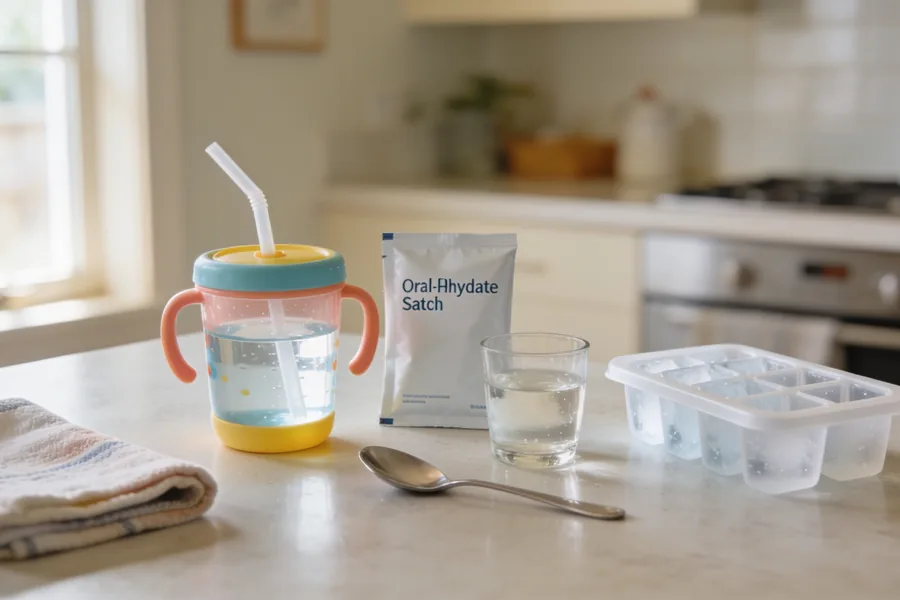
Keep the drinks within reach and keep your own voice calm. Children read your worry, and a relaxed parent who says “small sips, you are doing fine” gets more fluid into a sick child than a stressed one who is counting every millilitre. You are not failing if they refuse food for a day. The fluids are the medicine here, and food can wait until the stomach settles.
What not to give matters just as much. Skip full-strength juice and sugary drinks, because they can make diarrhoea worse, and do not reach for anti-vomiting medicine unless a doctor or pharmacist has said to use it. Plain water is fine for older children. For a baby, keep offering breastmilk or formula alongside the extra fluids, because for them it is both food and drink, and their small bodies lose fluid faster than an older child’s.
Red flags: when to call the doctor
Most gastro needs nothing more than time and fluids, but there is a list of signs that mean a call to the doctor, or to emergency care, is the right move. You are not overreacting to call. Every one of these is worth a professional opinion.
Dehydration can come on faster than parents expect, especially in babies and toddlers, because their bodies are small and they lose fluid quickly when both ends are busy. That is why this list exists. Read it as permission to call, not as something to worry through alone.
- Dry mouth and lips, or no tears when they cry.
- Fewer wet nappies than usual, or long gaps without weeing.
- Sunken eyes, or a soft spot on a baby’s head that dips.
- Unusual drowsiness, or floppiness that is not just tiredness.
- Blood in the vomit or the stool.
- Severe tummy pain that is not easing.
- A fever in a baby under three months.
If you see any of these, call your GP or health advice line. Dehydration is the real risk with gastro, and it is treatable, but it is easier to treat early than to turn around. Trust the list over the hope that it will pass. A worried parent who calls is doing the right thing, full stop.
Stopping it from spreading through the house
Gastro moves through a household fast, but you can slow it down with a few plain habits.
Soap and warm water beat hand sanitiser for this virus. Norovirus is stubborn, and sanitiser does not reliably kill it, so make handwashing the rule after the bathroom, after nappies, and before food. Clean the bathroom and the high-touch spots, the taps, the toilet flush, the door handles, with a bleach-based cleaner. Give the sick child their own towel for a few days, and wash your own hands after you help them. Keep their cup and plate separate, and wash them well.
If there is a baby in the house, a stomach bug needs even more care. The same habits that carry a newborn through winter illness season, which I have written about before in my guide to natural ways to prevent colds and flu in your newborn this winter, apply double here. Wash your hands before you pick the baby up, no matter how many times a day you do it, and keep the sick child’s things away from the baby’s things where you reasonably can.
Not every “stay home” is an illness
Gastro has a clear physical rule, and that makes it a straightforward call. But it is worth gently saying that not every child who says they feel sick on a school morning has a stomach bug.
If a child is regularly fighting school when they are well, complaining of tummy aches that vanish on weekends, or crying on Sunday nights about Monday, that is a different conversation, and a calmer one than a sick day. It deserves patience and a proper look at what is happening at school, not a lecture and not a forced day off. My calm guide to school refusal walks through how to tell the difference and where to start, because keeping the two separate helps you respond to the right problem.
A real stomach bug and a worried child both need you. They just need different things from you.
Let the clock, not the guilt, decide
Gastro is miserable, common and almost always short. It is not a reflection on your parenting, your cleaning or your cooking. It is a virus that moves through families, and almost every family gets its turn.
The rule is simple once you know it. Keep them home until they have been symptom-free for a full day, two in many states and centres, and use that time for fluids and rest. The doctor is the right call the moment you are worried, not the moment you are certain. And when you are second-guessing whether one more day at home is overkill, let the clock answer instead of the guilt. One extra day costs very little. A classroom of gastro costs a lot more.
Sources:
- Healthdirect Australia – gastroenteritis (what it is and when to seek help)
- NSW Health – School exclusion periods fact sheet (infectious disease exclusion times)
- SA Health – Exclusion from childcare, preschool, school and work

One Car or Two? Working Out How to Move a Group Without the Shuffle

Bridging Visas: What You Are On While You Wait, and What It Actually Lets You Do

Your NDIS Plan Reassessment: What Happens, and What to Have Ready

The Science Behind Melbourne’s Unpredictable Climate: What’s Really Going On?

Plastic-Free Coffee Makers: Myth or Must-Have?

Zero Waste Toothpaste: What’s Worth the Switch and What to Look For
-
 Melbourne1 year ago
The Science Behind Melbourne’s Unpredictable Climate: What’s Really Going On?
-
Eco Friendly4 years ago
Plastic-Free Coffee Makers: Myth or Must-Have?
-
Eco Friendly4 years ago
Zero Waste Toothpaste: What’s Worth the Switch and What to Look For
-

 Automotive1 year ago
Wet Weather Tyres in Australia: What to Look For and When to Replace Them
-
 Eco Friendly4 years ago
Plastic Free Packaging: How to Keep Your Business Plastic Free
-
 Eco Friendly4 years ago
How Aussie Businesses Can Reduce Plastic Pollution
-

 Home & Garden1 year ago
Boost Productivity and Mood with a Deep Cleaned Space
-

 Financial1 year ago
How to Secure the Best Car Finance Deal: Tips for Negotiating and Saving Money