
Home & Garden
What the Aircraft Sees: Drone Surveying, and What It Still Cannot Tell You

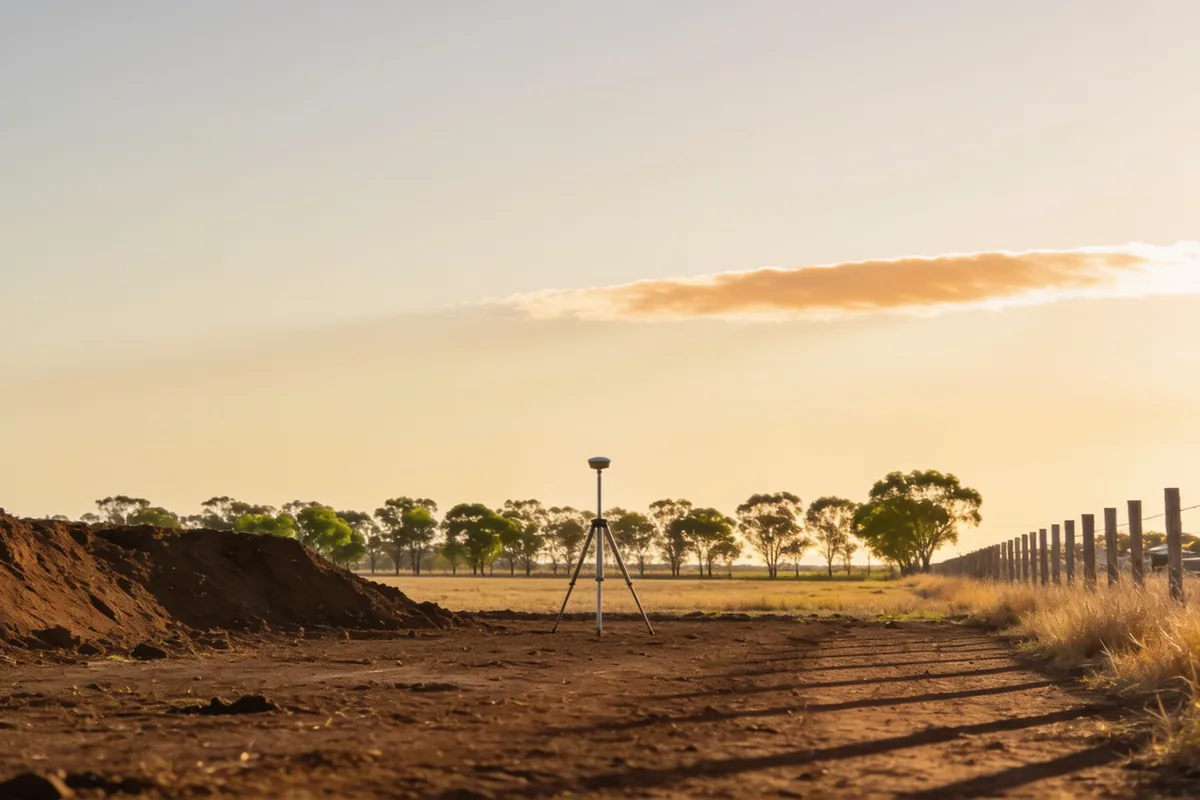
- A drone does not survey anything. It collects a very large number of very well-located points, and a surveyor turns those into something you can measure.
- The aircraft’s whole advantage is also its whole limit: it can only measure what it can see.
- That is exactly why it cannot answer the questions that matter most about a title.
- What you are buying is a deliverable rather than a flight, so it is worth asking what a delivery looks like.
- And there is a short list of things to settle before anybody flies, which is most of the work of arranging one.
There is a moment, usually after a quote arrives with a drone survey on it, when you look up at your own block and wonder what the aircraft could possibly see that you cannot. The honest answer is both more interesting and less magical than the quote suggests. A drone is very good at some things, genuinely unable to do others, and the line between the two is worth knowing before you accept anything. This is what that line looks like, in plain words.
Before anything flies
0 of 11If you are arranging a survey of your own site, these are the things worth settling first. Tick each one as you go, and the count keeps track.
Sorting out access
What is on the site and under it
What you need out of it
Before the day
General information. What a survey can and cannot capture depends on the site and the purpose, so confirm it with the surveyor who is doing the work.
What is actually being captured
Start with what happens during a flight, because it is simpler than the result looks.
The aircraft takes a great many overlapping photographs, from positions it knows precisely. Software then reconstructs a dense set of measured points across every surface the camera could see. From that set, a surveyor derives the things you actually use: heights, distances, areas, surfaces, contours and volumes. None of those are photographs. They are measurements, and they are only as good as the positioning underneath them.
The overlapping matters more than it sounds. Each part of the ground appears in several photographs at once, which is what lets the software place it, and a windy day or a rushed flight quietly costs coverage rather than announcing it. The other half of the sentence is worth unpacking too. The aircraft knows roughly where it is. The ground reference is what makes a position precise, and that is a surveying problem rather than a flying one.
That last part is the one worth slowing down for. What separates a toy that flies from a survey is the reference on the ground, the points that tie everything the camera saw to a real coordinate system, and the surveyor’s judgement about where those points need to go. A flight without that reference produces something that looks impressive and means very little.
So the division of labour is this. The aircraft flies the site. The surveyor decides what the numbers are measured against.
What the output looks like
Knowing what you are buying is half of being able to use it, so here is the shape of a typical deliverable.
A surface model. The shape of the ground itself, which is where volumes and drainage work come from.
A plan view. The site as drawn from above, which is where areas and layouts come from.
A set of measured points that other software can read. This is what designers and engineers work from, and it is usually the least decorative part of the delivery.
And contours or a section, which is the version a landowner recognises as “the lines”.
What the output is not is equally worth saying. It is not a title, not a certificate, and not an opinion about where a boundary sits.
Most deliveries are some subset of that list, and asking which parts you need is part of the conversation rather than an extra to request later.
One thing to ask for that people rarely ask for: see what a delivery actually looks like before you accept the quote. A sample of the output tells you more about the job than any description of the aircraft, because what you are buying is a deliverable rather than a service.
The jobs it is genuinely good at
This is the fair-minded half, and the list is specific rather than glamorous.
Measuring a site that is hard to walk. Steep ground, scrub, a quarry face, a rubbish fill, a wetland margin. The places where sending a person with a tripod is slow, unpleasant or unwise.
Measuring a site repeatedly. A stockpile, a cut, a fill, a development in progress. Here the value is the comparison rather than any single measurement, and a flight makes the repeat cheap and quick.
Measuring something that has already changed. After a fire, a flood, a storm or a demolition, where access is the problem and a record is what you need.
Measuring one thing across a very large area. A length of road, a drain, a fence line, a paddock. One question, asked of a lot of ground.
And measuring where nobody should be standing. Over water, over traffic, over unstable ground.
And a fence line is a good example of the last one, because a fence is easy to walk where it is easy to walk, and the interesting part of it is usually somewhere else.
The honest common thread is not precision. It is access and repetition. There is one more quality worth noticing about the list: none of those jobs is about making a pretty picture. Each one is a decision waiting on a number, a record, or a comparison between two visits, and a developer tracking earthworks across a season is buying the same few jobs over and over. That is where the method quietly pays for itself.
What it cannot do
This is the section the provider pages do not carry, and it is the one worth reading twice.
It cannot see under the ground. Underground services, pipes, footings, tanks, rock and fill are all invisible to it, and this is the single most common thing a landowner assumes a drone has solved. It has not.
It cannot see under vegetation or under water. A heavily treed block and a muddy dam are both blind spots, and no amount of processing recovers what the camera never saw.
It cannot see through a building. An interior, or a rear elevation hidden behind a structure, is captured from wherever the aircraft could reach, or it is not captured at all.
It cannot establish or prove a boundary. A boundary is a legal line established from title and evidence, and no survey of what is visible changes that. The site’s Surveying and property law: what every landowner should know covers that ground properly, and this article will leave it there.
It cannot verify what it cannot position, so a flight without ground reference is a picture rather than a survey.
And it cannot replace a judgement about what matters. Deciding which of the thousand things on a site are the ones you need to know about is the surveyor’s actual job, and it does not happen in the air. It also cannot hold a conversation about what a number means for a decision, which is the part most people actually need.
One consequence people miss: because it cannot see under the ground, a flight is often used alongside old drawings and site records rather than instead of them, and the combination is the honest picture of a site.
The trap worth naming: a pretty render of a site looks more authoritative than it is. The reader who asks what the flight cannot see is the reader who does not get caught by that.
What has to be ready before anybody flies
The practical core, and the half that decides whether the output is useful or just interesting.
Access and permission. Who owns the land, who has to agree before anyone flies over it, and what the aircraft will pass over on the way in. The way in matters as much as the site itself.
What is on the site and what is under it. Power lines, trees, structures, people, animals, and anything you know to be buried. Say all of it, even the parts you think are obvious.
Whether the site is ready. A paddock of long grass and a working site with machinery both change what can be captured, and the client who tells the surveyor is the client who gets useful output rather than a smooth surface that hides everything.
What the output is for. A volume, a design, a dispute, a record, a comparison. The purpose decides the flight rather than the other way around.
And whether a flight is the right tool at all, because the honest answer is sometimes no, and it is much cheaper to establish that before the quote than after.
The more of this you settle in advance, the less the flight is a reconnaissance and the more it is a measurement. One practical habit goes with it: put the answers in writing, because the person who flies the site is rarely the person you spoke to on the phone.
The questions to ask before you accept the quote
Written as your own questions, in the order they make sense.
What am I actually going to be given, in what format, and will the people who need it be able to open it? A deliverable nobody downstream can use is an expensive curiosity. If they cannot show you a sample of a previous delivery, that is an answer too.
What is the output referenced to? If the answer is vague, you are buying a picture.
What will you not be able to see here? Ask it directly. The answer is the whole value of the conversation, and a surveyor who answers it well is a surveyor who has thought about your site.
What do you need from me? It turns out to be the access, the information and the purpose, which is everything in the section above.
Is a flight the right answer for this job at all, and what would you do instead? It is the question that separates a professional from an operator, and it is free.
And what happens if the weather or the site does not cooperate on the day? Every outdoor job has an answer to that, and you want to hear it before you need it.
It is worth saying the standard in one line, because it is the whole test: a surveyor who can tell you what their method cannot do is a surveyor who has thought about your site. An Australian surveying company that runs drone surveys from its Darwin and Perth bases is one place to ask, and the questions above are the test to apply to any of them.
What the flight still cannot tell you
The honest summary, kept short on purpose.
It cannot tell you what is under the ground. It cannot tell you what is under the trees or under the water. It cannot tell you what is behind the building. It cannot tell you where the legal boundary is. It cannot tell you whether the ground reference was good enough, unless you ask what the output is referenced to. And it cannot tell you whether the question you are asking is even a measurement question.
The aircraft answers the part of the question that is about the surface. The surveyor answers the part that is about everything else.
Sources consulted: national aviation safety guidance on remotely piloted aircraft.


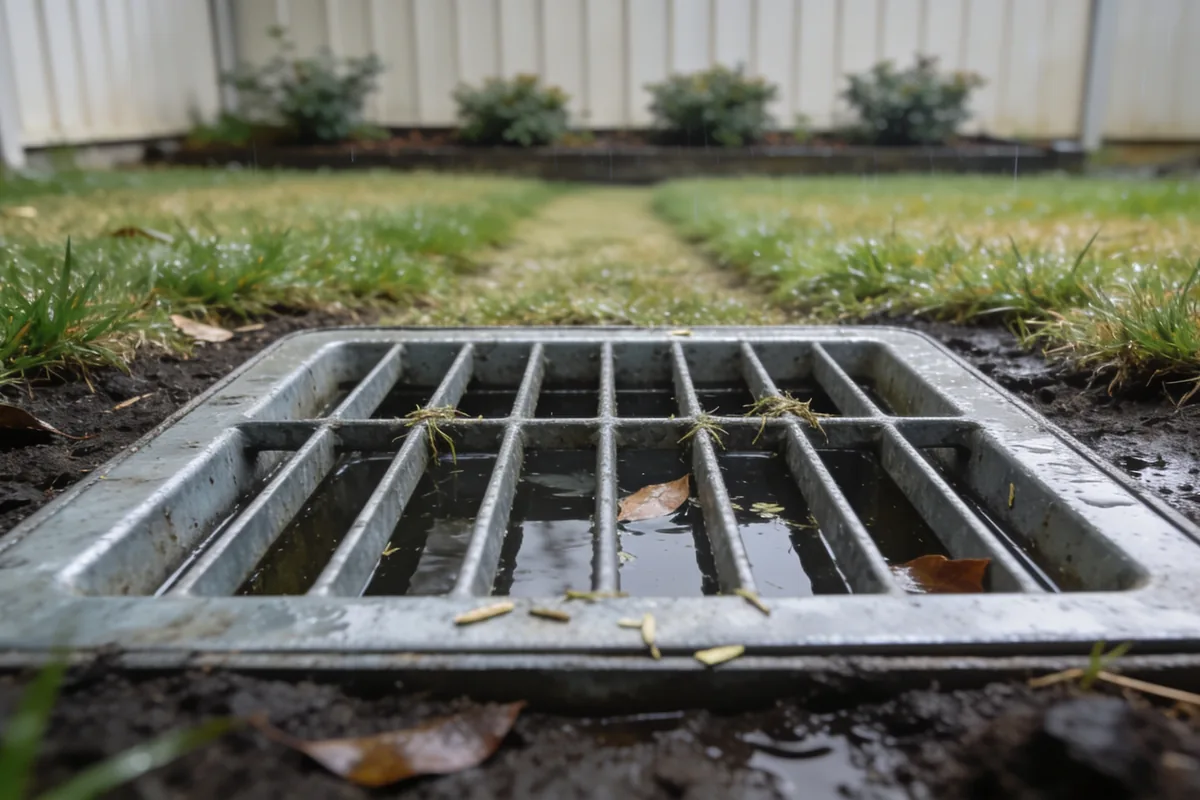
- Once is bad luck. Twice is information.
- A drain does not block because of what you put down it. It blocks because of where the water stops moving, and that is a property of the pipe.
- Six things actually cause a repeat blockage, and the famous one is not always your one.
- Clearing a drain removes a symptom. Fixing it removes a condition, and telling the two apart is the decision this article is about.
- And the reader who can describe the pattern has already done the hard half of the work.
If you are standing over a drain that was cleared last year, wondering whether this is simply your life now, the first useful thing to hear is that a repeat is not bad luck. A drain that blocks twice is telling you something specific about the pipe, and the message gets clearer the more precisely you can describe what keeps happening. This is not an article about how to clear a drain. It is about why the same one keeps filling up, and how to tell clearing it again from fixing it properly.
What a drain actually is
Start with the one piece of understanding everything else hangs on, because it is simple and almost nobody is told it plainly.
A drain is not a tube. It is a run of pipe with joints, changes of direction, connections where other pipes join it, and a fall, which is the slope that carries water and everything in it away by gravity rather than by pressure. Every one of those features is a place where the flow slows.
That has two consequences the reader needs. Water that slows drops what it is carrying, which is how a deposit forms in the first place. And a drain that has blocked once has already told you where its slow point is, because it will block in the same place every time, and it will do it for the same reason.
The connections matter as well: every pipe that joins the run adds one more place for debris to pause. And the fall matters more than most people realise. A pipe with barely enough slope works fine until something small changes, and then it does not. A pipe that has settled differently from its neighbours loses its fall quietly, which is one of the ways a line that was fine for years stops being fine.
The honest limit: you cannot see any of this from the grate. Everything downstream of the drain is out of sight, which is exactly why the next section is about what is likely to be in there.
What is actually in the pipe
Six causes cover most repeat blockages. Each one is recognisable from the outside if you know what you are looking at.
Fat, oil and food. The most common, the most household-owned, and the one that returns because the line is already coated. It does not vanish when it goes down the sink. It cools, sticks and narrows.
Wipes and paper that do not break down. The modern one. They catch on an existing rough patch and build a dam behind it, and the word on the packet is not a promise about the pipe. Once one of them catches, the rest arrive to keep it company, which is why a wipes problem and a rough patch in the pipe are usually found together.
Tree roots at a joint. And here is the correction worth keeping: roots enter at a crack or a joint, not through a solid pipe. That is why they come back at the same spot, and why the failure, rather than the tree, is the thing to find.
A sagging or bellied section. Ground movement, age or a bad original fall, where water sits and solids settle. The pipe is not blocked so much as permanently slower than it should be.
Scale and corrosion in an older line. The pipe narrows over the years and there is no blockage to remove, only a smaller pipe than the house needs.
And a foreign object. A toy, a cloth, a build-up of gravel from a broken grate. This is the one cause that genuinely does not recur once it is out, which is the reason to rule it in or out honestly rather than assuming a return is coming.
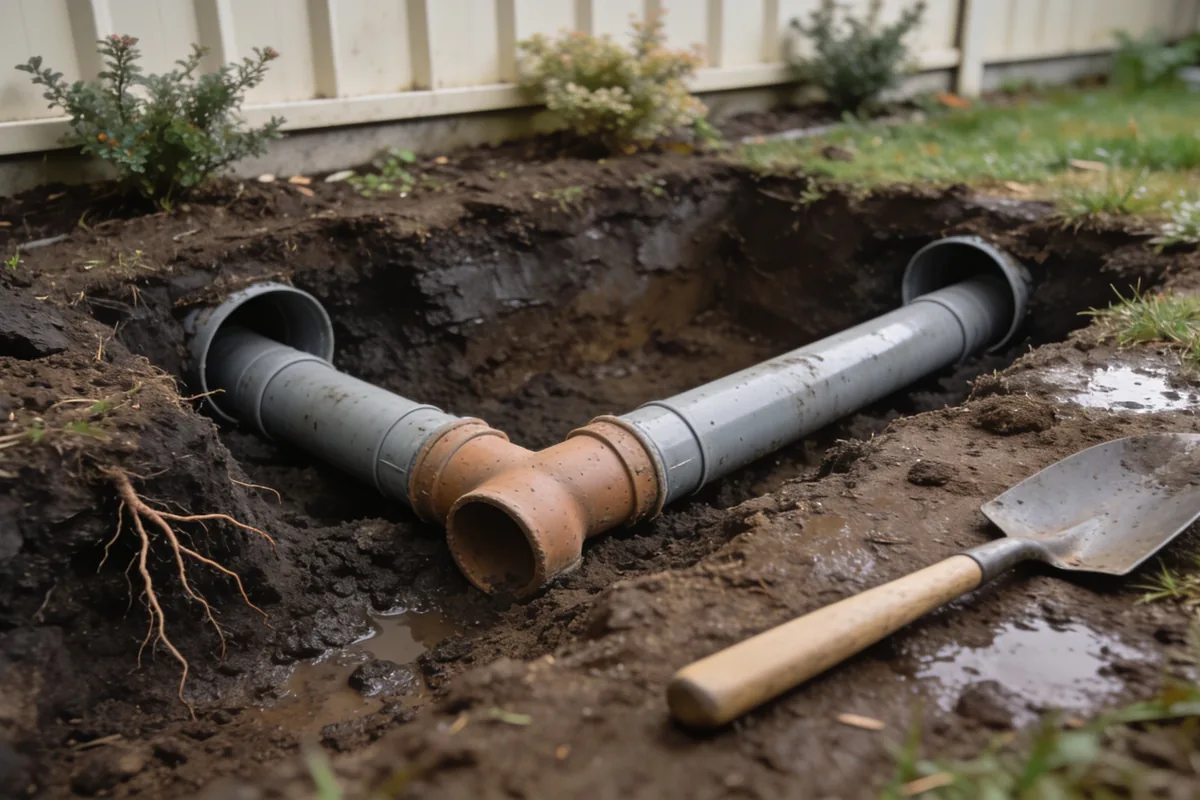
One more note before the list turns into a diagnosis: when the pipe itself is the problem rather than its contents, it usually shows in more ways than a blockage, and the site’s Top signs your home pipes need repairs is the list worth checking yourself against. Notice, too, that five of the six causes point at the pipe or the pattern rather than at the household, which is the uncomfortable half of the trade and the reason this article leads where it does.
Why it comes back at the same place every time
This section is the article’s whole argument: a renewed blockage in the same spot is a diagnosis, not a coincidence.
It means the pipe at that point is either damaged, narrow, badly laid or permanently coated. Clearing it removes the symptom and leaves the condition underneath, which is why the relief lasts weeks or months rather than years.
Here is the practical version. The reader who can say “it is always this drain, it is always about a year apart, and it backs up when the washing machine empties” has handed a plumber more than a camera will find in ten minutes. That sentence contains the location, the interval and the trigger.
Two patterns are worth recognising by name. The seasonal one, which points at roots or at rubbish entering from outside, because the pattern follows the tree or the weather. And the load-related one, which points at a partially restricted line that only fails when the fixture upstream empties into it. In both cases the pattern is the evidence.
The interval is information as well. A repeat that arrives faster each time means the condition is getting worse, and a repeat that arrives on the same schedule means you are running on a cycle. Cycles can be planned for. Escalations should be acted on. Write the dates somewhere you will find them again, because next year you will want them.
And one thing to resist: do not conclude it is roots because roots are the famous cause. The famous cause and your cause are two different things, and the difference is worth a question before anybody starts digging.
How a plumber works out which one it is
It helps to know what the visit involves, because it tells you what you are paying for and why some visits are quick.
Asking first. The history is the cheapest diagnostic there is, which is why the previous section matters more than any tool. Everything about the pattern, the interval and the trigger shortens the job. The history is not small talk before the real work. It is the diagnostic, and a plumber who skips it is leaving the cheapest tool they own in the van.
Looking at the layout. Which fixtures are affected, what sits upstream, where the low spots are, and what is growing near the line. None of this involves opening anything, and all of it narrows the field.
Testing with water, rather than assuming. How it backs up and where it appears tells you where the restriction sits, and a plumber who tests before quoting is doing the job in the right order. How it backs up is itself a reading: a slow rise points one way, an instant flood another, and a gurgle somewhere else in the house a third.
And looking inside the line, which is the step that turns clearing into diagnosing. It is the difference between knowing that a drain is blocked and knowing why. What it changes is everything downstream: a cleared drain with a known cause comes with a plan, and a cleared drain without one comes with a return visit.
What a proper diagnosis produces is a reason rather than a cleared drain. If you take one sentence from this article, take that one.
Clearing it, or fixing it
This is the decision the article exists for, and it is genuinely a decision rather than an instruction.
Clearing is the right answer when it is the first time, when the cause is one the household owns and can change, when the line is otherwise sound, or when the reader is renting and the fix is not theirs to authorise. In those cases the site’s How to clear blocked stormwater drains in winter: a practical Aussie guide covers the maintenance side properly, and this article will stay on the pattern.
Fixing is the right answer when the same drain blocks twice within a reasonable period, when it blocks with nothing unusual going into it, when the pattern is seasonal or load-related, when the line is old, or when the reader has paid to clear the same spot more than once already.
The honest arithmetic, with no numbers in it: the question is not what each visit costs. It is how many visits you are prepared to pay for. A householder can decide that for themselves once they know which cause they have, and knowing the cause is the whole reason this article pushes on the pattern rather than on the blockage. Fix and clear are not always either-or, either. A household can fix the cause and still clear the line once more while the fix settles in. What matters is that the money buys a reason rather than only relief.
That is also the point a Merrylands plumber who handles blocked drains across Western Sydney starts from on a repeat blockage, because the third visit to the same drain is a pattern rather than bad luck. Whether the pipe is the householder’s to fix or sits on the other side of a boundary is its own question, and it is a different article, but it is a fair one to ask.
The things that make it worse
A short section, deliberately modest, because habits help at the margin rather than working miracles.
What genuinely helps. Keeping fat out of the sink and putting it in the bin rather than washing it down with hot water. Being sceptical of anything described as flushable. A drain grate over anything that can drop into an open drain. Noticing a slow drain before it stops, because a drain that drains slowly has already told you it is narrowing, and the site’s Signs your stormwater drains are blocked: don’t ignore these red flags is the detection list for exactly that stage. And writing down when it happens, because a pattern is the most useful thing you can bring to the visit.
What does not help: relying on a chemical cleaner as a routine. It can clear a soft blockage and it cannot touch a root, a sag or a scale problem, so a repeat visit from the bottle is really a sign that the cause has not been found. That is not a safety claim about anything, and it is not an instruction about anything. It is just the observation that a routine is a strange thing to have for a one-off problem.
What to tell the plumber when you ring
Here is everything above, compressed into what to have ready.
Which drain it is, and how many times it has blocked. Roughly how long apart the blockages are. What it does when it backs up, and which fixture causes it. Whether it drains slowly all the time or only sometimes. Anything growing near the line. How old the house and the line are, as far as you know. Whether the property is owned or rented. And whether anything unusual has been put down it.
That is a two-minute conversation, and it changes the visit from a search into a confirmation.
And there is no shame in a repeat. Drains are infrastructure, and infrastructure deserves a reason rather than a fresh excuse each time. The reader who can describe the pattern has already done the hard half of the work. And a plumber who asks about it before quoting is the one to keep.
Sources consulted: published household guidance on drainage and plumbing.


- Water pressure is not one thing, and where it is happening tells you almost everything.
- One slow tap and a slow house are different problems with different answers, and the difference takes about two minutes to establish.
- Whether the hot side or the cold side is affected changes the answer again.
- Pressure and flow are not the same thing, and describing the wrong one sends a plumber looking in the wrong place.
- And there is a second side to this that hardly anybody mentions, which is having too much pressure rather than too little.
If the shower has gone soft, or the kitchen tap takes longer to fill the kettle than it did last winter, you are in a very common position. Most people wait and see, and then ring somebody without knowing what to say. The useful thing to know before you pick up the phone is that the tap is where the symptom shows up, and it is almost never where the cause is. Where it is showing up, though, narrows things down fast.
One tap or all of them
Start here, because this one test does most of the work, and it costs you nothing but a lap of the house.
If it is one fixture and everything else in the house is fine, the problem is at that fixture. The most common cause is also the simplest one: the little screen on the end of the spout, which collects grit and scale over time. The kitchen tap that gets used twenty times a day is usually the first to slow down, because every use pushes a little more into that screen. The second most common cause is the valve or washer inside that tap, which is a repair rather than a mystery.
If it is the whole house, the cause is upstream of every tap. That narrows it to the supply coming into the property or the pipework that feeds the house from there. It also tells you that taking a spanner to a tap will not help, which is worth knowing before you start.
If it is one side of the house rather than the other, the bathroom but not the kitchen, or the back tap but not the front, then it is the run of pipe between them. A house is a run of pipe with branches on it, and a problem on one branch behaves differently from a problem on the trunk. Both taps in the same bathroom behaving the same way, while the kitchen is fine, points at the branch that feeds that bathroom rather than at either tap. That is the sort of detail that saves a plumber time, and it takes you one more minute to notice.
You can establish which of these three you have in about two minutes, and it is the difference between something you can sort yourself and something to ring about.
Hot, cold, or both
Now do the same thing again with temperature, because it splits the answer a second time.
If both the hot and the cold are weak at the same fixture, the problem is at the fixture itself: the screen, the mixer or the valve. The fixture is the one place the two supplies meet, so a fault on both sides at once points there rather than anywhere else.
If it is the hot only, the cause is on the hot side of the system: the hot water unit, the tempering valve, or the pipework between the unit and the tap. A hot line also scales faster than a cold one, so “it is only the hot” is a pattern with a boring explanation rather than a mystery. It is worth noticing whether the hot has always been the weaker one, or whether it has only just changed, because a change is information. If the unit itself is the trouble, the site’s From leaks to no heat: when to book hot water repairs covers that territory properly, and this article will leave it there.
If it is the cold only, it points at the cold supply to that fixture, or at the main. One useful habit while you are checking: run the two taps in the same fixture one at a time, then together, and notice whether the weak one stays weak or gets weaker. The answer says more than either tap does on its own.
The two sides of a house are separate systems that meet at the tap, which is why the pattern of which one is affected is worth noticing. It is not a detail. It is how a plumber works out where to look first.
Pressure is not flow, and the difference matters
This is the part nobody explains, and it is the part that decides whether your description sends somebody to the right place.
Pressure is the push. Flow is how much comes out in a given time. They usually travel together, but they can part company, and when they do it tells you something.
A house can have perfectly good pressure and poor flow, because something between the main and the tap is restricting how much can get through. A narrow or scaled pipe, a valve that is not fully open, an old galvanised line, or a screen packed with grit will all do it. A house can also have plenty of flow and poor pressure at the upstairs shower, because pushing water upwards costs something.
Why does it matter? Because the fix for a pressure problem and the fix for a flow problem are different, and a reader who describes the wrong one gets the wrong first guess. Two sentences carry the difference on the phone. “It comes out strong for a second and then drops” and “it trickles from the moment I turn it on” are describing two different houses, even though both people would say their pressure is low.
One more distinction that helps: a problem that follows a fixture is a fixture problem, and a problem that is worse in the morning and settles later often points upstream rather than at the tap.
The other problem: too much
Everyone rings about low pressure. Too much pressure is also a fault, and it is the quiet one, because it does not bother anybody until it costs them something.
High pressure works away at the joins in a system. It shortens the life of taps, valves and the appliances connected to them. It makes a dripping tap worse, which is why a tap that keeps returning to its old trick is often the visible end of it. It is also the reason some houses seem to spring leaks that nobody can explain, and why a tap that has been replaced twice can be replaced a third time.
Nothing about high pressure is an emergency, which is exactly why it goes unfixed for years. What you might notice instead is subtler: water that hammers when a tap shuts, a shower that is genuinely uncomfortable rather than generous, a washing machine connection that drips, or a repair history that keeps coming back to the same fixture. If any of that sounds familiar, this is the one problem on this list where a plumber earns their call, because sorting it means fitting a device at the point where the supply enters the property, and that is not something a household can reasonably do or set. The good news is that it is one of the more straightforward things to put right once somebody has measured it, because the fix sits at one point rather than all over the house. If the house is older and the small repairs are starting to stack up, it is worth raising sooner rather than at the next emergency.
What a plumber actually does about it
It helps to know what you are buying before you buy it, so here is the shape of the visit.
A plumber will test at a tap or an outlet rather than guess, and will compare one outlet against another to work out where the change happens. The visit itself is usually shorter than people expect, because the testing does not take long and the answers decide where to look. On the low side, the order of the search runs: the screen, then the fixture, then the run of pipe, then the supply. On the high side, it starts with a measurement at the property boundary and ends with a device fitted there.
Two questions do most of the work in a phone call, and they are the same two that turn a vague job into a quick one. What does it do when you turn on two taps at once? And is it the same at the front tap as the back? The site’s Top signs your home pipes need repairs is the list to check yourself against while you are walking around, so this article does not need to repeat it.
Those two questions are also among the first a plumber covering Altona and Melbourne’s west will ask about a pressure problem, because the answers decide whether the visit starts at a tap or at the meter.
When it is not yours to fix
Some pressure problems sit on the network side rather than the property side, and those tend to arrive without warning. A change that happens to the whole street at once, a problem that starts after work has been done nearby, or a change that arrives with the weather or with a new development going in. A change like that can also be temporary, so the pressure you have today may not be the pressure you have next month.
None of it is yours to fix, and knowing that early saves you a call you did not need. The useful thing you can do is also the thing that makes the conversation short either way: write down when it started and which taps it affects. “It started on Tuesday and it is the whole house” is a different call from “it has always been a bit slow”.
Before you ring anyone, it is worth two minutes of asking a neighbour whether they have noticed the same thing. If they have, the answer changes, and you will not be the one paying to find that out. And if the whole thing is turning into a list of jobs you keep meaning to deal with, the site’s Think you don’t need a plumber? Here’s what you might be overlooking is a good place to check what is actually yours to worry about.
Which half of the house to look at first
Here is everything above, in the order you would actually do it.
Check one tap, then check all of them. Check hot against cold. Clean the screen on the worst one and see whether anything changes. Think about whether this arrived suddenly or crept up, because sudden and gradual point in different directions. If it is the whole house on both sides, or if the problem is pressure rather than flow, that is the point to ring somebody.
And if none of it changes anything, you have still done the useful half of the work, because you now have a description rather than a worry. When you do ring, the useful thing to tell a plumber is not that the pressure is low. It is where it is low, and when it started.
Sources consulted: published water authority guidance on household water pressure and supply.

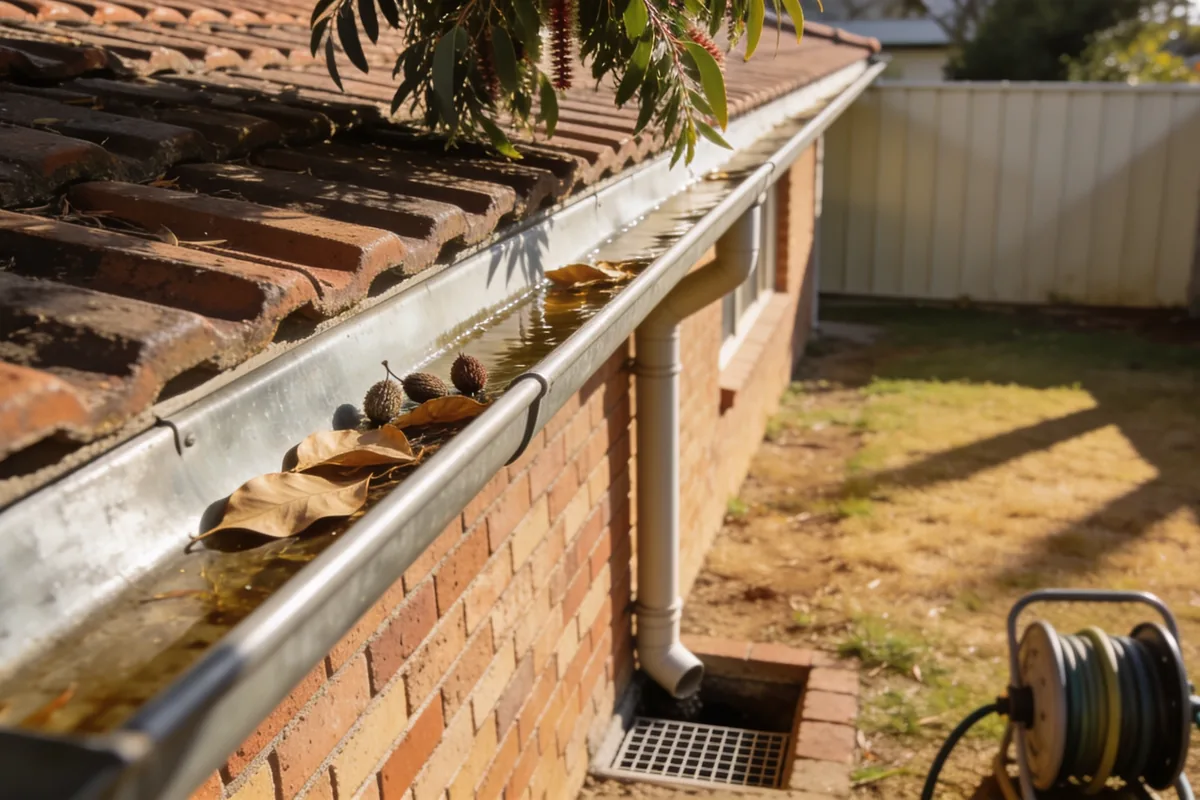
- A gutter guard is sold as the end of a job. It is really a change to it, and the question is whether that change is worth it on this roof.
- What lands on your roof, and what shape it is, decides most of it.
- A guard does not stop debris landing up there. It changes where the debris ends up and who deals with it.
- Before a guard helps, the water has to be able to leave: a gutter that does not fall to its outlet is a different problem.
- And yes, the gutters still need cleaning afterwards. Less often, and differently. Anyone who tells you otherwise is selling something.
If you have a quote for a gutter guard, or you are standing at the kerb looking at a gutter full of leaves, you are asking the right question in a crowded room. Search for the product and you will find a wall of them for sale, and underneath, a run of people asking whether any of them actually work. The answer starts with a smaller question. Work out what your roof sends into your gutters, and whether your gutters can already deal with it.
Is a gutter guard right for your roof?
Five questions. The answer at the end is the same one this article gives in prose, and it is not always "yes".
If this does not load: what lands on your roof, and what shape it is, decides most of it. Then ask whether your gutter falls to its outlet and where the water goes after that. If the gutter holds water, a guard is not the first thing to fix.
Answer all five questions and a plain answer will appear here.
General guidance only. Check the fall of your gutters, your outlets and your roof with somebody who works on roofs before you buy anything.
No products, brands, sizes or prices are named here. The answer is built from your answers alone.
What a guard is, and the four kinds
In plain terms, a guard is something placed between the gutter and whatever lands on the roof. Almost every product is one of four ideas.
The most common is a screen over the top of the gutter: a mesh or perforated sheet that lets water through and keeps debris out. Its weak point is built in, because you have added a surface to the roof and that surface can clog itself.
Then the curved or surface-tension cover: a solid profile with a rounded leading edge, relying on water to cling and curl in while leaves slide off the front. It works on flow, which means it depends on the flow behaving, and heavy rain on a steep roof is where flow gets interesting.
The third kind is an insert that sits inside the gutter, a foam or brush filler that lets water through and holds debris up top where it can dry.
And the fourth is not an add-on at all: a gutter profile shaped to shed debris by itself, relying on the roof to wash it clear.
Four answers to the same problem, and none of them is magic. Each one controls what reaches the channel, in its own way.
What a guard does not do
This is the honest half, and none of it makes guards useless. It describes a product with conditions, which is what a quote should tell you in the first place.
It does not stop debris landing on the roof. Whatever falls up there still has to come down somewhere, and if it does not make it into the gutter, it is sitting on your roof instead.
It does not remove the maintenance. It changes what gets cleaned, how often, and by whom. People who have lived with guards for a few years are nearly unanimous on this one: the thing that now needs clearing is often the guard.
It does not solve fine debris. Small leaves, needles and seed pods are the classic disappointment, because they either pass straight through a screen chosen for bigger leaves or lodge in it. Matching the guard to what your trees drop decides whether it works or becomes a second job.
It does not guarantee that the water goes in. A solid cover depends on water following the curve, and on a steep roof in a downpour, water can skip past the gutter entirely. People describe waterfalls against the wall, the opposite of the intended outcome.
And it does not fix a gutter that was already the problem. That one gets its own section below, because it is where the most money gets spent for the least return.
The three things that decide it
Three questions, and they do most of the work.
What lands on your roof, and what shape is it? Broad leaves off a deciduous tree behave nothing like fine needles or seed pods, and dry dust and grit off a garden are a third case again. It is the question people regret not being asked before they buy.
What does your roof and your gutter do, above and below? How much roof drains into the run you are covering, how steep it is, how long the gutter is, whether it is an ordinary gutter or a box gutter, and where the water goes once it is in. A guard on a gutter that does not fall to its outlet is a lid on a pond, and we will come back to that next.
And who cleans it now? The honest comparison was never guard against nothing. It is guard against the arrangement you already have. A household that pays somebody twice a year is making a decision about money. A household that has not been up a ladder in four years is making a decision about something else entirely.
Answer those three, and the useful guard, if there is one, has usually chosen itself.
What has to be true before it helps
This is where the money gets saved, and it is the part almost nobody publishes.
The gutter has to fall to the outlet. The Australian Government’s own rainwater guidance is to make sure all gutters fall towards their outlets and to use outlets that fit to the underside of the gutter, because water has to be able to leave. If water sits in the gutter after rain, you do not have a leaf problem. You have a drainage problem, and a guard will sit on top of it without touching it.
The water has to have somewhere to go. A downpipe taking more than it can handle, a rain head packed with debris, a pit that fills: every one of those sits downstream of the guard and none is fixed by it. It is the same story the site’s Signs your stormwater drains are blocked: don’t ignore these red flags tells from the other end.
The roof itself has to be part of the plan. Overhanging vegetation is named in that same guidance as something to deal with, and a guard is not an answer to a tree that stands over the roof, dropping into it all autumn.
And the water has to be wanted or sent away, because those are two different projects. If you capture rainwater, the guidance treats the whole thing as a system: the roof and gutters, the collection system including downpipes, leaf-shedding rain heads and first flush diverters, the tank, and the supply. A leaf screen belongs in that system as one component rather than as an accessory, and what the water is for changes how good it needs to be. The site’s Is storing rainwater a smart move? What you need to know covers that side of the picture. And if the water ends up at a tap, the guidance gives its own reasons to get advice about what it fell on first, naming lead flashing, asbestos sheeting and old paint.
The honest summary of all this: a guard is the third or fourth thing to fix, not the first. Fall, outlet, downstream flow, then the guard. In that order, it earns its place. Out of that order, it is an expensive lid.
The ongoing job, and what makes a guard fail
So, do you still have to clean the gutters? Yes. Less often, and differently.
What the maintenance becomes is this. You clear the top surface of the guard rather than the channel underneath, and the outlets and the rain head, because that is where whatever gets through ends up. And you do a full run after a big storm and at the end of autumn, because those are the two moments the roof delivers its load.
And these are the four ways a guard fails, from the people who have lived with one. The wrong type for the debris: fine material and a screen chosen for leaf shape. The wrong profile for the roof: a cover that cannot handle the flow on a steep run. Fixings and set-out that do not suit the gutter, so the guard lifts or holds water against the fascia. And one more: a guard fitted over a gutter that was already flat, blocked or rusted underneath.
If a guard has to be lifted off to clean what is under it, the job has not shrunk. It has grown a step.
When it is genuinely worth it
The other side of the ledger, because a guard is not a bad idea. It is a conditional one.
It is worth it where the debris suits the guard: broad leaves, an ordinary pitched roof, a gutter with a proper fall and a clean outlet. That is the combination the product was designed around, and in that combination it does what the brochure says.
It is worth it where the alternative is a ladder. A two-storey house, a steep roof, or a household where getting up there is not safe: for those homes the point of a guard is not removing the job, it is reducing how often somebody does something risky. That is a good reason to buy one, and it has nothing to do with cleanliness.
It is worth it where the water is being captured, since the guidance treats a screen as part of a working collection system rather than as an extra.
And it is worth paying for somebody who knows the roof rather than the cheapest kit on a shelf, which is the same case the site’s Roofing supplies: your complete guide to quality, value and long-lasting protection makes about materials generally. Some of it is also just where you buy: a Truganina roofing supplier that stocks rainwater goods and flashing is the kind of counter where the fall, the outlet and the screen can be worked through in one conversation.
On the other side, one honest note. On a single-storey house with a clean run, a safe way up, and not much landing on the roof, the money is better spent on a ladder and an afternoon. There is no shame in that answer.
The question that decides it
The whole thing, compressed, in the order the decision happens.
What lands on your roof, and what shape is it. Whether your gutter empties properly, with no water sitting in it after rain. Where the water goes after the gutter, and whether that path is clear. Who cleans it now, and how safely they can get up there. And whether the water is captured or sent away, because that changes what the screen is for.
No guard is going to end the job. The ones worth buying make the job smaller, on a roof that suits them, and once you know which roof you have, that is enough to make the call.
Sources consulted: Your Home rainwater guidance.

What the Aircraft Sees: Drone Surveying, and What It Still Cannot Tell You

The Drain That Keeps Blocking: What a Repeat Actually Tells You

The Run That Isn’t a Person: Sending Something Across a Country Town

The Science Behind Melbourne’s Unpredictable Climate: What’s Really Going On?

Plastic-Free Coffee Makers: Myth or Must-Have?

Zero Waste Toothpaste: What’s Worth the Switch and What to Look For
-
 Melbourne1 year ago
The Science Behind Melbourne’s Unpredictable Climate: What’s Really Going On?
-
Eco Friendly4 years ago
Plastic-Free Coffee Makers: Myth or Must-Have?
-
Eco Friendly4 years ago
Zero Waste Toothpaste: What’s Worth the Switch and What to Look For
-

 Automotive1 year ago
Wet Weather Tyres in Australia: What to Look For and When to Replace Them
-
 Eco Friendly4 years ago
Plastic Free Packaging: How to Keep Your Business Plastic Free
-
 Eco Friendly4 years ago
How Aussie Businesses Can Reduce Plastic Pollution
-

 Home & Garden1 year ago
Boost Productivity and Mood with a Deep Cleaned Space
-

 Food1 year ago
The 9 Best Foods and Drinks to Enjoy Before Bed for Restful Sleep