
Healthcare
What a Support Coordinator Is Actually For (and How to Change One)


- A support coordinator is the one person in a plan whose job is to make the rest of the plan work, and most people are handed one without being told what that means.
- The scheme describes the role in plain words: help to understand and use the plan, choose providers, connect with community and mainstream services, and build the participant’s own confidence.
- A support coordinator is not a plan manager. The scheme draws that line in a single sentence, and it is the line readers most often get wrong.
- You choose your support coordinator, and you can change one at any time. You do not have to wait for your plan to end.
- The reader asking this question is not asking for a favour, and they are not stuck.
If you have been given a support coordinator, or you are about to sign one up, there is a decent chance nobody has explained what the role is meant to deliver. You get a name, an agreement and a feeling that you are supposed to be grateful, and the questions you have are left somewhere behind the paperwork. So here is the plain version: what the scheme says the role is for, the three levels of it, how it differs from plan management, how to tell whether the arrangement is working, and what to do if it is not. The last part takes one sentence, and it is allowed at any time.
What the scheme says the role is
Start with the scheme’s own short version, because it is shorter than most people expect: a support coordinator helps you use your plan effectively.
That means four headline things. Understanding and using the supports in your plan. Choosing the right providers. Connecting with community and mainstream supports and services, not only the funded ones. And building your own confidence and skills to manage your supports, which is the part that tells you what the role is really for.
The longer version is worth setting out, because it is the closest thing a participant gets to a job description, and almost nobody has seen it in one piece. A coordinator is there to help you understand your budgets and what your funding can be used for, and to make the choice about how that funding is managed. They help with what can be claimed and when, and with knowing when a service agreement is needed. They find providers, and they keep your supports lined up with what your plan says. They help you reach community and mainstream services as well as funded ones, and they know when a registered provider is required and when an unregistered one can be used, which is a genuinely useful thing to have explained. They set up service agreements and help you understand what providers can charge. They check whether the supports you have are working, and they help you plan for when things go wrong. And they help you change providers when something is not working, which is the item on the list that matters most to the reader who came here unhappy.
One sentence from the scheme pulls all of that together: the coordinator gives you the right information so you can make your own decisions about your plan and your supports. Hold on to that, because it is the standard everything later in this article is measured against. A coordinator who decides on your behalf, or who will only talk about you to somebody else, is not doing the role as the scheme describes it.
Three levels, and which one you have
Support coordination comes in three levels, and the honest reading is that they describe different situations rather than better or worse versions of the same help.
The first level is about connection. It is the lightest version of the support, and it is there to help you understand your plan, get plugged in to community and mainstream supports, and build some confidence in using what you have.
The second level is what most people mean when they say support coordination. It is about building the confidence and skills to direct your own life: keeping relationships going, living more independently, being part of your community, and getting the hang of running your own supports.
The third level is specialist support coordination, and it exists for a more complex situation. Its work is keeping services consistent through something difficult, which is why it exists as its own level rather than as extra hours of the second one.
Two things worth knowing if you are checking which one you have. The level is written in your plan, so begin by reading it there, and if it is not clear, that is a question with a plain answer. And the level is a statement about complexity, not about how deserving you are. Participants can ask about it, and asking is a planning conversation rather than an accusation aimed at anybody. The level can also change as circumstances change, which is something to raise rather than quietly live with.
A coordinator is not a plan manager
The two roles sit so close together that people use the names interchangeably, so here is the distinction in the scheme’s own terms: a plan manager helps keep track of your funding, and a support coordinator helps with your supports.
The practical difference is one line each. A plan manager is about the money moving correctly: invoices, claims, budgets, the paperwork. A coordinator is about the services being right, and about what happens when they are not. They can work alongside each other, and plenty of plans have both, but they are not the same job and they are not interchangeable.
One more name to watch for. If you have been told you have a recovery coach, or support connection rather than support coordination, that is a different arrangement again, and worth asking about by name so everybody is talking about the same thing.
How long it lasts, and why that is the design
Support coordination funding is usually included in plans for a set amount of time, and the scheme gives the reason plainly: as you become more comfortable and confident using your plan, you are less likely to need a coordinator.
Read that twice if you need to, because it is the most reassuring fact in the whole subject. The role is designed to work itself out of a job. A shrinking amount of coordination funding over time is not a judgement about you, and it is not the scheme losing interest. It is the support doing what it is for.
Two consequences follow. The funding is meant to be used flexibly to meet the goals in your plan, so there is no prize for hoarding it and no failure in using it. And the goal of the whole arrangement is your own capability, which means a coordinator who never builds any is falling short on the part of the role that matters most. If you take one thing away from this section: the plan should leave you needing less help to run it, not more.
Is the one you have doing the job?
This is the section the search results do not have, and it is written from the participant’s side rather than a provider’s.
What it looks like when it is working. You know what is in your plan and why. Providers are being found and lined up rather than left to you. Somebody is checking whether your supports are actually working rather than assuming they are. There is a plan for when things break, and you know what it is. And over time, you are the one doing more of this yourself, because that was the point.
What it looks like when it is not. Questions you have already answered get asked again. Your coordinator talks about you to somebody else rather than to you, which is the pattern the role is most specifically designed to avoid. A service agreement arrives before there has been a real conversation about what you want. You ask what has actually been done this month and there is no answer. A support stops, and nobody explains why.
Now the fair note, because this article is not a licence to fire anybody. A good coordinator can still have a bad month, and a bad month is not a pattern. The relationship is a working one rather than a friendship, and the test is whether your plan is being implemented, not whether you enjoy the phone calls. One practical place to look: your service agreement says what was promised, and you are entitled to read it and ask questions about it. The site keeps its guide to the ultimate checklist: what to look for in an NDIS provider for choosing a provider from the outside. This section is deliberately about judging one from the inside, and the two make a pair.
How to change one
Open with the scheme’s own sentence, because it is the permission the reader came for: you choose your support coordinator, you can change your support coordinator at any time, and you do not have to wait for your current plan to end.

Then the order that works. Read your service agreement first, because that is where the answer about ending it lives. Decide what you want from the next coordinator before you start looking, so the search has a target rather than a hope. Ask people who use services, which is what the scheme itself recommends, rather than starting with advertising. Ask every candidate the same set of questions, including what they will do in the first month and how they will report back. Set up a request for service when you have chosen. And make the new service agreement before the old one ends, so there is no gap in your supports while the paperwork moves.
Two honest notes for the road. A handover between coordinators is a normal thing, and the outgoing one can be asked to do it properly, so the next person is not starting from a blank page. And a participant can complain about the arrangements without changing coordinators at all, which matters if what you want is the arrangement fixed rather than the person replaced. How you do that, and how long anything takes, are answers that live in your agreement and with the scheme, so ask there rather than rely on a blog. If you are working out what you want from the next one, and which support suits you more broadly, the site’s The essential guide to choosing the right support for your NDIS journey covers that wider question and leaves this article to the coordinator relationship.
The things worth asking before signing
The scheme sets out a short process for finding a coordinator, and a service agreement sits at the end of it. These are the questions to bring to that step.
What exactly will you do in my first month? How will you tell me what you have done? Who do I contact, and how quickly will I hear back? What happens if you are away? How do you work with my other providers? How will you help me need you less? And what does the agreement say about ending it?
That last one is the question people find hardest to ask, and it is the one worth asking most. A candidate who handles these questions comfortably is showing you something. A candidate who finds them difficult is answering one of them. The site’s own Top 5 questions to ask when choosing an NDIS domestic care provider is a good model of the habit in a different support, and the habit transfers. And one note in the other direction, because it is fair to say: a participant who arrives with a clear idea of what they want gets a better coordinator. Preparation is not a burden the scheme puts on you. It is the first step of the process, and it is yours.
What to ask before you sign the agreement
The short version, in the order that helps.
What is in my plan, and at which level. What will you do in the first month. Who do I ring, and how quickly will I hear back. How will I know what has been done. What does the agreement say about ending it, if it comes to that. And how will all of this help me do more of it myself.
Those questions are the whole relationship in miniature, and any coordinator worth having will recognise them. The questions are the ones a registered NDIS provider that delivers specialised support coordination and community participation expects to be asked, and they are the standard the scheme’s own words set. The scheme built the choice into the role on purpose. A participant who knows that is already asking better questions than the page of providers they started with.
Sources consulted: NDIS information on what a support coordinator is and on how to find one.









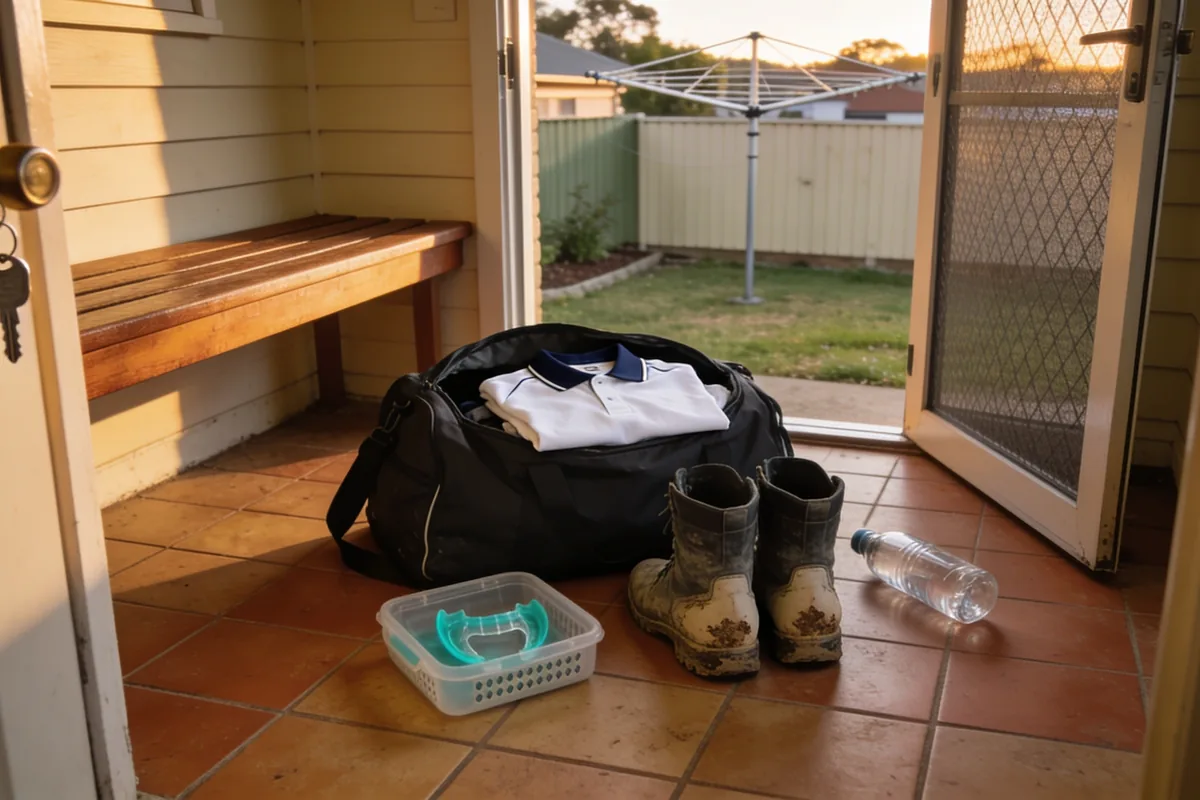
- A mouthguard is a small, inexpensive thing that sits between a tooth and a badly aimed elbow.
- There are three types, and the difference between them is mostly fit.
- The best one is not the most expensive one. It is the one that fits, does not restrict breathing, stays in, and lets the wearer talk.
- It is worn at training as well as on game day, and for more activities than most people think.
- And it is useless if it is not looked after, which takes about a minute.
The season is starting, the gear list has a mouthguard somewhere near the bottom, and nobody has told you which one to buy or whether it matters. It matters, but not in the way the shelf display suggests. This is a small decision with a short set of facts behind it, and once you know them, the choice becomes easy. Here is what a mouthguard is for, the three types, who needs one, and how to look after it so it keeps doing its job.
What it is actually for
Start with the plain version from the state health department’s own information. A mouthguard fits snugly over the teeth to help prevent injuries to the teeth and mouth.
What it does in a knock, in the same source’s terms: it cushions a strong blow to the face, it acts as a shock absorber that protects the teeth and the lower jaw from breaking, and it prevents the wearer accidentally biting their lips, tongue or cheeks. That is the whole mechanism. No mystery, and no magic.
The source’s own examples of what happens without one are short. A misdirected elbow in a basketball game. A fall off a skateboard. And the outcomes it names for those moments: chipped or broken teeth, nerve damage to a tooth, or tooth loss. Nothing there is dramatic for its own sake, and none of it is rare.
One honest note on the scale of it. Most knocks do nothing at all, which is exactly why people skip the mouthguard, and the ones that do something tend to be the expensive sort of problem. If a fear of the dentist’s chair is part of why this decision keeps sliding down the list, the site’s 5 Common Myths About Root Canal Treatment Debunked! is a friendlier read than most search results, and worth five minutes before the season starts.
The three types, and the test that actually matters
Three kinds, and the honest ranking is about fit rather than price.
Stock or ready-made guards, sold at sports stores and chemists. Cheap, pre-formed, and the health department’s own note is that they often cannot be made to fit the mouth properly. That is not a scandal, it is a description of a shelf product.
Boil-and-bite guards, softened in hot water and shaped by the wearer at home. These are a real improvement on stock when they are done patiently, and a soft, ill-fitting lump when they are not. The instructions are on the packet, and the patience is on you.
Custom guards, made by a dental practitioner from an impression of the wearer’s teeth. The source says this provides the best comfort and fit, and it is the version built around the specific mouth it will sit in, which is the appointment a Perth dental practice with clinics in Wanneroo and Mount Lawley that makes mouthguards books most often before a season starts.
Now the turn, and it is the reason this section exists: the cheap one is not automatically the worse choice, and the expensive one is not automatically the right one. The source’s own test is what decides it, and a reader can check every part of it in about ten seconds at the counter. The mouthguard should be fitted to the mouth, not restrict breathing, be stable, be comfortable, allow the wearer to talk, and not cause choking. A parent can check the last few by asking the child to say a sentence and take a breath. If it fails any of them, it is the wrong guard, whatever it cost. Cost is the last thing to look at, not the first.
Who needs one, and for what
Broader than most people expect, in the source’s own framing: anyone who plays a sport that carries a major risk of a knock to the face. And here is the part that gets missed: it should be worn while playing and while training, not only on game day. Training is where the most hours happen, which makes it the exposure nobody counts.
Then the activities on the source’s list that are not team sports at all. Rollerblading. Skateboarding. Mountain bike riding. Trampolining. Horse riding. If any of those fill a weekend in your household, the mouthguard conversation applies there too.
Two specifics for particular readers. Braces are not a complication here, they are a covered case: a mouthguard can be made to fit over braces, where it cushions between the braces and the cheek or the lips, which is a relief for the readers most likely to be told they cannot play. And for the adult who plays socially rather than competitively, the source’s advice does not draw a line between the two. A Saturday game is still a game, and the level of the match does not change what an elbow does.
Looking after it, in four steps
The section nobody writes, and it takes about a minute.
Before it goes in: rinse it with mouthwash or a mild antiseptic, then with water. After it comes out: wash it with mild soap and cold water, then dry it, and store it in a rigid box away from heat.
Then four consequences, which follow from the source rather than being printed on it. Heat is what ruins a mouthguard, so it does not live on a car dashboard, in a hot car, or in a dishwasher, and it is not re-boiled once it has been fitted. Do not share one, because it goes in a mouth. That one needs no explanation, and it gets none. Check it before each season for chewing, cracks, or a fit that has gone soft and loose. And if anything seems wrong with it, or with the mouth it sits in, ring the dental practice, which is the source’s own closing line.
One last thought to finish the section. A guard that lives loose at the bottom of a sports bag, uncleaned, is a guard that will not be worn, and a guard that is not worn protects nothing. The rigid box is not a fussy detail. It is the difference between gear and clutter.
When a child needs a new one
A growing mouth is the main reason, and the source states it plainly: as the mouth grows, a new mouthguard is needed. That gives a child’s guard a working life measured in seasons rather than years, which is worth knowing before you choose what to buy.
The other reasons, one line each. It has been chewed through or bitten flat. It has gone soft or loose after heat or a hot wash. It was bought before the braces went on, or before they came off. It has been lost, which is common and not a reason for a lecture. And the child has moved to a different sport, or a different level of contact, and the old guard no longer matches the job.
And the honest line for parents weighing it up: a guard that no longer fits is not a cheaper version of a guard that does. It is a piece of plastic in a bag, and the fit was the entire point. A new guard, fitted properly, is the smaller problem in every version of that story.
A mouthguard is not a night guard
A short section, because the search results on this topic mix two different devices together.
They do different jobs. A sports mouthguard is worn during activity to cushion an impact. A night guard is worn while sleeping, for a different reason entirely. They are made differently, they fit differently, and they are for different problems entirely. This article is about the sports one.
One thing worth saying clearly, though. If a reader is waking with a sore jaw, worn teeth or a headache, that is a conversation with a dentist about what is actually happening, not a reason to buy a sports guard from the chemist. The two should not be swapped, in either direction. That is as far as this piece goes on the subject, and it is deliberately far enough.
Before the season starts
Short and ordered, so a parent or a player can act on it this week.
Get the guard before the first training session, not before the first game, because training is where the source says it should be worn as well. Check the list at the counter: fitted, breathing, stable, comfortable, can talk. Do not buy the one the child will not wear, whichever type that turns out to be. Label it, and keep it in a rigid box, out of the heat. Look at it at the start of every season, and replace it when the mouth has grown or the guard has had enough.
And the closing thought, which is the whole case for the thing: a mouthguard is one of the few pieces of protective gear a player can lose and simply replace. The entire point of it is the five seconds it is asked to do its job.
Sources consulted: HealthyWA information on mouthguards.
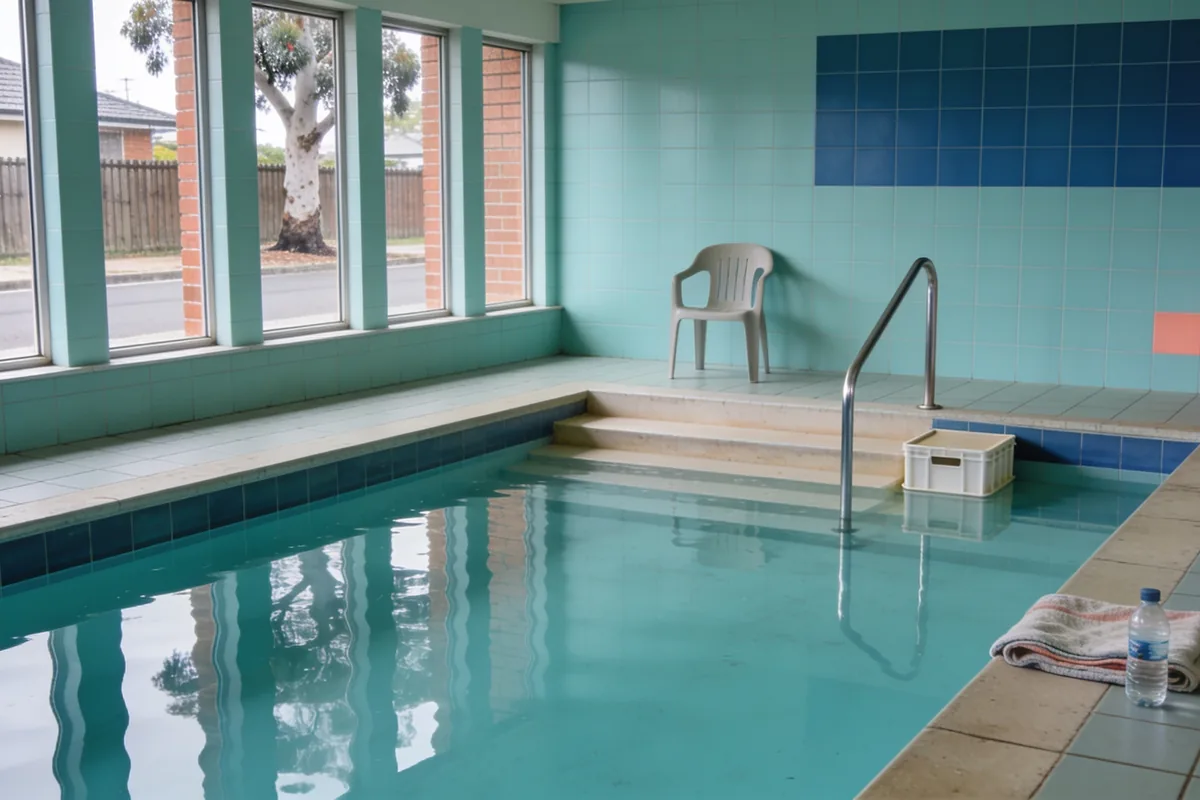
- Hydrotherapy is guided exercise in a warm, shallow pool, and the professional guiding it is usually a physiotherapist.
- The water does three things for a body that finds land difficult: it takes the weight off, it is warm, and it resists movement.
- It is not a spa and it is not a swim.
- The one thing to check before anything else is that your medical conditions are stable, and that check is a conversation rather than a form.
- What to bring, what happens on the day, and who pays.
Someone has suggested you try hydrotherapy, and you are not sure whether that means exercise, a spa, or something that might hurt. That is a very reasonable thing to wonder, and you are not alone in wondering it. The short answer is that it is guided exercise in warm water, run by a professional who knows what your body is doing in there. The longer answer is everything else: who it suits, what a session is like, what to bring, and how the paying works. Let us go through it in order.
Your first hydrotherapy session
0 of 12One list for what to bring and one for what to ask. Tick as you go, and take the second list with you.
Bring
Ask before you get in
General information only, not medical advice. Nothing here decides whether hydrotherapy is right for you. That is a conversation with your doctor or physiotherapist.
What hydrotherapy actually is
The physiotherapy profession’s own consumer guidance describes hydrotherapy as movement and exercise for rehabilitation, carried out in a warm pool. These pools are usually quite shallow, so you can stand up in them, and there is a rail to hold on to. If you have pictured something deep, or something you need to swim in, let that picture go now.
The work itself is built around an assessment. A physiotherapist uses their skills to find the main problems in your flexibility, strength, posture, balance, general movement and walking, and then puts together a targeted program in the water that addresses them. That is the treatment. The water is the room it happens in.
A word on who is in the pool with you. It is usually a physiotherapist, and in some practices an exercise physiologist working alongside one. The letters after their name are not the important part. What matters is that the person assesses you rather than instructs you, and adjusts what you do as you go.
One distinction is worth drawing plainly, because it is the reason this article exists. Warm water feels pleasant, and that is not the same thing as a treatment. A spa is something you sit in. Hydrotherapy is something you do, with a plan, under supervision, with your progress in mind. The warmth helps, and the exercise is the point. If you go looking for more reading afterwards, the professional term to search is aquatic physiotherapy, which is the same thing under its clinical name.
Who it helps, and who needs to check first
Two halves here, and the second one is the important one.
Who it tends to help, in the profession’s own framing: it can assist most conditions that result in pain, stiffness, weakness, deconditioning or low fitness, balance problems, or difficulty moving, such as walking or going up stairs. It is used across musculoskeletal, neurological and cardiopulmonary problems, and it suits people of all ages, from babies and children right through to older people. And here is the sentence that explains the whole appeal, again from the association’s guidance: exercise in water may be most beneficial for people who find exercising on land very difficult or very painful, because the water can make moving easier for painful or weak joints and muscles.
Now the check, stated plainly and early. To undertake aquatic physiotherapy, your medical conditions need to be stable. If you have high blood pressure, the guidance is to check with your GP that it is steady and controlled. If you have a recent surgical wound, it needs to be covered with a waterproof dressing before you get in the pool. And it is best to get clearance from your surgeon or doctor, or to talk to your physiotherapist about whether you are ready.
An article cannot tell you whether you are ready. A physiotherapist can, and asking is not a nuisance. It is the first clinical decision of the treatment, and it is the reason the check comes before the pool in this piece. It is also fine to bring questions about your own body to that conversation. A pool is general, and your situation is specific, which is exactly why the check is personal. Nothing here diagnoses anyone, and nothing here promises an outcome.
What a first session is actually like
This is the part nobody explains, so here it is in order, from the doorway to the drive home.
Before the water, expect a conversation on land. The practitioner will ask about your conditions, your medications, any restrictions a professional has put around your activity, and what hurts. And they will ask the question that matters most: what do you want to get back to doing? The stairs at home, the garden, the shopping, a grandchild’s birthday. That answer shapes the program, so it is worth thinking about on the way there.
Getting in is gentler than you might fear. Pools used for this work are usually shallow with a rail, and most have steps, a ramp or a hoist. Using any of them is normal, and nobody expects you to lower yourself in unaided. If you are unsure, say so, and someone will show you. If the pool has a hoist, asking for it is a routine request rather than an event.
In the water, the exercise is guided and graded. It starts gently and becomes harder as you can manage more, which is the profession’s own description of how the early stages work. Sessions may be one to one or in a small group, and it is worth asking which yours will be before you arrive, because the two feel different. And the thing nobody says out loud: you can stop, sit on the step, or get out at any point. Saying “I need a break” is part of the session rather than a failure of it.
Afterwards, some people are tired, and some are sore in the ordinary way that follows new movement. A warm shower and a quiet rest are the usual advice. Some people clear the rest of the day around a first visit, and it is not a bad instinct. If you would like to know who else may be around your care, the site’s What Does a Physio Therapy Assistant Do? A Complete Guide explains the roles, and this article is staying with the pool.
Who pays, in plain language
The question everyone asks second, after “what is it”.
Medicare does not cover these sessions for routine visits. There is a pathway where a GP can arrange a care plan that subsidises a limited number of sessions with an eligible allied health professional, and the details change over time, so it is worth confirming the current position with Services Australia rather than trusting a remembered version of it.
NDIS funding may cover hydrotherapy where the support is written into your plan and meets the scheme’s criteria. It is not automatic, and no article can tell you that you are eligible. The scheme’s rules also change from time to time, so the current wording is the one to check. If the funding will come through a plan, the site’s The Essential Guide to Choosing the Right Support for Your NDIS Journey is the place to start on the wider question.
Aged care funding is its own pathway with its own process, and a provider will know whether it applies to your situation. Workers compensation and CTP schemes cover treatment for accepted claims, arranged through the insurer or the scheme once the claim is accepted. Private health insurance may pay a rebate, depending on your policy and whether the fund recognises the provider, which is a quick check before you book.
Under all of it sits one practical instruction, and it saves a lot of awkwardness: ask the clinic which funding pathways it works with before you book. The same appointment can land very differently depending on the answer, and the person on the phone is used to the question.
Before you get in: the practical bits nobody mentions
Short, warm and specific, because this is the list that makes a first session easier.
What to bring: a towel, water, and any dressing, brace or support you normally use. What to wear: bathers, and a shirt or rash vest is fine if you would rather be covered. That is genuinely the whole answer.
Anything the clinic asks for in advance: a clearance letter if one was requested, a list of your medications, your GP’s care plan if there is one, and anything that tells the practitioner about your history. Write the medication list down rather than reciting it from memory. Nobody remembers it all, and the practitioner would rather read it than test you.
And one line on company. If you would like someone with you, ask. Most pools have somewhere for a support person to sit, and needing one is not disqualifying. Bringing someone is a normal part of a first visit, not a special arrangement.
When it is not the right call
This section exists so the rest of the article can be trusted.
If the medical picture is not stable yet, the water waits. That is the profession’s own advice, and it is why the check comes first.
If you are not comfortable in water at all, that is a real reason to choose a land-based program instead. The same assessment and the same graded exercise happen in a gym room without any pool, and the site’s How Exercise Physiology Helps People Recover Faster from Injuries describes the land-based version properly. There is no prize for choosing the pool.
If you are being asked to pay for a large package up front, before any assessment, slow down rather than walk away. A first session should be an assessment, and you should know what it costs before you commit to anything. The same instinct applies to anyone who promises an outcome before they have met you.
And if the pool is not accessible to you, because of travel, parking, a long walk from the car park or hours that do not work, say so. Mobile therapy exists as a different route to the same problem, and some practices deliver it. A treatment you cannot get to is not a treatment, and asking about the alternatives is a reasonable question rather than an admission.
What to ask before your first session
Five questions, and then you are ready.
Will the practitioner have seen my kind of situation before, and what would a normal program for me look like? How do I get in and out of the pool? Will I be in the water with the practitioner alone, or in a group? What will this cost me, and who is funding it? And what should I do if something gets sore afterwards?
Those five answers turn a nervous first visit into an ordinary appointment, and the person meeting you at the pool expects to answer them. That is the standard a Sydney practice that offers hydrotherapy alongside exercise physiology and physiotherapy works to, every week. Walking in with five questions is a better start than walking in with none, and asking them is how the treatment starts.
Sources consulted: Australian Physiotherapy Association hydrotherapy information; Services Australia chronic disease management guidance; NDIS information on funded supports.

- Short-term accommodation is funding for a break, and the break is for the carer as much as for the participant.
- It is usually funded for up to 28 days a year, and those days can be used in one block or spread across the plan.
- It pays for the supports of daily life and standard accommodation. It does not pay for a holiday, and the list of what it excludes is specific.
- The eligibility shape is narrower than people expect, and knowing it early saves a hard conversation.
Short-term accommodation has a fair claim to being the most misunderstood support in the scheme, and it is not hard to see why. The name sounds like a holiday booking. The funding looks, from the outside, like money for a trip. And the people who most need it are usually too tired to spend an evening reading scheme pages. So here is the plain version: what this support is for, what it covers, what it never covers, and how to use it well. If you are the person holding a household together, this one is worth the twenty minutes.
Who it is for, in the scheme’s own terms
Start here, because this is the part that saves the most wasted effort.
The scheme describes short-term accommodation as a support that gives a participant time apart from their usual care arrangements, such as family, friends or a carer. The purpose is stated just as plainly: it supports the participant while the people who usually help them take a short break from their caring responsibilities, so they can keep caring afterwards.
That single sentence tells you what the support is actually for. It is not a reward and it is not a treat. It is maintenance for a caring arrangement, funded because carers who never get a break stop being able to care. If you have been feeling guilty about asking, read that sentence again, because the scheme built this support precisely for you.
Then the eligibility shape, which is narrower than most people expect. A participant may be able to get short-term accommodation if they live with their primary informal supports, which means family, friends or a carer, or if they get daily drop-in support, and they get disability-related support from those primary informal supports for more than six hours a day.
Notice what that describes: a household with a caring arrangement in it. It is not a support for anyone who would like a break. A participant who lives alone with paid support is not the shape this support is designed around, and finding that out from an article is better than finding it out from a refusal. Whether any individual can get it is the scheme’s decision and not this article’s, so treat the shape as a guide to the conversation, not a verdict.
One more note about that shape, because it catches people out: the assessment is built around the household’s actual arrangements, not around a diagnosis or a label. The question being answered is who is carrying the caring load, and for how many hours a day. That is the thing to describe honestly, in plain words, when the conversation happens.
One clarification while we are here, because the names are easy to mix up. Short-term accommodation and respite are the same support under two names. The scheme’s current wording leans on short-term accommodation, most people search for respite, and both are correct. It is also a different support from medium-term accommodation, which exists for a different purpose, and the site’s The role of medium term accommodation in hospital discharge planning covers that one properly.
The 28 days, and what flexible actually means
Now the numbers, and this is where people’s ears prick up, because almost nobody knows them.
Short-term accommodation is usually funded for up to 28 days per year. And within that, the funding is flexible. The scheme’s own example is a block of up to 14 days at a time, or one weekend per month. It is your plan and your household’s choice how to spread the days, within the rules the scheme sets.
That flexibility is the answer to a question a lot of people carry around quietly: can I use this differently to how someone else uses it? Largely, yes, with one piece of discipline attached. Spend it in line with your plan so it lasts the whole length of the plan. A household that burns the whole year’s days in the first two months is a household with nothing left in the last quarter, when a break might matter most. It is worth writing the days into the household calendar for that reason, because they are easy to spend and hard to win back.
There is one more wrinkle the scheme names, and it cuts the other way. People can choose to use the funding for more support than they would normally need, and if they do, they may use it all before the plan ends. That is a choice, not a mistake. The point is to make it knowingly.
So the honest summary of the flexibility question: it is flexible within the rules, the scheme describes it as flexible, and a household that wants to use it a certain way should ask rather than assume, in either direction.
What it can be used for
This list is broader than people expect, which is another reason the “it is not a holiday” framing lands as a surprise.
It covers supports with everyday activities, things like showering, cooking and toileting. It covers standard accommodation, and the scheme’s own examples are a hotel, motel, short stay rental, cabin, cottage, hostel or respite accommodation. And it covers support to stay in your own home, or a homestay arrangement with a support worker, where the participant usually needs overnight support.
There is a choice built into all this. The participant can use their funding in their own home, in a shared setting, or in an individual setting. That matters, because it means this is not a building you have to be allocated or a place you have to wait for. It is a budget that pays for a break, in a setting you have some genuine say over. For a participant who usually needs overnight support, the option of staying at home or in a homestay with a support worker is the one people forget, and for some households it is exactly right.
The funding is based on the level of support the participant usually needs, so they can keep doing the things they normally do. That detail will come back later, because it is the test for whether a break is a good one.
What it never covers, and this is where people get hurt
The scheme keeps a list of what its funding cannot be used for, and this support’s list exists precisely because these are the first things everyone tries. It is better to meet it here than in a rejected invoice.
No cruises. No holiday packages. No holiday accommodation, and no airfares. No passports, no visas, and no travel or vehicle insurance. No accommodation or travel expenses for family members or support workers who are providing support on holiday. No theme parks, music, theatre, cinema, sporting events or conferences. And no food or meals.
Now the practical consequences, said plainly, because some families read this after they have already started planning a holiday.
The accommodation this funding will pay for is standard accommodation, not a holiday booking. A family member coming along is not a cost this funding carries. And meals are the household’s cost, not the plan’s. None of that is the scheme being mean. It is the line between a support that keeps a caring arrangement going and a holiday, which is funded out of a household’s own pocket, like any other holiday.
And the constructive version: if the trip you are imagining is genuinely a holiday, with everyone together and the theme parks on the itinerary, that is a lovely plan. It is simply a different budget and a different conversation. It is not dishonest to have it. It is just not this support.
Where it happens, and the younger-participant rule
Two shorter points that matter to particular households.
Where it happens: the funding should generally be used in the participant’s home state or territory, and the scheme notes it may be able to fund it outside that where the participant lives in a remote area. The word “generally” is doing real work there, so if you are contemplating anything cross-border, ask before you book anything, not after.
And for families of younger participants: the scheme may fund short-term accommodation for participants younger than 18 in some situations. The examples it gives are where disability-related support needs are more than typical for their age, or where it will help the family keep caring, including giving them a break to look after their own wellbeing or health.
The scheme also states, in its own words, that this support does not replace normal parenting responsibilities, and its examples are helping a child to go to the toilet, settling a child to sleep, or babysitting. That sentence can land hard for a parent who is already exhausted and wondering whether they are doing enough. Read it as what it is: a funding boundary, not a comment on your parenting. Every parent reading scheme documents at midnight is doing more than they give themselves credit for.
If the plan does not have it yet
Not every plan includes short-term accommodation, and the useful thing to know is that this is not necessarily permanent.
If your plan does not have the support you need, or your situation has changed, the scheme’s own route is to ask for a change to your plan. That is a real process, and it is worth doing properly rather than hopefully.
Two notes on doing it well. The conversation to have is about the caring arrangement and its sustainability, not about a desire for a holiday, because the first is the shape the scheme funds and the second is not. And the evidence that counts is usually about the household’s capacity: who is doing the caring, how many hours a day, and what happens when that load never pauses.
This is also a point where a provider can be useful without overstepping. The site’s The essential guide to choosing the right support for your NDIS journey walks through how to work out which support is the right one in the first place, and this article’s job is done once you know whether this is it.
How to tell a good short break from a bad one
If you are about to choose somewhere, this is the section to bring with you.
Ask what a normal day looks like, hour by hour, rather than what activities are on offer. Ask who else will be staying there, because the scheme’s design means a mix of support needs in one setting, and a participant who is the only person with low support needs among high-needs residents is in the wrong setting. The scheme’s own page says the funding should be based on the level of support the participant usually needs, and it is fair to hold a setting to that: a place where the participant gets less support than usual is not a break, it is a downgrade.
Ask what happens if the participant changes their mind, and whether a booking can be moved. Ask what the provider does if the participant becomes unwell while they are there. And ask who is accountable if the stay does not deliver what was booked.
Those five answers are the whole test, and the questions are the same ones worth asking before hiring an SIL provider, which the site takes apart in What to ask before hiring an SIL provider. A provider that welcomes these questions is telling you something, and so is one that does not. It is the standard a registered NDIS provider that delivers short-term accommodation and supported independent living across western Sydney builds its own arrangements around, and it is the standard any household should be able to expect, wherever they live.
What a good short break looks like
Here is the whole thing, from the household’s side.
The participant spent their days doing the things they normally do, in a place that suited them, with the level of support they normally get. The carer actually stopped. Nobody spent the last quarter of the plan with nothing left, and nothing was paid for that the funding does not cover. Everyone came back to the arrangement with a little more in the tank.
That is the entire point of this support. The scheme funds it because a caring arrangement that never pauses does not last. Thinking of the break as maintenance rather than as a treat is not a cold way to look at it. It is the most useful way, and it is the way the scheme itself describes it. And if a first attempt is not perfect, treat that as information rather than failure, because the second one usually goes better.
Take the twenty minutes, check the plan for the funding, and if it is there, use it. That is what it is for.
Sources consulted: NDIS information on short-term accommodation and on changing your plan; NDIS pricing arrangements.

Where Your Water Is Going: Finding a Leak Before You Call Anyone

What a Support Coordinator Is Actually For (and How to Change One)

A Taxi Fare Is Not One Number: How Yours Is Actually Worked Out

The Science Behind Melbourne’s Unpredictable Climate: What’s Really Going On?

Plastic-Free Coffee Makers: Myth or Must-Have?

Zero Waste Toothpaste: What’s Worth the Switch and What to Look For
-
 Melbourne1 year ago
The Science Behind Melbourne’s Unpredictable Climate: What’s Really Going On?
-
Eco Friendly4 years ago
Plastic-Free Coffee Makers: Myth or Must-Have?
-
Eco Friendly4 years ago
Zero Waste Toothpaste: What’s Worth the Switch and What to Look For
-

 Automotive1 year ago
Wet Weather Tyres in Australia: What to Look For and When to Replace Them
-
 Eco Friendly4 years ago
Plastic Free Packaging: How to Keep Your Business Plastic Free
-
 Eco Friendly4 years ago
How Aussie Businesses Can Reduce Plastic Pollution
-

 Home & Garden1 year ago
Boost Productivity and Mood with a Deep Cleaned Space
-

 Financial1 year ago
How to Secure the Best Car Finance Deal: Tips for Negotiating and Saving Money