
Healthcare
3 Meditation Techniques for a Better Night’s Sleep


If you have spent another night watching the ceiling while your thoughts run in circles, you are in good company. The Sleep Health Foundation reports that around 33 per cent of Australians deal with poor sleep, and plenty of us fall short of the seven to nine hours we need each night.
Meditation will not fix every bad night, but it is a gentle way to tell your body it is safe to slow down. The three techniques below are simple enough to try tonight, in bed or just before it. You do not need a cushion, an app or any experience. You need a quiet few minutes and a little patience with yourself.
Let go of tension with progressive muscle relaxation
Stress has a habit of hiding in the body. Your shoulders stay hunched, your jaw stays tight and you may not notice until you try to sleep. Progressive muscle relaxation works by tensing and releasing each muscle group on purpose, so your body learns the difference between holding on and letting go.
How to do it:
- Settle somewhere comfortable and dim the lights.
- Start at your feet. Breathe in and tense the muscles in your feet for five to ten seconds.
- Breathe out and let them go completely. Notice how the release feels.
- Work slowly upwards through your calves, thighs, stomach, chest, hands, arms, shoulders, neck and face.
- When you reach the top, take a few slow breaths and let your whole body sink into the relaxation.
Allow about ten to fifteen minutes for this before you expect to feel drowsy. Some people fall asleep partway through, which is really the point.
Use guided imagery to quiet a busy mind
If your mind is the reason you are still awake, guided imagery gives it somewhere peaceful to go. Instead of trying to stop your thoughts, you simply replace them with a scene you can almost feel.
How to do it:
- Close your eyes and choose a place that feels calm to you. A quiet beach, a shady patch of bushland, a room you loved as a child. It does not need to be impressive.
- Fill in the details with your senses. What can you hear, what is the temperature, what can you smell?
- Breathe slowly as you stay with the scene. A long exhale is what signals the body to settle.
- Keep returning to the image whenever your mind wanders, and stay with it for ten to fifteen minutes.
Some people find it easier to follow a recorded voice than to build a scene themselves. There are plenty of free sleep meditations and calm music tracks that guide you through the same thing, and they work just as well as doing it alone.
Try mindfulness when your thoughts keep circling
Mindfulness is the simplest of the three on paper: you pay attention to the present moment instead of the replay in your head. It is harder than it sounds, but it gets easier with practice.
How to do it:
- Sit comfortably or lie down in a quiet spot.
- Close your eyes and rest your attention on your breath. Notice the rise and fall of your chest or belly.
- When a thought arrives, and it will, acknowledge it and let it move on like a cloud. You are not trying to push it away.
- Gently bring your attention back to your breath. This is not a failure, it is the practice.
- Stay with it for ten to fifteen minutes before bed.
Apps such as Headspace and Calm offer short bedtime sessions if you would like a voice to guide you. They are tools, not requirements, and the technique works just as well on its own.
Pair the techniques with good sleep hygiene
Meditation works best when the rest of your evening is on its side. A few simple habits make it far easier to drop off:
- Keep a regular bedtime and wake time, even on weekends. Your body’s clock likes predictability.
- Make the bedroom cool, dark and quiet. Blackout curtains, earplugs or a white noise machine can all help.
- Give yourself an hour away from screens before bed. The blue light keeps your brain in daytime mode.
- Go easy on caffeine, nicotine and heavy meals close to bedtime.
Think of meditation and sleep hygiene as a team. One calms the mind, the other sets the conditions, and together they do more than either can alone.
Questions about meditating for sleep
How often should you practise? Most of the benefit comes from consistency, so a few minutes most nights beats one long session every now and then.
When will you notice a difference? Some people sleep better after the first few tries. For others it takes a couple of weeks of regular practice before the pattern settles. Either way, the technique is doing no harm in the meantime.
Can these techniques help with other sleep problems? They are especially useful when stress or a busy mind is keeping you up, and many people use them to wind down when anxiety or discomfort is interfering with rest.
Is there a best time of day? Meditation works at any time, but practising close to bed is most useful because it tells your body the day is over. And you do not need anything special. A quiet space and a comfortable position are enough, though an app or some calm music can help you stay with it in the early weeks.
A softer way into sleep
You do not need to master all three techniques tonight. Pick the one that sounds least like a chore and give it a fair go for a couple of weeks. Some nights it will still be hard, and that is normal. What matters is that you have given your body a reason to slow down, night after night, until it starts to trust the pattern.
Sources: Sleep Health Foundation, sleep health statistics.


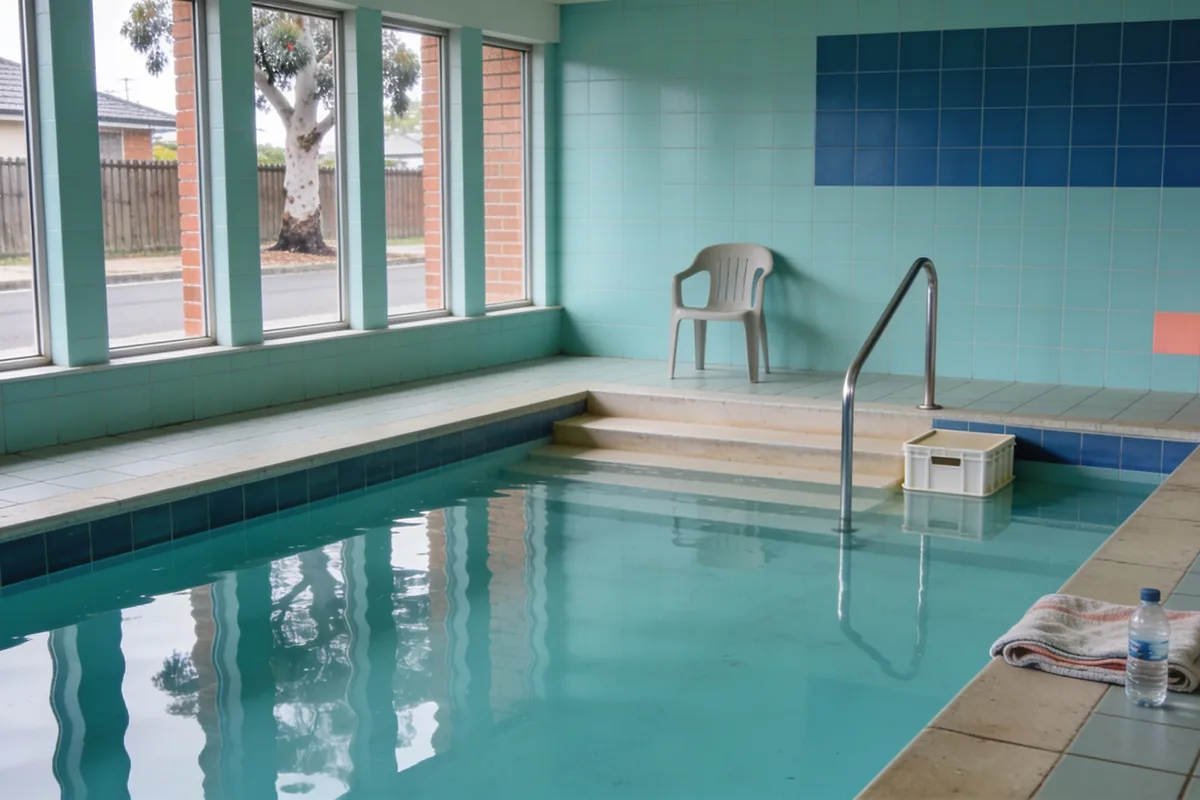
- Hydrotherapy is guided exercise in a warm, shallow pool, and the professional guiding it is usually a physiotherapist.
- The water does three things for a body that finds land difficult: it takes the weight off, it is warm, and it resists movement.
- It is not a spa and it is not a swim.
- The one thing to check before anything else is that your medical conditions are stable, and that check is a conversation rather than a form.
- What to bring, what happens on the day, and who pays.
Someone has suggested you try hydrotherapy, and you are not sure whether that means exercise, a spa, or something that might hurt. That is a very reasonable thing to wonder, and you are not alone in wondering it. The short answer is that it is guided exercise in warm water, run by a professional who knows what your body is doing in there. The longer answer is everything else: who it suits, what a session is like, what to bring, and how the paying works. Let us go through it in order.
Your first hydrotherapy session
0 of 12One list for what to bring and one for what to ask. Tick as you go, and take the second list with you.
Bring
Ask before you get in
General information only, not medical advice. Nothing here decides whether hydrotherapy is right for you. That is a conversation with your doctor or physiotherapist.
What hydrotherapy actually is
The physiotherapy profession’s own consumer guidance describes hydrotherapy as movement and exercise for rehabilitation, carried out in a warm pool. These pools are usually quite shallow, so you can stand up in them, and there is a rail to hold on to. If you have pictured something deep, or something you need to swim in, let that picture go now.
The work itself is built around an assessment. A physiotherapist uses their skills to find the main problems in your flexibility, strength, posture, balance, general movement and walking, and then puts together a targeted program in the water that addresses them. That is the treatment. The water is the room it happens in.
A word on who is in the pool with you. It is usually a physiotherapist, and in some practices an exercise physiologist working alongside one. The letters after their name are not the important part. What matters is that the person assesses you rather than instructs you, and adjusts what you do as you go.
One distinction is worth drawing plainly, because it is the reason this article exists. Warm water feels pleasant, and that is not the same thing as a treatment. A spa is something you sit in. Hydrotherapy is something you do, with a plan, under supervision, with your progress in mind. The warmth helps, and the exercise is the point. If you go looking for more reading afterwards, the professional term to search is aquatic physiotherapy, which is the same thing under its clinical name.
Who it helps, and who needs to check first
Two halves here, and the second one is the important one.
Who it tends to help, in the profession’s own framing: it can assist most conditions that result in pain, stiffness, weakness, deconditioning or low fitness, balance problems, or difficulty moving, such as walking or going up stairs. It is used across musculoskeletal, neurological and cardiopulmonary problems, and it suits people of all ages, from babies and children right through to older people. And here is the sentence that explains the whole appeal, again from the association’s guidance: exercise in water may be most beneficial for people who find exercising on land very difficult or very painful, because the water can make moving easier for painful or weak joints and muscles.
Now the check, stated plainly and early. To undertake aquatic physiotherapy, your medical conditions need to be stable. If you have high blood pressure, the guidance is to check with your GP that it is steady and controlled. If you have a recent surgical wound, it needs to be covered with a waterproof dressing before you get in the pool. And it is best to get clearance from your surgeon or doctor, or to talk to your physiotherapist about whether you are ready.
An article cannot tell you whether you are ready. A physiotherapist can, and asking is not a nuisance. It is the first clinical decision of the treatment, and it is the reason the check comes before the pool in this piece. It is also fine to bring questions about your own body to that conversation. A pool is general, and your situation is specific, which is exactly why the check is personal. Nothing here diagnoses anyone, and nothing here promises an outcome.
What a first session is actually like
This is the part nobody explains, so here it is in order, from the doorway to the drive home.
Before the water, expect a conversation on land. The practitioner will ask about your conditions, your medications, any restrictions a professional has put around your activity, and what hurts. And they will ask the question that matters most: what do you want to get back to doing? The stairs at home, the garden, the shopping, a grandchild’s birthday. That answer shapes the program, so it is worth thinking about on the way there.
Getting in is gentler than you might fear. Pools used for this work are usually shallow with a rail, and most have steps, a ramp or a hoist. Using any of them is normal, and nobody expects you to lower yourself in unaided. If you are unsure, say so, and someone will show you. If the pool has a hoist, asking for it is a routine request rather than an event.
In the water, the exercise is guided and graded. It starts gently and becomes harder as you can manage more, which is the profession’s own description of how the early stages work. Sessions may be one to one or in a small group, and it is worth asking which yours will be before you arrive, because the two feel different. And the thing nobody says out loud: you can stop, sit on the step, or get out at any point. Saying “I need a break” is part of the session rather than a failure of it.
Afterwards, some people are tired, and some are sore in the ordinary way that follows new movement. A warm shower and a quiet rest are the usual advice. Some people clear the rest of the day around a first visit, and it is not a bad instinct. If you would like to know who else may be around your care, the site’s What Does a Physio Therapy Assistant Do? A Complete Guide explains the roles, and this article is staying with the pool.
Who pays, in plain language
The question everyone asks second, after “what is it”.
Medicare does not cover these sessions for routine visits. There is a pathway where a GP can arrange a care plan that subsidises a limited number of sessions with an eligible allied health professional, and the details change over time, so it is worth confirming the current position with Services Australia rather than trusting a remembered version of it.
NDIS funding may cover hydrotherapy where the support is written into your plan and meets the scheme’s criteria. It is not automatic, and no article can tell you that you are eligible. The scheme’s rules also change from time to time, so the current wording is the one to check. If the funding will come through a plan, the site’s The Essential Guide to Choosing the Right Support for Your NDIS Journey is the place to start on the wider question.
Aged care funding is its own pathway with its own process, and a provider will know whether it applies to your situation. Workers compensation and CTP schemes cover treatment for accepted claims, arranged through the insurer or the scheme once the claim is accepted. Private health insurance may pay a rebate, depending on your policy and whether the fund recognises the provider, which is a quick check before you book.
Under all of it sits one practical instruction, and it saves a lot of awkwardness: ask the clinic which funding pathways it works with before you book. The same appointment can land very differently depending on the answer, and the person on the phone is used to the question.
Before you get in: the practical bits nobody mentions
Short, warm and specific, because this is the list that makes a first session easier.
What to bring: a towel, water, and any dressing, brace or support you normally use. What to wear: bathers, and a shirt or rash vest is fine if you would rather be covered. That is genuinely the whole answer.
Anything the clinic asks for in advance: a clearance letter if one was requested, a list of your medications, your GP’s care plan if there is one, and anything that tells the practitioner about your history. Write the medication list down rather than reciting it from memory. Nobody remembers it all, and the practitioner would rather read it than test you.
And one line on company. If you would like someone with you, ask. Most pools have somewhere for a support person to sit, and needing one is not disqualifying. Bringing someone is a normal part of a first visit, not a special arrangement.
When it is not the right call
This section exists so the rest of the article can be trusted.
If the medical picture is not stable yet, the water waits. That is the profession’s own advice, and it is why the check comes first.
If you are not comfortable in water at all, that is a real reason to choose a land-based program instead. The same assessment and the same graded exercise happen in a gym room without any pool, and the site’s How Exercise Physiology Helps People Recover Faster from Injuries describes the land-based version properly. There is no prize for choosing the pool.
If you are being asked to pay for a large package up front, before any assessment, slow down rather than walk away. A first session should be an assessment, and you should know what it costs before you commit to anything. The same instinct applies to anyone who promises an outcome before they have met you.
And if the pool is not accessible to you, because of travel, parking, a long walk from the car park or hours that do not work, say so. Mobile therapy exists as a different route to the same problem, and some practices deliver it. A treatment you cannot get to is not a treatment, and asking about the alternatives is a reasonable question rather than an admission.
What to ask before your first session
Five questions, and then you are ready.
Will the practitioner have seen my kind of situation before, and what would a normal program for me look like? How do I get in and out of the pool? Will I be in the water with the practitioner alone, or in a group? What will this cost me, and who is funding it? And what should I do if something gets sore afterwards?
Those five answers turn a nervous first visit into an ordinary appointment, and the person meeting you at the pool expects to answer them. That is the standard a Sydney practice that offers hydrotherapy alongside exercise physiology and physiotherapy works to, every week. Walking in with five questions is a better start than walking in with none, and asking them is how the treatment starts.
Sources consulted: Australian Physiotherapy Association hydrotherapy information; Services Australia chronic disease management guidance; NDIS information on funded supports.

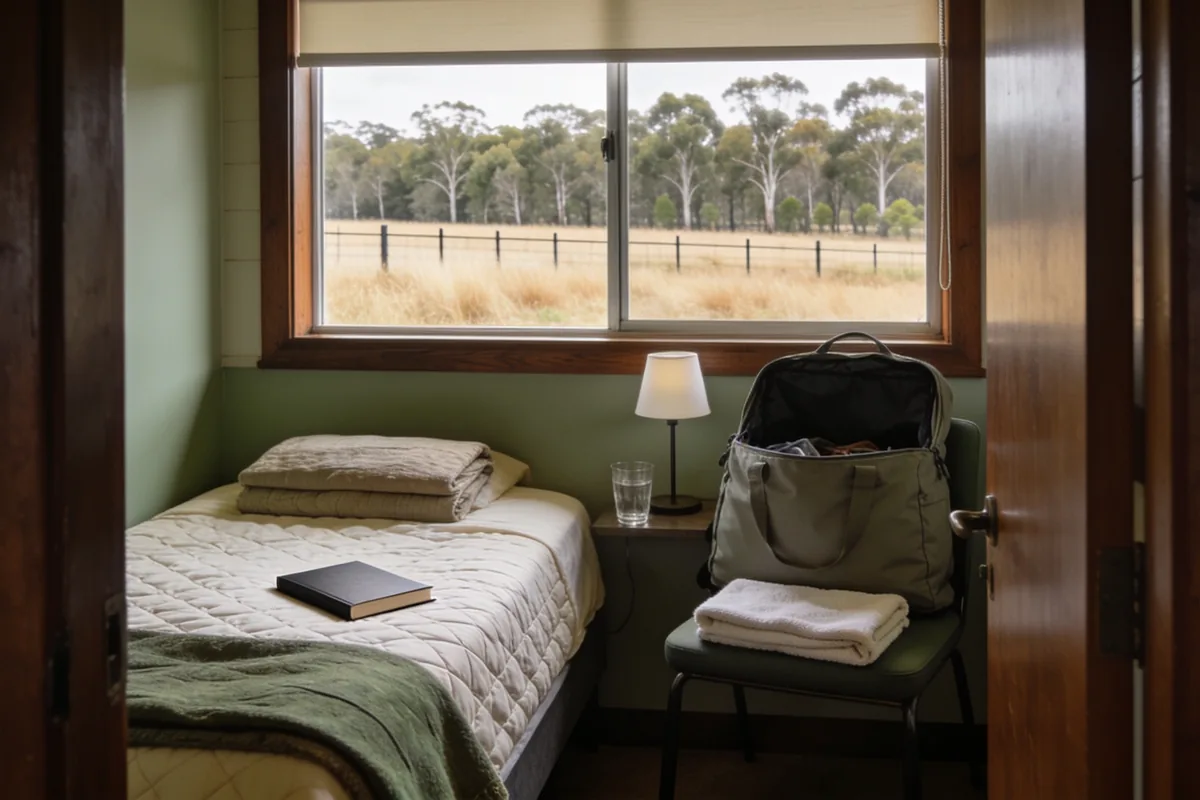
- Short-term accommodation is funding for a break, and the break is for the carer as much as for the participant.
- It is usually funded for up to 28 days a year, and those days can be used in one block or spread across the plan.
- It pays for the supports of daily life and standard accommodation. It does not pay for a holiday, and the list of what it excludes is specific.
- The eligibility shape is narrower than people expect, and knowing it early saves a hard conversation.
Short-term accommodation has a fair claim to being the most misunderstood support in the scheme, and it is not hard to see why. The name sounds like a holiday booking. The funding looks, from the outside, like money for a trip. And the people who most need it are usually too tired to spend an evening reading scheme pages. So here is the plain version: what this support is for, what it covers, what it never covers, and how to use it well. If you are the person holding a household together, this one is worth the twenty minutes.
Who it is for, in the scheme’s own terms
Start here, because this is the part that saves the most wasted effort.
The scheme describes short-term accommodation as a support that gives a participant time apart from their usual care arrangements, such as family, friends or a carer. The purpose is stated just as plainly: it supports the participant while the people who usually help them take a short break from their caring responsibilities, so they can keep caring afterwards.
That single sentence tells you what the support is actually for. It is not a reward and it is not a treat. It is maintenance for a caring arrangement, funded because carers who never get a break stop being able to care. If you have been feeling guilty about asking, read that sentence again, because the scheme built this support precisely for you.
Then the eligibility shape, which is narrower than most people expect. A participant may be able to get short-term accommodation if they live with their primary informal supports, which means family, friends or a carer, or if they get daily drop-in support, and they get disability-related support from those primary informal supports for more than six hours a day.
Notice what that describes: a household with a caring arrangement in it. It is not a support for anyone who would like a break. A participant who lives alone with paid support is not the shape this support is designed around, and finding that out from an article is better than finding it out from a refusal. Whether any individual can get it is the scheme’s decision and not this article’s, so treat the shape as a guide to the conversation, not a verdict.
One more note about that shape, because it catches people out: the assessment is built around the household’s actual arrangements, not around a diagnosis or a label. The question being answered is who is carrying the caring load, and for how many hours a day. That is the thing to describe honestly, in plain words, when the conversation happens.
One clarification while we are here, because the names are easy to mix up. Short-term accommodation and respite are the same support under two names. The scheme’s current wording leans on short-term accommodation, most people search for respite, and both are correct. It is also a different support from medium-term accommodation, which exists for a different purpose, and the site’s The role of medium term accommodation in hospital discharge planning covers that one properly.
The 28 days, and what flexible actually means
Now the numbers, and this is where people’s ears prick up, because almost nobody knows them.
Short-term accommodation is usually funded for up to 28 days per year. And within that, the funding is flexible. The scheme’s own example is a block of up to 14 days at a time, or one weekend per month. It is your plan and your household’s choice how to spread the days, within the rules the scheme sets.
That flexibility is the answer to a question a lot of people carry around quietly: can I use this differently to how someone else uses it? Largely, yes, with one piece of discipline attached. Spend it in line with your plan so it lasts the whole length of the plan. A household that burns the whole year’s days in the first two months is a household with nothing left in the last quarter, when a break might matter most. It is worth writing the days into the household calendar for that reason, because they are easy to spend and hard to win back.
There is one more wrinkle the scheme names, and it cuts the other way. People can choose to use the funding for more support than they would normally need, and if they do, they may use it all before the plan ends. That is a choice, not a mistake. The point is to make it knowingly.
So the honest summary of the flexibility question: it is flexible within the rules, the scheme describes it as flexible, and a household that wants to use it a certain way should ask rather than assume, in either direction.
What it can be used for
This list is broader than people expect, which is another reason the “it is not a holiday” framing lands as a surprise.
It covers supports with everyday activities, things like showering, cooking and toileting. It covers standard accommodation, and the scheme’s own examples are a hotel, motel, short stay rental, cabin, cottage, hostel or respite accommodation. And it covers support to stay in your own home, or a homestay arrangement with a support worker, where the participant usually needs overnight support.
There is a choice built into all this. The participant can use their funding in their own home, in a shared setting, or in an individual setting. That matters, because it means this is not a building you have to be allocated or a place you have to wait for. It is a budget that pays for a break, in a setting you have some genuine say over. For a participant who usually needs overnight support, the option of staying at home or in a homestay with a support worker is the one people forget, and for some households it is exactly right.
The funding is based on the level of support the participant usually needs, so they can keep doing the things they normally do. That detail will come back later, because it is the test for whether a break is a good one.
What it never covers, and this is where people get hurt
The scheme keeps a list of what its funding cannot be used for, and this support’s list exists precisely because these are the first things everyone tries. It is better to meet it here than in a rejected invoice.
No cruises. No holiday packages. No holiday accommodation, and no airfares. No passports, no visas, and no travel or vehicle insurance. No accommodation or travel expenses for family members or support workers who are providing support on holiday. No theme parks, music, theatre, cinema, sporting events or conferences. And no food or meals.
Now the practical consequences, said plainly, because some families read this after they have already started planning a holiday.
The accommodation this funding will pay for is standard accommodation, not a holiday booking. A family member coming along is not a cost this funding carries. And meals are the household’s cost, not the plan’s. None of that is the scheme being mean. It is the line between a support that keeps a caring arrangement going and a holiday, which is funded out of a household’s own pocket, like any other holiday.
And the constructive version: if the trip you are imagining is genuinely a holiday, with everyone together and the theme parks on the itinerary, that is a lovely plan. It is simply a different budget and a different conversation. It is not dishonest to have it. It is just not this support.
Where it happens, and the younger-participant rule
Two shorter points that matter to particular households.
Where it happens: the funding should generally be used in the participant’s home state or territory, and the scheme notes it may be able to fund it outside that where the participant lives in a remote area. The word “generally” is doing real work there, so if you are contemplating anything cross-border, ask before you book anything, not after.
And for families of younger participants: the scheme may fund short-term accommodation for participants younger than 18 in some situations. The examples it gives are where disability-related support needs are more than typical for their age, or where it will help the family keep caring, including giving them a break to look after their own wellbeing or health.
The scheme also states, in its own words, that this support does not replace normal parenting responsibilities, and its examples are helping a child to go to the toilet, settling a child to sleep, or babysitting. That sentence can land hard for a parent who is already exhausted and wondering whether they are doing enough. Read it as what it is: a funding boundary, not a comment on your parenting. Every parent reading scheme documents at midnight is doing more than they give themselves credit for.
If the plan does not have it yet
Not every plan includes short-term accommodation, and the useful thing to know is that this is not necessarily permanent.
If your plan does not have the support you need, or your situation has changed, the scheme’s own route is to ask for a change to your plan. That is a real process, and it is worth doing properly rather than hopefully.
Two notes on doing it well. The conversation to have is about the caring arrangement and its sustainability, not about a desire for a holiday, because the first is the shape the scheme funds and the second is not. And the evidence that counts is usually about the household’s capacity: who is doing the caring, how many hours a day, and what happens when that load never pauses.
This is also a point where a provider can be useful without overstepping. The site’s The essential guide to choosing the right support for your NDIS journey walks through how to work out which support is the right one in the first place, and this article’s job is done once you know whether this is it.
How to tell a good short break from a bad one
If you are about to choose somewhere, this is the section to bring with you.
Ask what a normal day looks like, hour by hour, rather than what activities are on offer. Ask who else will be staying there, because the scheme’s design means a mix of support needs in one setting, and a participant who is the only person with low support needs among high-needs residents is in the wrong setting. The scheme’s own page says the funding should be based on the level of support the participant usually needs, and it is fair to hold a setting to that: a place where the participant gets less support than usual is not a break, it is a downgrade.
Ask what happens if the participant changes their mind, and whether a booking can be moved. Ask what the provider does if the participant becomes unwell while they are there. And ask who is accountable if the stay does not deliver what was booked.
Those five answers are the whole test, and the questions are the same ones worth asking before hiring an SIL provider, which the site takes apart in What to ask before hiring an SIL provider. A provider that welcomes these questions is telling you something, and so is one that does not. It is the standard a registered NDIS provider that delivers short-term accommodation and supported independent living across western Sydney builds its own arrangements around, and it is the standard any household should be able to expect, wherever they live.
What a good short break looks like
Here is the whole thing, from the household’s side.
The participant spent their days doing the things they normally do, in a place that suited them, with the level of support they normally get. The carer actually stopped. Nobody spent the last quarter of the plan with nothing left, and nothing was paid for that the funding does not cover. Everyone came back to the arrangement with a little more in the tank.
That is the entire point of this support. The scheme funds it because a caring arrangement that never pauses does not last. Thinking of the break as maintenance rather than as a treat is not a cold way to look at it. It is the most useful way, and it is the way the scheme itself describes it. And if a first attempt is not perfect, treat that as information rather than failure, because the second one usually goes better.
Take the twenty minutes, check the plan for the funding, and if it is there, use it. That is what it is for.
Sources consulted: NDIS information on short-term accommodation and on changing your plan; NDIS pricing arrangements.

- A plan reassessment is not the same thing as a plan variation, and knowing which one you are in changes everything about what happens next.
- It can be started by the scheme or asked for by you, but there is one rule almost nobody knows: a provider cannot ask for it on your behalf.
- The evidence has rules. What it has to show, and how recent it has to be, is where most of the preparation is won or lost.
- This article explains the process as the NDIS publishes it. It cannot tell you what your funding will be, and nobody honestly can.
You have a date and a knot in your stomach. The plan reassessment is coming, you have been told what time it is, and nobody has told you what actually happens in the room, what you are expected to bring, or what happens if you get it wrong. So let us walk through it, in order, from the point the reassessment starts to the point a decision comes back. Read it once before the meeting and a lot of the fear turns into a list.
First, which of the two things is happening
Before anything else, it is worth checking which process you are actually in, because the words sound similar and the paths are different.
A plan reassessment is what happens when your situation has significantly changed and you need a new plan with different supports. It ends in a new plan, and it is the bigger of the two paths.
A plan variation is the lighter mechanism. It is for changing something inside the plan you already have, without rebuilding the whole thing. It is a different request, made a different way.
And the third one, which people most often confuse with the other two, is the check-in. A check-in is a conversation, not a decision. It is how the scheme finds out how the plan is going, and we will come back to it later, because it is the step most people do not see coming.
Why does the distinction matter so much? Because the wrong request gets returned, or gets you told you are in the wrong process, and that costs you a month you did not have to lose. It is worth one call to your my NDIS contact to confirm which process you are in.
What triggers one, and who is allowed to ask
The scheme’s own pages say a reassessment can start from either side.
It can be triggered by the scheme when you are coming to the end of a plan and significant changes to your supports are needed, or when the scheme has information that your support needs have changed. And it can be requested by you, when your situation has significantly changed and your current plan no longer fits it.
Now the rule that this article exists to carry, because it surprises almost everyone. If you are asking for the reassessment, the plan reassessment request form has to be completed by you, by your plan nominee, or by a child representative. Consent cannot be given to someone else, such as a provider, to ask for a reassessment on your behalf. Not because the scheme is being difficult, but because the request is yours to make.
It reframes what a provider is for in this process. It is not a piece of red tape to be worked around. It is the reason a good provider helps you build the case and then stands back while you make it, instead of offering to make it for you. If someone offers to “handle the whole application” on your behalf, that is your cue to ask exactly what they mean, because the form itself cannot be lodged that way.
The scheme does provide help with the form. Your my NDIS contact can talk you through it and answer questions while you complete it. That is a normal part of the process, and using it costs nothing.
The evidence is the whole case
This is the section to read carefully, because the evidence is where reassessments are won and lost. Everything else is process; this is the argument.
What the evidence has to do is show a significant change to your ongoing support needs. That phrase is doing a lot of work. It is not a wish list, and it is not a description of a hard year. It is an argument with dates on it, and the elements of it are specific.
What counts as evidence? Assessments, reports or other evidence from your treating health professionals, your therapists, or your support workers. In practice, the strongest sets tend to have the same shape: a recent assessment, a therapist’s recommendation that names the support being asked for, and a support worker’s record of what is actually happening week to week. That last one shows the pattern rather than the moment.
Then the recency rule, which is the one that catches out well-prepared people. The evidence has to be recent, which the scheme describes as usually within four months of the request, and dated after your current plan was approved. Evidence that is thorough but dated before the last plan was made does not do the job, however good it is.

There are two jobs the evidence has to do, and people usually only prepare for one of them. The first is to show why the current funding is not meeting your needs. The second, just as important and much more often forgotten, is to show why what is already in your plan should stay. A reassessment is not only a pitch for more. It is also a review of what exists, and the parts that are working deserve a sentence of their own.
What a good evidence set looks like in shape, then: recent, from the right people, specific about the change, and honest about what should stay. Nobody else can write it for you. But you can make sure the record exists before it is needed, and that is a conversation worth having with your provider long before a reassessment date appears.
One more thing about the paperwork trail: what supports cost and how they are billed is its own conversation, and if that is the part you are trying to get straight, the site’s How much do NDIS providers get paid? answers it without dragging a pricing table through a reassessment.
The check-in, and the three-year question
The step most people do not see coming is the check-in, and knowing about it turns a surprise into an advantage.
About two to three months before your current plan’s reassessment date, your my NDIS contact gets in touch to check in. The check-in is where you are asked how the plan is going and whether anything has changed. If the situation has significantly changed, the scheme will start the reassessment process from there. If nothing has changed, you have had a useful conversation, and that is that.
The preparation the scheme asks for here is broader than most people expect. You will be asked about expected life changes over the next three years, which is the scheme’s horizon. Things like leaving school, starting or leaving work, or a change in where you live all belong in that picture.
You will also be asked about your connection with social and community supports, about your goals, and about your preference for how long the plan should run. That last one is worth thinking about in advance, because plan duration is a choice you have a say in.
The check-in is the cheapest opportunity in the whole cycle. It happens before positions harden, before forms are lodged, and while a conversation can still change the shape of what follows. If you get the call, treat it as the useful thing it is.
Getting the paperwork in
Getting the evidence to the scheme is simpler than people fear, as long as the details are right.
The complete form and the evidence can be sent through the service hub, by mail, or in person. The scheme’s own summary of what makes a valid request is worth reading twice: the request can only be considered if it arrives on the right form, includes evidence, and comes from the right person. Those three conditions are the whole checklist.
The practical habits that save stress later: keep a copy of everything you submit, along with the date it went in. Put the evidence in the order the argument needs rather than the order it arrived in your inbox. And if the scheme comes back asking for more information before accepting the request, read that as a request rather than a refusal. It usually is one.
What happens after you press send
Once the request is in, an NDIA planner reviews the information and evidence. There is a person on the other end working through what you sent. Expect to be asked questions, and to ask your own.
The honest expectations are these. The outcome is a decision about supports, not a verdict on your need, and the two are easy to confuse when you are the one waiting. A reassessment can result in more, less, or different supports, which is what the scheme says a reassessment is for. It is not a one-way ratchet, and knowing that in advance makes the conversation easier rather than harder.
If you disagree with a decision that comes back, there is a route: the scheme’s decision review process. Knowing that route exists is enough for this article. What it involves, the time limits and the prospects are things to go through with someone who can look at your actual decision.
And one practical note worth acting on: you can bring someone to the meeting. The reassessment is a conversation with a decision attached, and having a second set of ears in the room is allowed, sensible, and more common than you would think.
What a provider can and cannot do for you
This is the boundary that lets the most people down.
What a good provider does. It keeps records that show what support is actually being delivered and why, so the evidence trail exists when the time comes. It keeps assessments current. It helps you understand what evidence you already have, and it writes its own supporting reports when asked. That record-keeping is everyday work, and it is the everyday work of a registered NDIS provider working across Greater Sydney.
What no provider can do, however good it is. It cannot ask for a reassessment on your behalf. It cannot decide your eligibility. It cannot promise you an outcome, and you should be wary of any provider that talks as though it can. The decision belongs to the scheme.
There is one question worth asking any provider you work with, and it takes thirty seconds: what records do you already hold that show my support needs, and can I have them? A provider that answers that without flinching is a provider that will serve you well through a review. For the wider question of how to choose supports in the first place, the site’s The essential guide to choosing the right support for your NDIS journey is the right place to start, and when you are weighing up providers themselves, The ultimate checklist: what to look for in an NDIS provider takes that decision apart properly.
What to have ready before the reassessment meeting
Here is the list, ready to act on.
The current plan, and the date it runs to. The assessments and reports you already have, with the dates visible on them, because the dates are the part that gets checked. A plain one-page summary of what has changed and when, in your own words. The people who know you best, invited. A short note of what is working and what is not, again in your own words rather than in service language. And the one question you most want answered, written down so it actually gets asked.
None of that is complicated, and all of it is yours to control. The meeting asks what your life looks like now. You are the only person in the room who can answer that, and the list above is how you make sure the answer is ready.
Sources consulted: NDIS information on changing your plan, plan reassessments and how to prepare for one.

A Spanish Spread at Home: What to Buy, What to Cook, and the Order to Do It In

Becoming a Traffic Controller: The Ticket, the Work, and What Nobody Tells You

Hydrotherapy, Explained: What Happens in the Pool and Who It Is Actually For

The Science Behind Melbourne’s Unpredictable Climate: What’s Really Going On?

Plastic-Free Coffee Makers: Myth or Must-Have?

Zero Waste Toothpaste: What’s Worth the Switch and What to Look For
-
 Melbourne1 year ago
The Science Behind Melbourne’s Unpredictable Climate: What’s Really Going On?
-
Eco Friendly4 years ago
Plastic-Free Coffee Makers: Myth or Must-Have?
-
Eco Friendly4 years ago
Zero Waste Toothpaste: What’s Worth the Switch and What to Look For
-

 Automotive1 year ago
Wet Weather Tyres in Australia: What to Look For and When to Replace Them
-
 Eco Friendly4 years ago
Plastic Free Packaging: How to Keep Your Business Plastic Free
-
 Eco Friendly4 years ago
How Aussie Businesses Can Reduce Plastic Pollution
-

 Home & Garden1 year ago
Boost Productivity and Mood with a Deep Cleaned Space
-

 Financial1 year ago
How to Secure the Best Car Finance Deal: Tips for Negotiating and Saving Money