
Healthcare
How Exercise Physiology Helps People Recover Faster from Injuries

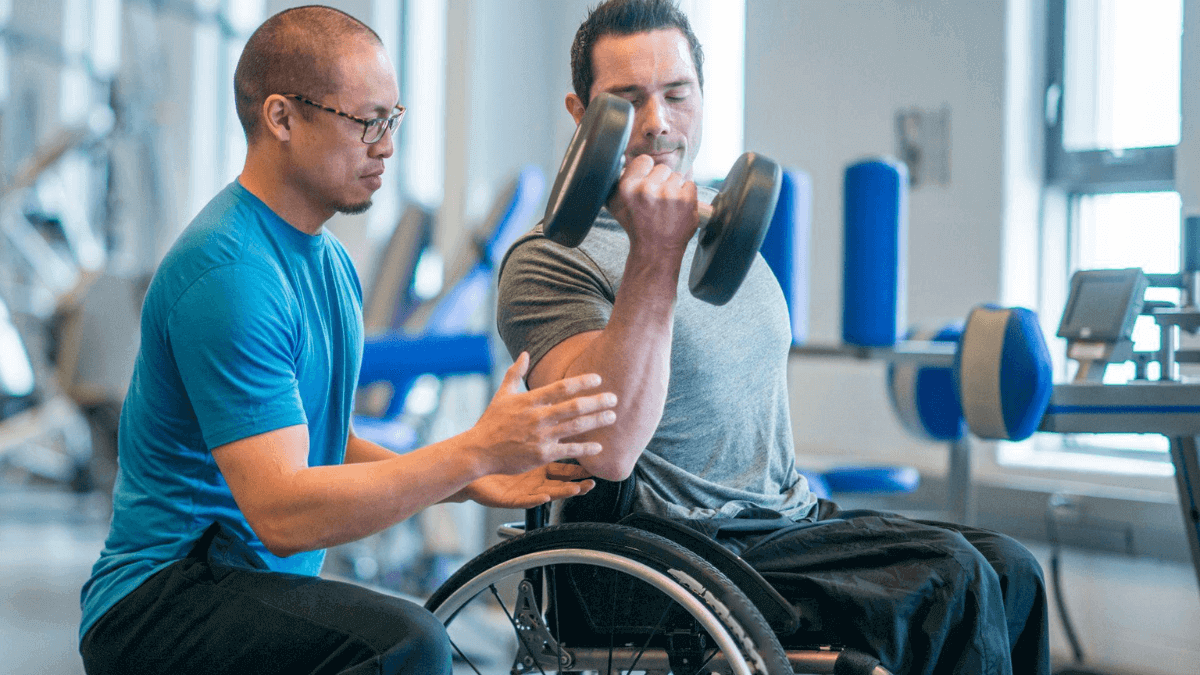
When an injury puts you out of action, the usual advice is to rest and let the body heal. Rest does help, but it is rarely the whole answer. After a sprain, a bad back, an operation or a long stretch of pain, muscles weaken and joints stiffen. Getting back to normal takes more than waiting. It takes rebuilding the strength and movement you lost.
That is what exercise physiology is for. It is a health profession that uses carefully planned exercise to help people recover from injury and manage long-term conditions. An exercise physiologist looks at how you move, finds the weaknesses that are slowing you down and designs a program to fix them. This guide walks through how it works, who it helps and what to expect.
What an exercise physiologist actually does
An exercise physiologist assesses the body by watching it work. They check your posture, your range of movement, your muscle strength and the way you move through everyday tasks. From that assessment they can see which areas are weak, tight or out of balance, and why an injury keeps lingering.
The role is different from a physiotherapist’s, although the two overlap. Physiotherapy tends to focus on treating a specific injury with hands-on therapy and rehabilitation. Exercise physiology focuses more on using exercise as the treatment, building the capacity of the body so it can handle normal life again without pain.
A session is not about pushing through pain. It is about controlled, graded movement. The exercise physiologist watches how your body responds, adjusts the load and slowly increases it as you improve.
Why guided movement helps healing
When a muscle or joint is injured, the body protects it by tightening up and reducing movement. That protection is useful at first, but if it goes on too long the surrounding muscles weaken, which makes the original problem worse. This is why people can feel recovered yet still struggle to lift, bend or walk the way they used to.
Guided exercise breaks that cycle. Movement brings blood flow to the injured area, which supports repair. It retrains the muscles to support the joint properly. And it rebuilds the strength and flexibility needed for real-life activities, not just for passing a test in a clinic.
The key word is graded. Exercise is introduced gradually so the body adapts without being re-injured. Sudden intense activity after an injury often sets recovery back, while a steady, progressive program moves it forward.
Injuries that respond well to exercise-based rehabilitation
Exercise physiology suits a wide range of problems, not just sporting injuries. Some of the most common include:
- Lower back pain from prolonged sitting, lifting or weak core muscles
- Shoulder problems from work, gym training or repetitive overhead tasks
- Knee pain from sports, joint stress or arthritis
- Muscle strains from physical work or sudden movement
- Recovery after orthopaedic surgery such as a knee or hip replacement
- Ongoing pain linked to conditions like osteoarthritis
It also helps people who have been inactive for a long time and need a safe way to rebuild fitness. The common thread is a body that has lost capacity and needs to regain it steadily.
Programs are built around you, not the injury
No two injuries are identical, and neither are the bodies carrying them. A good program starts with a detailed assessment, then builds a plan around your work, your lifestyle and your goals.
That plan might include strength work to support injured muscles and joints, stretching to restore flexibility, core exercises to protect your posture, balance training to reduce the risk of falls, and a gradual return-to-activity plan so you can get back to sport or physical work without reinjuring yourself.
The plan is not fixed. As you improve, the exercise physiologist adjusts the difficulty, adds new movements and retires the ones you have outgrown. That is what separates it from a list of generic exercises found online; it tracks your progress and changes with you.
The benefits that last beyond the recovery
Exercise physiology is aimed at getting you better, but its value usually outlasts the original injury. People who finish a program often keep some of the habits they built, and that pays off.
The lasting benefits include better posture and body alignment, stronger muscles and greater endurance, a lower risk of the same injury returning, and more confidence moving through daily life. For older adults, the strength and balance work can be especially valuable, because it helps prevent the falls that lead to serious injuries in the first place.
The point is not only to heal the injury. It is to leave you stronger than you were before it, so the same weakness does not land you in the same trouble again.
When it is worth seeing an exercise physiologist
People are often referred to exercise physiology after physiotherapy, medical treatment or surgery, when they are ready to rebuild strength safely. Others seek it out themselves when pain has been hanging around and rest is not fixing it.
It is worth considering when:
- Pain continues long after the initial injury
- Movement feels limited or you are avoiding certain activities
- Muscle strength has dropped after a period of inactivity
- You need a safe, structured way back to sport or physical work
- You have a chronic condition and want to stay active without making it worse
You do not always need a referral. Many exercise physiologists see clients directly, though a referral from a doctor or physiotherapist is sometimes recommended if your situation is complex or covered by a specific care plan.
Recovery is more than waiting to feel better
If you have ever recovered from an injury only to find you still cannot do what you used to, you already understand the gap this article is about. Healing happens on its own. Rebuilding capacity does not.
An accredited exercise physiologist gives that process structure: an assessment of where you are weak, a plan to fix it, and the oversight to adjust the plan as you improve. For anyone who has been injured, lives with ongoing pain or wants to get back to sport or physical work safely, it is a practical way to recover properly and stay recovered. The exercise is the medicine, and it works best when it is planned with the same care as any other treatment.

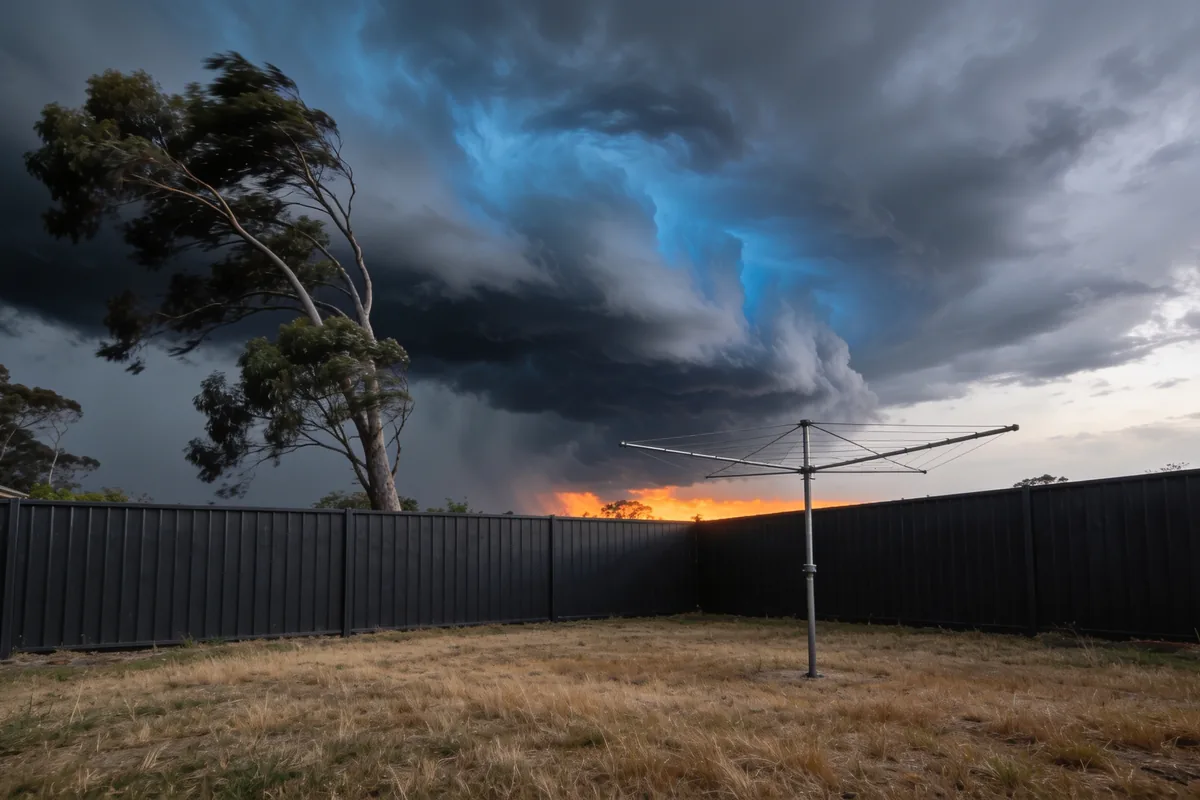
The warning that matters usually arrives before the rain. On a hot, windy day with high grass pollen, thunderstorm asthma peaks in the gust front that runs ahead of the storm, when the wind picks up and the light changes. The rain comes later. By then the particles that cause the trouble have already been released. The sequence is worth holding onto, because it changes what you watch. On a high-pollen day, the sky going dark is not the first warning. The wind arriving is.
Two things catch people out. The first is the timing. The instinct is to wait for the storm, or to shelter once it starts. The second is the assumption that you need a diagnosis. Current asthma, past asthma, undiagnosed asthma and spring hay fever all sit in the risk group, and a person with no diagnosis can be affected. That last group is the difficult one. A sensitivity can go unnoticed through ordinary springs and only show up when a storm concentrates the pollen into particles small enough to reach the lower airway.
The official advice is short. Go inside before the gust front, close up, turn off any cooling that brings outside air in, and use a reliever early if you have one. Call 000 if the person is not breathing, getting worse, not improving after first aid, or if any other 000 trigger applies.
How a storm makes asthma
The mechanism starts with pollen. Grass pollen is swept up from the ground and carried in the air ahead of a thunderstorm. Some grains burst in the wind gusts just before the storm, releasing particles small enough to reach deep into the lungs. That is why the danger is concentrated in the wind before the rain, and why the first drop is not the signal to act. Particle size is the problem. Pollen grains on their own are too large to travel far into the respiratory tract. The burst changes that. It breaks the grain into fragments that can be inhaled past the nose and throat, and the wind carries them in a concentrated cloud rather than a diffuse background count.
The pattern explains the timing. A hot, dry, windy day lifts pollen. The gust front arrives with the first strong wind of the change. The grains burst. People who are sensitive breathe the particles in. The storm can then produce a rapid spike in asthma attacks across a whole region at once, which is what makes thunderstorm asthma different from an ordinary bad pollen day. There is also a difference in scale. An ordinary high pollen day affects the people who are sensitive to that pollen, spread across a city and a day. A thunderstorm can concentrate the same exposure into a short window, and that is why it can affect many people at once.
Rain and pollen have a more complicated relationship than the timing suggests. The guide to rain and pollen explains why a shower can help some allergy days and make others worse.
Who is at risk? Current asthma, past asthma, undiagnosed asthma and spring hay fever. ASCIA notes that around one in four people with hay fever also have asthma. That overlap is the reason a warning is not only for people who already carry a reliever.
The ten minutes before the rain
healthdirect’s wording is worth keeping: stay inside, especially when it is windy before the rain. The sequence below is the practical version.
- Go inside before the gust front. Do not wait for the first drop.
- Close doors and windows.
- Turn off any air conditioner that brings outside air in, including evaporative cooling. If it cannot be turned off, set it to recirculate.
- Stay inside until the storm has passed.
- Do not rely on a mask.
The order matters. Going inside is the first move because it removes you from the air carrying the particles. Closing up is the second because it keeps that air from following you in. Turning off outside-air cooling is the third because a system can keep pulling the same air through the house after the doors are shut.
Point three is the one most often missed. An evaporative cooler pulls outside air through the house, which is the opposite of what you want when the air is carrying pollen particles. A refrigerated system set to recirculate is a different case, because it is not drawing in fresh air from outside. The test is simple: is the system bringing outside air in? If yes, turn it off.
Masks do not solve this one. It is a reasonable assumption, because masks work for so many other things, but healthdirect is clear: face masks do not protect you against the tiny particles. They are small enough to pass through the material and reach the parts of the lung where the reaction happens. A mask is not a substitute for going inside.
Staying in until it passes matters as much as the first move. The gust front is not a single moment. The wind can stay strong for a while, and the particles remain in the air.
The reliever, exactly
If you have an asthma action plan, follow it. That plan was written for you and it comes first. If you do not have one, the national first aid steps for people aged 12 and over are the ones to know, and they are worth reading before you need them. The sequence is designed to be used while you are waiting for help, not instead of it. It is short enough to keep on the fridge or in a phone note.
- Sit the person upright.
- Shake the puffer before every puff, then give 4 separate puffs through a spacer, one puff at a time, with 4 breaths after each puff.
- Wait 4 minutes.
- If there is no improvement, repeat once with another 4 puffs.
- Call 000 if there is no improvement after the second round.
- Keep giving 4 puffs every 4 minutes until help arrives.
Those steps come from Asthma Australia’s asthma first aid guidance. The simplified version was published in July 2025, and the blue reliever poster carries the continuing doses. The numbers are the national sequence, not a household guess: 4 puffs, 4 breaths per puff, 4 minutes, repeat once, then 000 if there is no improvement.
Call 000 if the person is not breathing, if the asthma is suddenly worse or not improving, if there is no reliever available, if you are unsure whether it is asthma, or if the person has known anaphylaxis. In that case, use the adrenaline autoinjector first.
The steps assume a spacer is on hand. If there isn’t one, Asthma Australia’s guidance is to use the puffer directly, one puff at a time with a slow, deep breath, but a spacer is the preferred method.
Children follow their own action plan. For everyone, the expiry date is easy to forget until the day you need it. The guide to what belongs in a first aid kit covers that check and the rest of the kit.
Where the warning comes from
The Bureau of Meteorology forecasts the storm. It does not issue the asthma risk forecast. That distinction matters, because a weather forecast can tell you a change is coming without telling you whether the air is carrying the kind of pollen that causes an epidemic. A severe thunderstorm warning and an epidemic thunderstorm asthma warning answer different questions, and one does not replace the other.
Victoria runs a detailed system. The Department of Health’s epidemic thunderstorm asthma risk forecast runs from 1 October to 31 December each year, covers nine districts, and uses three levels: green for low, orange for moderate and red for high. The current day’s forecast is updated about 12:30pm, and warnings are issued through VicEmergency. The department’s advice is to avoid any storm that forms, above all the wind gusts ahead of it. Once inside, shut the windows and doors and switch off cooling that draws outside air in.
The colour is a district-level guide, not a reading for your street. Green means low risk, not no risk, and orange or red is a prompt to change the day rather than a guarantee that a storm will form. The value is in the timing: the forecast is published before the change arrives, which is exactly when the ten-minute sequence is useful.
The forecast follows district lines, and the guide to Melbourne's unpredictable climate explains why the weather changes so quickly there.
The other states and territories publish their own information.
| Where you live | Where the warning comes from |
|---|---|
| Victoria | Department of Health epidemic thunderstorm asthma risk forecast, from 1 October to 31 December. Warnings through VicEmergency. |
| New South Wales | Sydney pollen count and forecast; Wagga Wagga SMS and email notifications. |
| ACT | Public health alerts from ACT Health. |
| Other states and territories | The state or territory health department, and the local public health unit. |
Check the forecast in the morning on any hot, windy spring or summer day, note the district, and decide before lunch what the afternoon looks like. That is easier than making the call while the wind is already up.
The forecast is a risk estimate, not a promise that your suburb will be hit. These events are rare, and most storm days pass without one. The right response is to stay in and be ready, not to treat every summer storm as a disaster.
After the storm
Symptoms can follow the storm, and they can appear in people who felt fine while it passed. Keep the reliever with you for the rest of the day. If breathing is still difficult after the storm, treat it as a reason to seek help rather than a reason to wait. A reliever used more than usual is worth mentioning at that appointment. So is a first episode of wheezing, even if it settled on its own.
See a GP if you have symptoms you have not had before, or if hay fever is affecting sleep or daily life. The longer game is to manage hay fever and asthma through the season, not only on the days with a warning. That means a current action plan, a reliever that is in date, and hay fever treatment that keeps the condition controlled.
None of that is a cure, and no single storm day is the whole risk. The point is to be less exposed when the conditions line up.
The days after a storm are also a good time to check the plan itself. If the reliever was hard to find, or the spacer was in another room, move it now. A plan that only works when everything is in the right place is not much of a plan.
The Ten Minutes Before the Storm
The ten minutes before the storm are the ones that count. Go inside, close up, turn off any cooling that pulls outside air in, and stay in until it passes. Do not wait for the rain to make the decision for you.
If you have a reliever, use it early. If the person is not breathing, getting worse, not improving after first aid, or any other 000 trigger applies, call 000. The forecast gives you notice. The sequence is what you do with it.
Sources: Better Health Channel, Thunderstorm asthma (https://www.betterhealth.vic.gov.au/thunderstorm-asthma); healthdirect, Thunderstorm asthma (https://www.healthdirect.gov.au/conditions/lung-and-respiratory-diseases/thunderstorm-asthma); Victorian Department of Health, Epidemic thunderstorm asthma risk forecast (https://www.health.vic.gov.au/environmental-health/epidemic-thunderstorm-asthma-risk-forecast); Asthma Australia, Simplified asthma first aid (https://asthma.org.au/wp-content/uploads/2025/07/AA25-Simplified-Asthma-First-Aid_WEB.pdf); Asthma Australia, Asthma first aid: blue reliever (https://asthma.org.au/wp-content/uploads/2021/12/AA26-Blue-1st-Aid-A4_Web-1.pdf); ACT Health, thunderstorm asthma public health alert (https://www.act.gov.au/health/public-health-alerts/public-health-alert-pages/public-health-alert-thunderstorm-asthma-event); NSW Health, Thunderstorm asthma (https://www.health.nsw.gov.au/environment/factsheets/Pages/thunderstorm-asthma.aspx)
- A plan can fund getting places, and the part nobody explains is how a funded trip actually happens.
- A transport line is not a taxi voucher. It is one of three arrangements, and they look identical from the kerb.
- The money is usually not the problem. The arrangement is.
- “My plan has transport funding” is not a request to anyone. A specific trip on a specific day is.
- And funding follows a purpose rather than a preference, which is the honest half worth understanding early.
Somewhere between having a plan and getting to an appointment, a lot of people pay for a taxi out of their own pocket because nobody told them how the funded version is supposed to work. If that sounds like you, you are not missing anything obvious. The scheme’s own information is written around what can be funded rather than around how a trip turns into a car at the kerb. So here is the practical version: what a transport line is for, the three ways transport actually gets arranged, who does what, and how to ask so that the answer is useful.
What the transport line is actually for
Start with the purpose, because it explains most of the rules of thumb that follow.
A plan funds the supports a person needs to do the things their plan is for, and getting to those things is part of doing them. So transport appears in a plan in more than one shape. Sometimes it is its own line. Sometimes it is part of a support that happens outside the house. And sometimes it is a transport component inside the hours of a support worker’s shift, which is the version most people never realise they already have.
That last one is worth sitting with, because it is the answer for a lot of quiet frustrations. If a support worker is funded to help you get to community activities, then the getting there is not a separate purchase. It is already inside the support you have.
If you take one idea from this section, take the three shapes rather than a number. Once you know that the travel can sit inside a support, stand on its own, or be met in the ordinary way, the question changes from “am I allowed” to “which one do I have”, and that second question has an answer. This is also why the rest of this article talks about arrangements rather than entitlements. Entitlements are decided for you. Arrangements are built with you.
Now the distinction at the centre of this whole article. There is a difference between funding that pays for a trip and a service that provides the trip. One is a contribution towards getting somewhere. The other is a person with a vehicle arriving at your door. A reader who does not know which one they have will ask the wrong person for the wrong thing, and conclude that the funding does not work, when the arrangement is simply a different conversation.
Three ways a funded trip actually happens
There are three arrangements, and almost everything confusing about transport funding comes from mixing them up.
The first is that your own worker takes you. The worker’s shift includes getting you to where you are going, because the plan is for the activity and the travel is part of it. This is the most common arrangement, the least understood, and the one that requires no separate booking at all. If you already have support hours and somewhere to be, this is the first thing to look at.
The second is that a transport service is arranged for you. The provider runs the vehicle, and the trip is a service in its own right, booked and delivered rather than folded into another support. This is what most people mean when they say transport funding, and it is also the arrangement with the most moving parts.
The third is that you travel the ordinary way and the cost is met. This is the reader paying a fare, in whatever way suits them, and the funding being applied somewhere in the arrangement. It is the version where people most often do not realise there is anything to claim, and it is also the one where the details are most likely to vary.
Here is the sentence that matters: the three arrangements look identical from the kerb and completely different from the plan. Everyone ends up in a car. What differs is who arranged it, who is paid, and what happens when something changes.
The order to consider them in is not fixed, either. The first is usually the lightest in time and complexity, because the trip travels inside support you already have. The third is the simplest in paperwork, because it starts with you getting on with your day. The second sits between the two, and it is where most of the questions land.
And the three are not locked. A household can move between them as circumstances change: a worker who used to drive retires, or a routine changes shape, and suddenly a different arrangement is the one to build. Knowing all three is what makes that kind of change survivable rather than frightening.
Who does what
Written as roles rather than as a process, because knowing who to ring is half the battle.
The provider delivers the support and arranges its own roster. That means the answer to “can I get there on Thursday” comes from the provider rather than from anywhere else, because they are the ones who hold the workers and the vehicles. That is why the first useful question is a specific one, and it is also the question a registered NDIS provider in Ipswich that runs transport alongside its care services starts from when a participant asks about a lift.
The support coordinator helps design how a support happens, including transport, and is the person to ask when the arrangement does not exist yet. If the question is “how do I make this work”, that is the desk it belongs on. The site’s The essential guide to choosing the right support for your NDIS journey covers that side of things properly, and this article will stay with the transport itself.
The plan manager handles the money and the invoices for a plan-managed participant, and that is where the question of what can be paid for actually lands. When a provider says a trip cannot be claimed, the plan manager is usually the person who can confirm whether that is right.
And then there is you, or your family, who are the only people who know where the person actually needs to go and when. No one else in the chain can supply that, which is why the next section puts the request in your hands.
It also helps to say what is not a role. The plan document itself is not something you can ring. Everything in this section is about people, because people are what a trip is actually made of.
One honest sentence to carry away from this section: “my plan has transport funding” is not a request to anyone. It is a fact about a document. The request is a specific trip, on a specific day, made to the person who can arrange it.
How to ask so that the answer is useful
This is the practical core, written as the words you would actually use.
Say where and when, not “transport”. A provider can answer a trip. Nobody can answer a category. “Thursday, the physio on [the main road], home by twelve” is a request. “Some transport support” is a shrug, however politely it is worded.
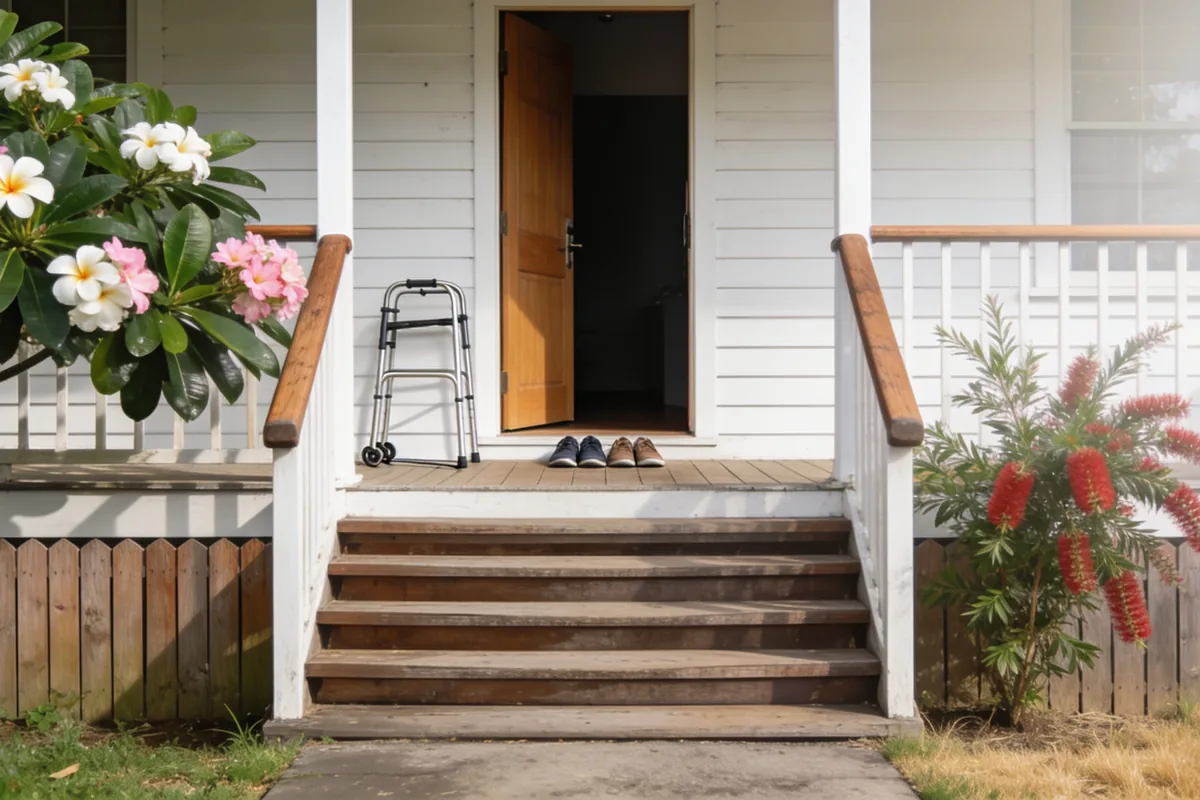
Say who is travelling and what they carry. A companion, a wheelchair, a walking frame, a folded mobility scooter, a school bag, an oxygen bottle. Those details decide the vehicle rather than the trip, and they are much easier to answer now than at the door.
Say whether the trip is regular or once. A weekly arrangement and a one-off are different asks, arranged by different people at different times, and blending the two is the most common way a request goes quiet.
Say what has already been arranged. If you are coming out of a hospital appointment or a therapy session, you are asking for a leg of a journey rather than a whole one, and saying so saves everyone a phone call.
And ask what is not covered before you assume. The honest answer is sometimes no, and finding that out today is much better than finding it out on the day.
One habit that works better than any of the sentences above: write the request down, and repeat it the same way every week. The version that gets answered is specific, written and consistent.
A written request settles a quieter problem too: repetition. If the same trip happens every week, everyone should be describing the same thing.
When the trip is outside the ordinary
Some journeys are longer, further apart, or somewhere the usual arrangement does not reach. An appointment in another city, a stay away from home, a move between services, a trip with equipment. These are still transport, but they are a different shape of it.
Three things change. The planning is longer, because there is more to line up. The arrangement is more likely to be a specific service than a worker’s shift, because the distances are beyond what a support hour covers. And the return leg is the part that fails first, which is true of every transport article worth reading and truer the further from home you go.
One example of journeys being part of a bigger arrangement is the way The role of medium term accommodation in hospital discharge planning describes a stay that begins with getting somewhere. This article will not repeat it, but the pattern is worth knowing: on a longer trip, the arrangement is the whole booking, and the coordinator’s desk is where it starts.
And the honest note for longer trips: they are often the point at which a family realises the ordinary arrangements were built around the local area. That is not a failure of the funding or of anyone’s planning. It is simply the edge of what the usual shape covers.
The honest half: where it stops
Written straight, because an article that oversold this would be worse than no article at all.
Funding follows a purpose, not a preference. A trip the plan is for is a different thing from a trip that is simply wanted, and understanding that makes your questions better rather than your hopes smaller. It is not a moral judgement. It is how the whole system is built.
There is a limit to what any line covers, and a reader who reaches it is not doing anything wrong. Budgets are budgets. The trip that exceeds one is a conversation rather than a failure.
An arrangement can also be unavailable even when the funding exists, because a provider may have no vehicle or no worker free on the day you need. That is a workforce problem rather than a funding problem, and naming it honestly is more useful than pretending the money solves it. It is the same shortage participants describe when they say good support is hard to keep.
And the rules in this area move. The scheme is in the middle of a wide set of changes and says so on its own pages, so a reader holding a rule they were told a while ago should check it rather than rely on it. The site’s The future of disability support: how NDIS daily life support is evolving is the place for that wider picture, and this article stays with the arrangements.
None of that is a reason to expect the worst. The limits matter because the exceptions are much easier to handle when you can see them coming.
Which gives the one line worth keeping: ask the question again when the plan changes, because the answer is allowed to change with it.
What to ask about the transport line
The compressed version, written as what to bring to the conversation.
What the plan already funds for getting places. Which of the three arrangements is currently in place. Who arranges a specific trip, and how far ahead. Whether the trips are regular or as needed. Whether a companion, some equipment or a wheelchair changes the arrangement. What happens when the usual worker is away. Whether anything about the trip has changed since the plan was written. What is not covered. And who to ask when the plan changes.
That list is a conversation with a person, not a form. And the reader who can name the trip, the day and the equipment is the reader who gets an answer.

- Most households own a first aid kit and almost none of them has looked inside it since the day it arrived.
- A kit is not a shopping list. It is a decision about a house, and the decision is different for a family with a toddler, a house with a workshop, and a couple in their sixties.
- Things quietly go off in there: strips lose their stick, sterile seals fail, gloves perish, and liquids carry dates.
- Two mistakes make a kit useless, and neither of them is about what is in it.
- And the contents are the easy half, which is the part this article ends on.
There is a first aid kit in most Australian homes. It is usually in a cupboard near the bathroom, it usually arrived as a gift or a bulk-buy, and it has usually not been opened since. If that sounds familiar, this article is a gentle errand rather than a lecture. We are going to work out what a kit is for, what should be in yours rather than what a shop says, what has quietly expired, and where it should live so somebody can find it in the minutes that matter.
What a kit is actually for
The plain definition: first aid is what you do in the first minutes of an injury or an illness, until more help arrives. That is the whole window a kit is built for. The minutes before an ambulance, a doctor, or the neighbour who used to be a nurse.
So everything in the box should be there for one reason: somebody in this house might need it in those minutes. Not because a list said so, and not because it seemed sensible for a household that is, on average, not this one.
Two things follow. A kit does not treat anything by itself; it is equipment waiting for a person who knows what to do with it. And buying a bigger kit is not the same as being more prepared. The larger box with forty extra items is not a safer house. It is a larger box.
So the rest of this article is a set of questions rather than a list of products.
The four questions that decide what is in yours
The method here is borrowed, and it is borrowed openly: workplace first aid codes in Australia decide a kit’s contents by looking at what could happen, how likely and how serious each thing is, what is needed for it, and then reviewing the lot. That is a method rather than a rule, and in a house it transfers almost unchanged. It is a much more useful way to fill a box than a standard packing list.
Question one: who lives here, and who visits? A household with a toddler needs things a household of two adults does not, and a house where a frail grandparent visits needs a different set again. If a new baby is part of your picture, the site’s Natural ways to prevent colds and flu in your newborn this winter is about prevention rather than reaction, and it is the right companion piece for that stage.
Question two: what actually happens here? A kitchen, a workshop, a pool, a motorbike, a dog, a trampoline and a paddock produce very different kinds of trouble, and a kit should reflect the building and the habits rather than the suburb.
Question three, and this is the one nobody asks: what can anybody in the house actually do? Equipment for a skill nobody has is equipment that will not be used in a frightened moment. Answer that honestly and your kit gets more useful, not smaller.
Question four: where does it live, and who checks it? That one gets its own section further down, because a kit nobody can find is not a kit. The useful kit is the one whose contents were decided by the household’s own week.
What goes in, and what quietly goes off
Group the contents in your head rather than reading them as a shopping list. The groups are what you will check your box against.
Things that clean and cover a wound: the dressings, the strips, the bandages, the tape, the saline, the gloves.
Things for the events a kit is meant to equip you for, named as kinds of harm rather than as instructions: cuts, scratches, grazes and splinters; sprains and strains; minor burns; major bleeding; broken bones; eye injuries; and shock. Those are the categories a workplace code equips for, and a household can borrow them without borrowing a single instruction from anywhere. This article will not describe what to do about any of them, and that is on purpose.
Then the paragraph worth reading twice: things get smaller or disappear with age. Adhesive strips lose their stick. Saline, antiseptic and eye products carry expiry dates. Packaged sterile items stop being sterile if the seal has gone, which is why a split packet is a bin item rather than a spare. Gloves perish in a hot cupboard, quietly, and are the last thing you want failing at the wrong moment. A kit is not a time capsule. It is a small stock of perishable goods.
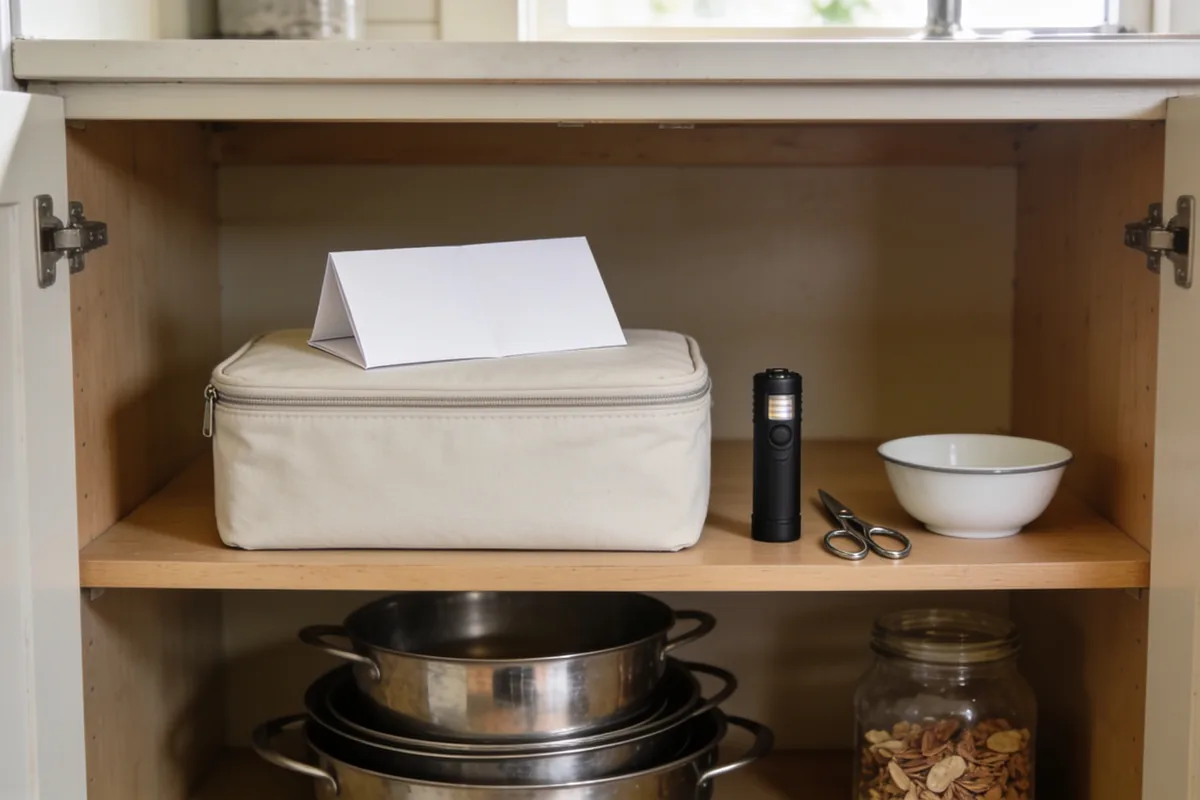
And the things people forget entirely: the list of what the kit contains, something to write with, emergency contact details that are current, a torch, and a pair of scissors that will cut what needs cutting.
A kit going off is a different thing from a certificate running out of currency. If it is the second one you are wondering about, that is a separate subject with its own rules.
The two mistakes that make a kit useless
Neither of these is about what you put in. Both are about everything around it.
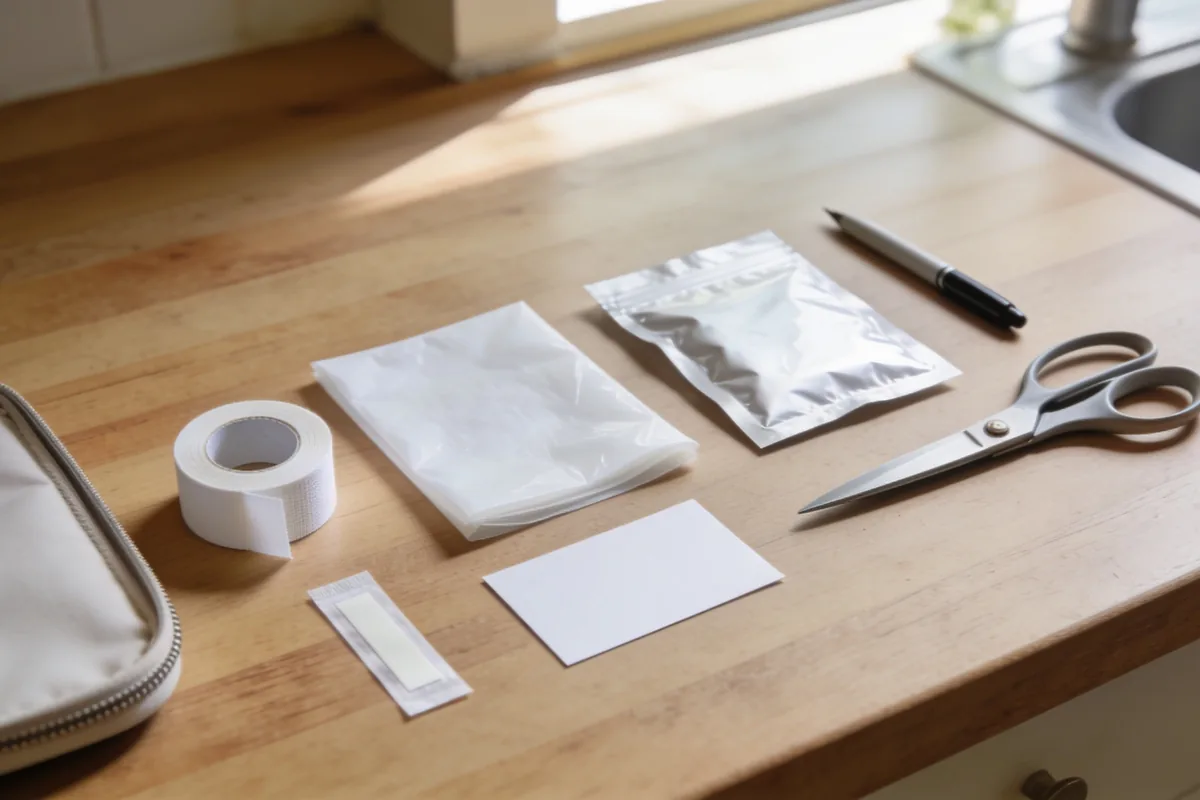
The first mistake is the kit nobody has checked. Bought, put in a cupboard, opened two years later to find the strips have curled, the saline has a date on it, and something is missing because it was used and never replaced. The fix is a routine rather than a resolution. Name one person who owns the kit in your household, check it after anything comes out of it, and give it one proper look a year, on a date you will remember, with the check date written on the inside of the lid so future you knows where things stand.
The second mistake is the kit nobody can find or reach. On the top shelf behind the saucepans, in a locked cupboard, in the boot under the pram, in a bathroom that only one person in the house uses. The borrowed workplace standard is a good one for a home too: reachable, known to everyone, and not locked. If two adults in the house cannot say where it is without looking, it is in the wrong place.
And the third mistake is the quiet one, so it gets its own moment later rather than a paragraph here: a kit containing equipment nobody in the house has been taught to use. Nothing about that is a reason to take anything out. It is information, and it tells you what to do next.
Where the kit should live
Placement, not storage. This is about function rather than tidiness.
One at home, in a place everybody in the house can name. That is the whole test, and it is stricter than it sounds. A kit is for the moment when somebody is frightened and moving fast, and muscle memory is the only map they will have.
One in the car. Workplace codes treat a kit as standard equipment for a vehicle that is somebody’s workplace, and the same logic works for the car that carries the family. One honest note: a car kit lives in heat, so it ages faster than the one in the hallway and deserves its own check more often.
One in the shed, the workshop or wherever the tools are, because that is where the injuries your household’s week produces tend to happen.
One in the caravan, the boat or the camper, because those are places where somebody can be a long way from help.
And one that is not about your house at all. The grandparent’s place. The car of the person who drives everybody else around. The sports bag that leaves the house every week, which in a household with children is a world of its own; the site’s The ultimate guide to cleaning kids’ toys: safe, simple, and effective methods looks after the rest of that gear, and the kit is the part that matters most.
One more version, for the household that needs a conversation rather than another kit: if two people live alone and see a neighbour twice a week, the useful arrangement is knowing where each other’s kit is, which is a five-minute conversation that pays for itself.
The only thing that matters more than the kit
The contents are the easy half, and this is the part worth ending on.
Among the many people who have written down what is in their own kit, one note keeps appearing: make sure everyone in the house knows how to use what is in it. That is the difference between a household that copes with a bad five minutes and one that watches them happen.
A kit is equipment for a situation that is unfamiliar by definition. Nobody uses it on a normal Tuesday, so nobody has practice by default. The households that manage are usually the ones where somebody was shown what to do once, properly, and has kept that with them since. That is a person deciding to be ready, and it costs an afternoon.
This article is not going to describe what to do with the things in the box. That is not what a cupboard article is for, and there are people whose whole job is teaching it well. The line from a Tarneit first aid trainer that delivers CPR and first aid courses, including on site for workplaces is worth keeping in the meantime: the box is worth having because somebody might need it, and it is worth knowing how to use because somebody will.
Where the kit should live
The short version, short enough to act on today.
Decide the contents by who lives here and what happens here. Check the dates and the seals, and replace what has gone off and what has been used. Write the check date inside the lid. Put it somewhere every adult in the house can point to without thinking. Keep one in the car and one where the tools are, and check the car one more often because of the heat. And make sure whoever is in the house knows what is inside.
The kit is not the part that saves anybody. It is the part that is already there when somebody who knows what to do needs it.
Sources consulted: Safe Work Australia’s model code of practice for first aid in the workplace; healthdirect information on first aid.

Thunderstorm Asthma Peaks Before the Rain. Get Inside When the Gust Front Comes

Screen Time by Age: Where the Guidelines Stop and the Household Plan Starts

How Much Ham Per Person? The Bone-In Leg Needs More Weight and Still Costs Less

The Science Behind Melbourne’s Unpredictable Climate: What’s Really Going On?

Plastic-Free Coffee Makers: Myth or Must-Have?

Zero Waste Toothpaste: What’s Worth the Switch and What to Look For
-
 Melbourne2 years ago
The Science Behind Melbourne’s Unpredictable Climate: What’s Really Going On?
-
Eco Friendly4 years ago
Plastic-Free Coffee Makers: Myth or Must-Have?
-
Eco Friendly4 years ago
Zero Waste Toothpaste: What’s Worth the Switch and What to Look For
-

 Automotive1 year ago
Wet Weather Tyres in Australia: What to Look For and When to Replace Them
-
 Eco Friendly4 years ago
Plastic Free Packaging: How to Keep Your Business Plastic Free
-

 Food1 year ago
The 9 Best Foods and Drinks to Enjoy Before Bed for Restful Sleep
-

 Financial2 years ago
How to Secure the Best Car Finance Deal: Tips for Negotiating and Saving Money
-
 Eco Friendly4 years ago
How Aussie Businesses Can Reduce Plastic Pollution