
Family & Parenting
School Refusal in Australia: A Calm Guide for Parents When Your Child Won’t Go

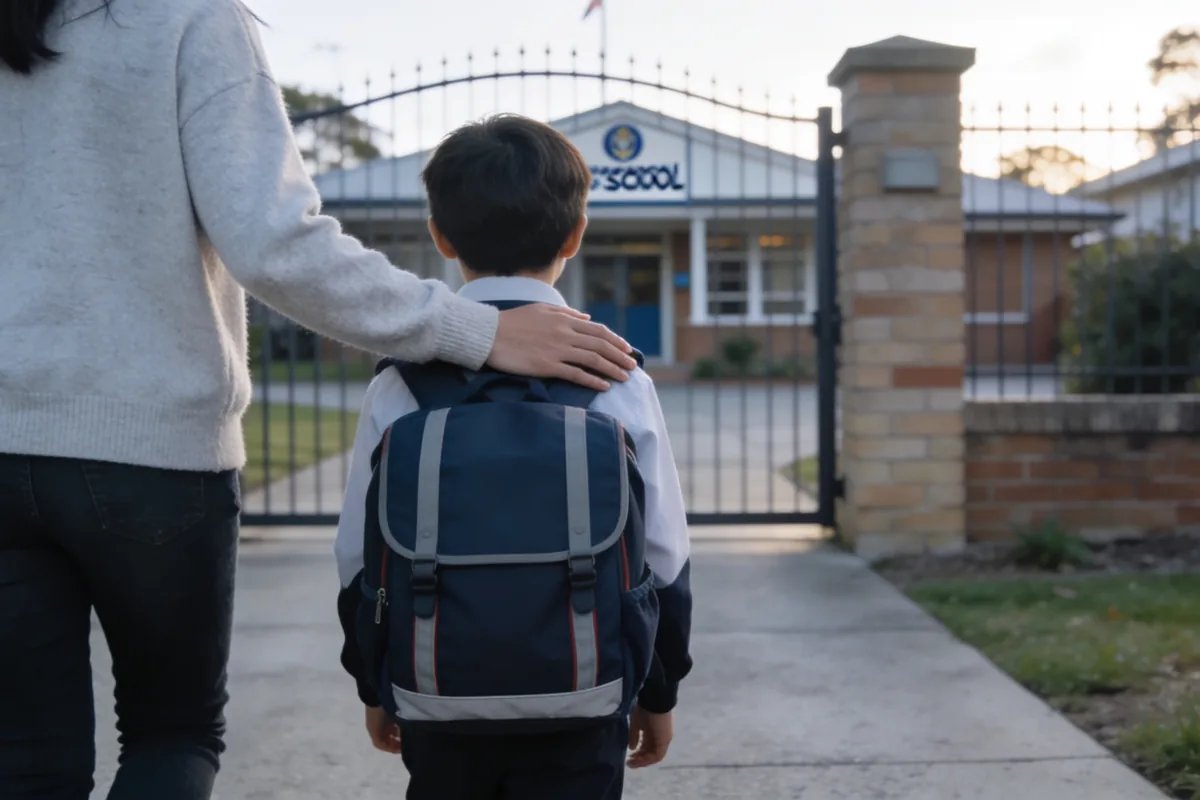
If this is your morning, take a breath
If you are reading this on a morning like the ones you have been having, let me start with the most important thing. You have not done anything wrong, and neither has your child.
The scene is probably familiar. A child in tears at the thought of school, or curled up in bed refusing to get up, or standing at the front door with their bag on and their body saying no. Days missed piling up. And that quiet voice asking where you went wrong, while a louder one wonders what everyone else will think.
School refusal is a recognised problem. It affects children across all ages and all kinds of families, and it is not a sign of bad parenting. It is not wagging and it is not a child being difficult for fun. Something is genuinely hard for your child about going to school, and the most useful thing you can do is approach it with calm curiosity rather than pressure.
This guide is general information for parents, not clinical or medical advice. What it offers is a calm path forward: what school refusal is, what might be underneath it, how to talk to your child, how to work with the school, and how to build a return plan gentle enough to stick. You do not need to fix everything today. Start with one conversation.
What school refusal is, and what it is not
School refusal is the term used when a child is distressed about going to school and, because of that distress, misses part or all of the school day. The distress is the key word. This is not a child skipping school to hang out with friends or because they find it boring. It is a child who wants to go, or wants to want to go, and finds that they cannot.
It can show up at any age: a prep child who cries at the gate, a Year 4 student with a stomach ache every Sunday night, a teenager who stops getting out of bed. The outward signs differ, but the pattern is similar. The thought of school produces real distress, and avoidance is the child’s way of coping.
It is not laziness, and it is not defiance. That distinction matters, because you respond to a distressed child very differently from a defiant one. Defiance calls for firm boundaries. Distress calls for understanding and support. Mistaking one for the other is the most common trap.
Most of the time, school refusal is driven by anxiety about something connected to school: separation from you, a worry about a subject, trouble with friends, or something that happened in the playground. The anxiety is real even when the reason is not obvious to the child either.
What might be underneath it
It helps to think of the refusal as the tip of something larger. Underneath it, one or more of these is often at work.
Separation anxiety is common in younger children. Being away from a parent feels unsafe, and the child’s body reacts as if something bad will happen while they are apart. It becomes school refusal when it stops them from staying at school.
Worries about school itself appear at every age. A subject the child finds overwhelming and is embarrassed about. A teacher they find intimidating. A fear of reading aloud, of tests, of getting something wrong in front of the class. These worries can build quietly for weeks before they surface as a refusal to go.
Social worries are a large part of it for many children. Bullying is the obvious one, but it does not have to be bullying. Friendship trouble, feeling left out, having no one to sit with at lunch, or navigating the shifting alliances of the playground can all make school feel unsafe.
Some children are simply overwhelmed. The noise, the busyness and the constant demands of a school day exhaust them in a way that is hard to explain. Others are reacting to something at home, a new baby, parents separating, a move, a loss, that has made the world feel less secure.
The point of this list is not for you to diagnose your child. It is to open the door to curiosity. The reason is often not what it looks like, and your job is to create a safe moment where they might be able to tell you, or where a professional can help them find the words.
Start with curiosity, not lectures
When a child is refusing school, the natural instinct is to explain why they have to go. You are right, but a lecture will not land when a child is in distress. They already know they are supposed to be at school. What they need is someone who sees that something is hard and wants to understand it.
Find a quiet moment, not the morning rush. The car on the way home, a walk together, ten minutes before bed, all work better than the front door at 8am. Ask gentle questions without an audience. If you could change one thing about school, what would it be? What is the hardest part of your day?
Listen without fixing. The urge to jump in with solutions is strong, but a child who feels heard is far more likely to keep talking than one whose every sentence is met with advice. Let them finish. Thank them for telling you. Let them know you are on their side.
Keep the questions low-pressure and open, and listen for the answer that comes out sideways, in a throwaway remark about a friend or a teacher. And be prepared for “I do not know”. A child who could explain exactly why they feel this way would probably not be refusing school, and that is exactly when a calm, patient adult matters most.
Work as a team with the school
You are not meant to do this alone, and the school is your partner, not your adversary. Most teachers have seen school refusal before, and most schools have ways to help. The earlier you bring them in, the more options everyone has.
Start with a calm message to the class teacher or the school’s wellbeing team. Explain what you are seeing without blame: the distress in the mornings, the missed days, anything your child has told you. Then ask what the school can offer. You may be surprised how much is available: a graduated return where the child comes for part of the day at first, a settled start to the morning, or a trusted adult they can check in with during the day.
If the first conversation does not lead anywhere, ask to be pointed to someone who can help. Schools have different people responsible for wellbeing and attendance, and sometimes it takes a couple of contacts to find the right one. Keep the tone collaborative. You both want the same thing: a child safely back in the classroom.
Attendance rules vary by state and territory, and schools have reporting obligations, so it is worth knowing your local education department’s expectations. That lets you plan with the school rather than against it, and a child who is struggling needs the support side working well.
Build a gentle return plan
The goal is a gradual, achievable return, not a perfect week. Forcing a full week of school immediately after a long absence usually backfires, because the child is overwhelmed and the avoidance gets stronger. A gentler return plan that starts small and builds is far more likely to hold.
A predictable morning routine helps more than almost anything else: the same wake-up time, the same breakfast, the same rhythm for leaving the house. Predictability lowers anxiety because the child knows what comes next.
A friend to meet at the gate can transform the walk in. If your child has one person they feel safe with, ask their family about meeting at the gate each morning. Walking in with a friend is far less daunting than walking in alone.
A reduced start can work well: a shorter day for the first week, or a timetable that begins with the easiest subjects and builds up. These need the school’s cooperation, which is why the teamwork above matters.
And acknowledge the hard parts. Going back after a period of refusal takes real courage. Name it. Notice the days they manage, even the partial ones, and say something specific. A child who feels seen for trying is more likely to keep trying.
Where possible, keep the child attending, even on hard days. Avoidance feels like relief in the moment, but it tends to make anxiety stronger, because the child learns that staying home makes the feeling go away. Small, consistent steps teach the opposite lesson.
If the morning anxiety is overwhelming, a calm-down tool can help you both. Simple breathing exercises to calm the mind and ease stress are something a parent and child can learn together and use in those anxious moments before school. A few slow breaths will not fix everything, but they can bring the panic down enough for the next step to be possible.
When to bring in extra support
Some situations call for more help than a parent and a school can provide on their own, and reaching for it is a strength, not a failure.
A GP is the best first stop. They know your child’s history, they can rule out physical causes for the stomach aches and headaches that often come with school refusal, and they can refer you to a counsellor or psychologist if that is what your child needs. Getting a referral early is better than waiting until the situation has become entrenched.
Professional support matters if you suspect something underneath that needs its own attention, such as an anxiety disorder, neurodivergence, or a learning difficulty making school genuinely unbearable. A psychologist can help untangle what is going on and give your child tools for managing the worry. This is not about labelling your child, it is about making sure they get the right kind of help.
There are also free, confidential help lines. Kids Helpline and Parentline are staffed by people who talk to worried parents every day, and sometimes just saying the whole story out loud helps you see the next step more clearly.
None of this means you have failed. School refusal is genuinely hard and it is not caused by bad parenting. Bringing in extra support recognises that some problems are too big for one household to solve alone. And treat this guide as what it is, general information, not a substitute for advice from your child’s doctor, school or a qualified professional.
Slow and steady wins the term
If you are in the middle of this right now, let me leave you with a few quiet truths.
Your child is not giving you a hard time. They are having a hard time, and the difference matters more than almost anything else you will read. Treating the behaviour as distress rather than defiance changes how you show up, and how you show up changes how they feel about being helped.
Look after your own patience too. Supporting a child through school refusal is exhausting, and you cannot pour from an empty cup. Ask for help from your partner, your family, your friends. Take a walk. Sleep. The steadier you are, the steadier your child can be.
And remember that return plans take time. There will be good weeks and bad weeks, and wobbles are normal. A day backwards does not undo the progress you have made. Slow and steady wins the term, not the single morning.
School is where children build more than academic skills. It is where they learn to manage a day on their own, to work with other people, and to grow into the independence and life skills they will carry into adulthood. Supporting your child back into that world, at their pace, is one of the most important things you will do as a parent. You just need to keep showing up, calmly, one day at a time.
Sources:
- Raising Children Network, School refusal
- Kids Helpline, School refusal (parents)
- Your state or territory education department, School attendance and support









The calm short version
Here is a thought to hold onto before you read any further. You do not need to be good at money to teach your children about it. If you have made mistakes with money yourself, that does not disqualify you. In some ways it is the best qualification you have, because you know what the mistakes cost, and you can help your child avoid paying the same price.
Children learn about money the way they learn about most things. Not from one big lecture, but from small, repeated, real experiences. Watching you buy the groceries, counting coins into a money box, deciding what to spend their pocket money on and living with the choice. Those everyday moments are the real curriculum, and a parent who stays calm through them teaches far more than a parent who lectures.
This guide is general information about helping children learn about money, not financial advice. There are no dollar figures presented as the right amount, because the right amount is different for every family. What works is the approach, and the approach is calm, practical and consistent. The goal is not a future finance whiz. It is a child who knows that money is a tool, not a worry.
Why the money talk matters (and why it feels hard)
Money habits form earlier than most parents think. The people who study this keep finding that children’s attitudes to money, whether it feels safe or stressful, whether you save it or spend it, are largely shaped in the early primary school years. Long before a child understands interest rates or budgets, they are absorbing how the adults around them feel about money.
That might sound like pressure. Read it as reassurance instead. It means you are already teaching, whether you realise it or not. Every time you talk about a bill, put off a purchase, or explain that you are saving for something, your child is learning. The question is not whether you are teaching them about money. It is what you are teaching them.
So why does the money talk feel so hard for so many of us? Usually because nobody taught us either. Money was not discussed at the kitchen table when we were growing up, or it was discussed in tones of worry and secrecy, and we carry that awkwardness into our own parenting. We worry we will say the wrong thing, or that our own finances are not a good enough example.
Let that worry go. You are not expected to have perfect answers or a perfect financial life. You are expected to be honest, calm and consistent, and those three things are within reach of any parent who cares enough to read a guide like this one. A child does not need their parent to be a finance expert. They need their parent to be a safe person to ask questions of.
Pocket money basics: your family, your choice
Pocket money is the most practical tool most families have for teaching children about money, and it is also where the arguments tend to start. So let us settle the two questions that cause most of them, calmly.
The first question is what pocket money is actually for. The honest answer is that it is a small, safe amount of money your child can practise with. It is their money, to make their own choices about, including their own mistakes. The value is not in the amount. It is in the experience of having a little money and deciding what to do with it.
The second question is whether pocket money should be tied to chores, and this is where families genuinely differ. Some families pay for jobs done. The bins, the dishes, the dog. The thinking is that children learn that money is earned, and that work has value. Other families give an allowance and keep chores separate, on the grounds that everyone in a household contributes to it, and that paying children for chores teaches them they should only help when there is money attached.
Both approaches work. What does not work is being unclear about which one you have chosen, or changing it week to week. Decide on your rule, explain it simply, and stay consistent. If the rule is “pocket money is for jobs”, then a job not done means pocket money not paid, calmly and every time. If the rule is “pocket money is separate from chores”, then chores still get done, without negotiation, because they are part of being in a family.
The amount is a family decision, and this article deliberately does not tell you what to pay. Some families give a little, some give more, and the right amount depends on your budget, your child’s age, and what you expect the money to cover. A useful starting conversation is to ask what other families in your area do, then set an amount that is big enough for real choices, and small enough that mistakes do not matter.
A simple way to split money a child can understand
Here is a method that makes saving concrete for a child who has no concept of a bank balance. Get three jars, or three boxes, and label them. One for spending. One for saving. One for sharing.
When pocket money arrives, the child puts a coin or a note into each jar. Some to spend now, on whatever they want. Some to save, for something bigger they are working towards. Some to share, to give to a cause or someone they care about. Even a young child who cannot count yet can put a coin in each jar and watch them grow.
There are no percentages to memorise. You do not need to divide the money into strict proportions, and you should not turn the jars into a maths test. The point is the habit, and the habit is that money gets divided with intention rather than spent all at once. If a child wants to put everything in the spend jar one week, that is their choice, and it becomes a gentle conversation, not a punishment.
The three jars teach three quiet lessons. The spend jar teaches that money is for enjoying, and that spending is not shameful. The save jar teaches that money can grow towards a goal, and that waiting can make the thing sweeter. The share jar teaches that money can do good beyond yourself, a lesson that has nothing to do with finance and everything to do with the person you hope your child becomes.
When a child is a little older, the three jars can become three accounts. A savings account, a transaction account, and perhaps a donation. A child who has grown up dividing pocket money into jars will find the jump to real bank accounts completely natural.
Letting them make small mistakes early
This is the honest heart of the whole guide, and it is the hardest part for a parent to do. Let your child make small mistakes with their money, on purpose, and do not rescue them.
Here is why it matters. A child who spends their whole pocket money on the first day, on something that has lost its shine by the second day, and then has nothing left for the thing they really wanted the next week, has learned more than a child who was simply told no. The first child has felt the actual consequence. The second child has only heard a warning.
Small losses now teach the lesson that a big loss later would. If a child learns at eight that spending everything leaves nothing for the thing you want, they are far less likely to learn it at twenty-eight with a credit card in hand. Letting the small mistake happen is one of the kindest things a parent can do.
Keep this gentle, and keep it free of triumph. The point is not to catch your child out, and it is certainly not to say “I told you so” when the cheap toy breaks. It is to let reality do the teaching while you stay steady. When the child is disappointed, you can be sympathetic, and you can ask what they might do differently next time.
You do not rescue them, because rescuing teaches the wrong lesson. A child who is always topped up learns that there is always a safety net, and that spending everything is fine because Mum or Dad will fix it. The child who lives with the empty jar learns to plan. Let the empty jar do its quiet work.
Teaching by example, without turning life into a lesson
Children learn more from watching you than from anything you say, so the most powerful teaching you can do is to let them see you handle money calmly. That does not mean walking them through your bank statements. It means letting the everyday moments do the teaching.
Talk about why you are waiting to buy something. When you are saving for a family holiday or a new appliance, let your child hear you say “we are saving for that, so we are not buying this right now”. That one sentence teaches delayed gratification more effectively than any lecture.
Compare prices at the shops, out loud. When you are deciding between two brands of the same thing, let your child watch you weigh the choice. They do not need the details of your reasoning. They need to absorb that buying is a decision, and that grown-ups think before they spend.
Save for a family goal together. A jar on the bench for a day out, a shared treat, or something the whole household wants gives everyone something to contribute to. When the goal is reached and everyone enjoys the reward together, the child has felt, not just been told, that saving works.
And keep it light, because children switch off when every trip to the shop becomes a finance seminar. If you turn every purchase into a ten minute lesson, they will stop listening to the ones that matter. Let most moments just be moments, and save the deliberate teaching for the ones that count.
As children get older, the lessons can grow with them. The life skills a teenager needs before adulthood include managing money alongside cooking, laundry and time, and a teenager who has had years of small pocket money practice is far better placed to take on those bigger skills than one meeting money for the first time at eighteen.
Small amounts, steady hands
If you take one thing from this guide, take this. The habits that teach children about money are small, and they are repeated, and they work best when the parent holding them is steady. A regular pocket money day, so the child can rely on it. Clear and few rules, so there is nothing to argue about. And a parent who stays calm when a child is disappointed, because the disappointment is where the learning happens.
You will not do it perfectly. You will forget a pocket money day, lose patience in the supermarket, or even rescue a child from a mistake you promised yourself you would let them make. All of that is normal, and all of it is recoverable. Consistency is not about never slipping. It is about returning to the same calm routine after you slip.
Remind yourself what you are really doing. The child who learns to manage a small amount of pocket money now is the adult who will not be caught out by the grown-up money mistakes that quietly cost people so much, the fees, the forgotten subscriptions, the impulse buys that add up. The patterns are the same, whether the amounts are coins in a jar or dollars in an account.
So start small. Get the three jars. Pick a pocket money day. Let them make a mistake, and stay steady while they sit with it. Small amounts, steady hands, and time. That is the whole method, and it is more than enough.
Sources:
- ASIC Moneysmart, Teaching kids about money
- Raising Children Network, Pocket money and teaching children about money


Moving out of the family home is one of those milestones everyone expects you to be excited about, and mostly you are. Your own space, your own schedule, dinner whenever you feel like it. But the reality of living apart from family is more mixed than the Instagram version, and almost everyone who has done it will admit to both sides of it.
This is not about whether leaving home is right or wrong. It is about being honest about what it gives you, what it quietly costs, and how to hold onto the family relationships that matter while you build a life of your own. In a country as spread out as Australia, where a job or a rental can land you in a different state from everyone you grew up with, it is a question plenty of people face.
What you gain by living apart
The most obvious benefit is independence, and it is a bigger deal than it sounds. When you live on your own, you make the decisions: how the place looks, how you spend your evenings, how you manage your money. Nobody else is going to buy the groceries or pay the electricity bill, and learning that you can run a household is quietly confidence-building.
That independence spills into other parts of life. Making decisions without a parent to check with forces you to think for yourself, and most people find they grow into adults faster once they have to. There is also the simple joy of privacy. Your own space gives you somewhere to recharge, pursue a hobby or just sit in silence, and for anyone who has always shared a house, that alone time is precious.
Living apart can also improve family relationships. Without the daily friction of shared space, many people find they get on with their family better. Visits become something you choose rather than something that just happens, and the time together tends to be more intentional and more enjoyable.
What it quietly costs
The flip side is that distance creates its own problems, and loneliness is the biggest one. You miss the casual stuff, the drop-in conversations, someone to watch TV with, the background hum of a household. In a share house or a small flat, it is easy to feel isolated even while surrounded by other people.
Guilt is another common companion. When a parent is unwell, a sibling needs help or a family event rolls around and you are a flight or a long drive away, it is hard not to feel that you should be there. Missing birthdays, anniversaries and ordinary Sunday gatherings takes a toll, and the longer the distance, the more those small absences add up.
The everyday connection fades too if you do not tend it. When you are not part of the daily rhythm of your family’s life, you stop being in the loop, and that can leave you feeling out of step when you do catch up.
Keeping the relationship strong from a distance
None of this means living apart is the wrong call. It means the relationship needs active care, the same way any important relationship does.
Set a rhythm for contact that actually works. A weekly phone call, a regular video chat, a family group chat that does not demand an instant reply, all of these bridge the gap better than relying on the occasional text. Time zones make this trickier if you move interstate, so find a slot that works for everyone and protect it.
Make visits count. If you can only get home a few times a year, plan them properly rather than treating them as an afterthought. And remember that visits do not all have to be to the family home. A weekend away together, a holiday or even a shared meal in a halfway city can create the same connection with less pressure.
When you talk, actually talk. It is easy for long-distance contact to slide into updates and logistics, so ask real questions and listen properly. Phone calls beat text for this, because hearing someone’s voice carries far more than a message.
Finding the balance between independence and family
The goal is not to choose between being independent and being a good family member. It is to hold both at once.
That means being clear about your boundaries. You are allowed to say no to a request without feeling you have failed, and you are allowed to need space. It also means showing up when it genuinely counts. A quick call before a big appointment, a thoughtful message after a hard week, help arranged from afar when a parent needs it, these small gestures keep you present even when you are not physically there.
Expect the family dynamic to change as you gain independence. That is normal and not a sign that anything is broken. The relationships that survive the distance are the ones where both sides accept that life has moved on and make an effort to stay connected anyway.
Questions about living apart from family
How do you deal with guilt about living away? Remind yourself that independence is a normal stage of life, and that being a good family member does not mean being available 24/7. Clear boundaries and honest communication reduce most of the guilt.
How do you stay close to family from a distance? Regular calls, planned visits and making the time you do talk count. Consistency matters more than frequency.
Is it unhealthy to live apart from your family? No. For most people it is a healthy step towards independence, and the relationship can stay strong with effort. It becomes a problem only if the distance is used to avoid difficult conversations that need to happen.
How do you balance independence with family expectations? Set expectations early and clearly, and be consistent. Most families adjust once they understand your boundaries and see that you still care.
Should you feel guilty for wanting independence? No. Wanting your own life is normal. What matters is that you keep nurturing the relationships you value while you build it.
Independence that keeps the door open
Living apart from family is rarely all one thing, and that is okay. It can be the freedom you needed and the loneliness you did not expect, often in the same week. The key is not to treat independence and family as opposites. You can build a life of your own and stay deeply connected to the people who raised you, as long as you are deliberate about it. Keep the calls regular, make the visits count and give yourself permission to need both space and family. The door does not have to close when you move out. It just opens onto a different kind of relationship, one you get to choose rather than one you fell into.


Most parents spend years making sure their teenager can solve algebra and write an essay, and those things matter. But the skills that actually carry a young person through adult life are often the ones nobody puts on the timetable. Managing money, keeping a level head, taking responsibility, speaking up and coping with change, these are the abilities that decide whether a teenager copes or flounders once they leave home.
The good news is that most of them can be taught at the kitchen table, long before the rental lease or the first pay slip arrives. Here are the five worth focusing on, and how parents and educators can help build them.
Financial literacy: the skill that pays for itself
Money management is the life skill teenagers are least likely to learn at school and most likely to need on day one of adult life. A teenager who can budget, save and understand debt is far less likely to spend their twenties digging out of a hole.
Start with the basics. Show them how to budget for income and expenses, even if the income is pocket money from a weekend job. Get them into the habit of saving a set amount before they spend anything, and open a savings account so they can watch it grow. Talk openly about credit cards, how interest works and what happens when you miss a payment, because the first credit card offer usually arrives before they are ready for it.
It also helps to let them make small money decisions and live with the outcome. Comparing prices, waiting for a sale or choosing to save for something bigger all teach more than a lecture ever will.
Emotional regulation: staying steady under pressure
The teenage years are a training ground for stress. School, friendships, family expectations and the noise of social media all pile up, and the teenagers who cope are the ones who have learned to manage their own emotions rather than being ruled by them.
Emotional regulation is not about suppressing feelings. It is about noticing them, naming them and choosing a response instead of reacting on impulse. Mindfulness helps with this, because it teaches a teenager to pause before they act. So does self-reflection, the habit of asking why a situation set them off and what they might do differently next time.
Practical coping strategies matter just as much. Deep breathing, exercise, journaling and simply stepping away from a screen for a while all give the nervous system a way to settle. Parents can help by modelling calm, talking through their own feelings out loud and helping a teenager identify the triggers that set them off before those triggers turn into a blow-up.
Responsibility: owning the consequences
Responsibility is the bridge between being looked after and looking after yourself. It is about more than doing chores. It is understanding that actions have consequences and being willing to own both the good and the bad.
The best way to teach it is to hand over real responsibility and let the teenager feel the result. That might mean managing their own timetable, cooking a meal for the family once a week or being in charge of their own laundry. When they forget, resist the urge to rescue them. Missing a deadline or running out of clean clothes is a far cheaper lesson at sixteen than at twenty-six.
Time management is part of the same skill. Help them break a big task into smaller pieces, set realistic goals and keep a simple planner. Problem-solving belongs here too, because an adult needs to try to fix things themselves before asking for help.
Effective communication: saying what you mean
Most conflict in life, at home, at work and in friendships, comes down to people not communicating well. A teenager who can say what they need, listen properly and advocate for themselves is at a huge advantage.
Active listening is the half of communication that gets skipped. Teach them to actually pay attention, ask questions and check they have understood, rather than waiting for their turn to speak. Body language and tone matter too, because most of a message is delivered without words.
Public speaking is worth practising early, even in small ways. A class presentation, a school club or speaking up at the dinner table all build the same confidence. The goal is not to turn every quiet teenager into a performer. It is to make sure they can ask for help, negotiate and put their hand up when they need something, in a way that gets heard.
Adaptability: coping when life changes direction
No matter how carefully a teenager plans, life will throw something unexpected at them. A failed subject, a cancelled job offer, a move to a new city, a friendship that ends. Adaptability is the skill that decides whether they bend or break.
Teenagers become adaptable by being allowed to face change, not by being sheltered from it. Encourage them to try new things, take sensible risks and sit with uncertainty rather than rushing to fix it. When something goes wrong, help them look at what they learned instead of letting them file it under failure. The teenager who can say “that did not work, what do I do now” will always do better than the one who needs the plan to survive contact with reality.
The five skills in one picture
| Life skill | Why it matters | How to help develop it |
|---|---|---|
| Financial literacy | Manages money, credit and saving for the future | Budgeting, saving regularly, learning how interest and debt work |
| Emotional regulation | Handles stress and keeps relationships steady | Mindfulness, naming feelings, deep breathing and self-reflection |
| Responsibility | Builds accountability and a work ethic | Real chores, deadlines, goal setting and letting them feel the consequences |
| Effective communication | Opens doors at school, work and in friendships | Active listening, body language, public speaking practice |
| Adaptability | Copes when plans change or things go wrong | New experiences, sensible risks, treating mistakes as lessons |
Skills that grow with them
None of this happens overnight, and no teenager will master all five before they turn eighteen. That is fine. The point of these skills is that they build on each other and keep developing for decades. A teenager who can budget will find it easier to take responsibility. One who can regulate their emotions will communicate more clearly. One who has learned to adapt will keep learning everything else.
Parents and educators do not need to add another subject to the timetable. They need to weave these lessons into ordinary life, and the teenager will carry them out the door long after the textbooks are forgotten. It is not about raising a perfect adult. It is about raising one who can handle life when it does not go to plan, which is most of the time.
Sources: Australian Government MoneySmart, financial literacy; National Institute of Mental Health, emotional regulation.

It Is Not a Holiday: What Short-Term Accommodation Actually Pays For

Booking, Not Hailing: How Accessible Taxis Actually Work, and What Most People Never Ask For

One Car or Two? Working Out How to Move a Group Without the Shuffle

The Science Behind Melbourne’s Unpredictable Climate: What’s Really Going On?

Plastic-Free Coffee Makers: Myth or Must-Have?

Zero Waste Toothpaste: What’s Worth the Switch and What to Look For
-
 Melbourne1 year ago
The Science Behind Melbourne’s Unpredictable Climate: What’s Really Going On?
-
Eco Friendly4 years ago
Plastic-Free Coffee Makers: Myth or Must-Have?
-
Eco Friendly4 years ago
Zero Waste Toothpaste: What’s Worth the Switch and What to Look For
-

 Automotive1 year ago
Wet Weather Tyres in Australia: What to Look For and When to Replace Them
-
 Eco Friendly4 years ago
Plastic Free Packaging: How to Keep Your Business Plastic Free
-
 Eco Friendly4 years ago
How Aussie Businesses Can Reduce Plastic Pollution
-
 Home & Garden1 year ago
Boost Productivity and Mood with a Deep Cleaned Space
-

 Financial1 year ago
How to Secure the Best Car Finance Deal: Tips for Negotiating and Saving Money