
Travel
Avoid These Sneaky Fees When You Rent a Car

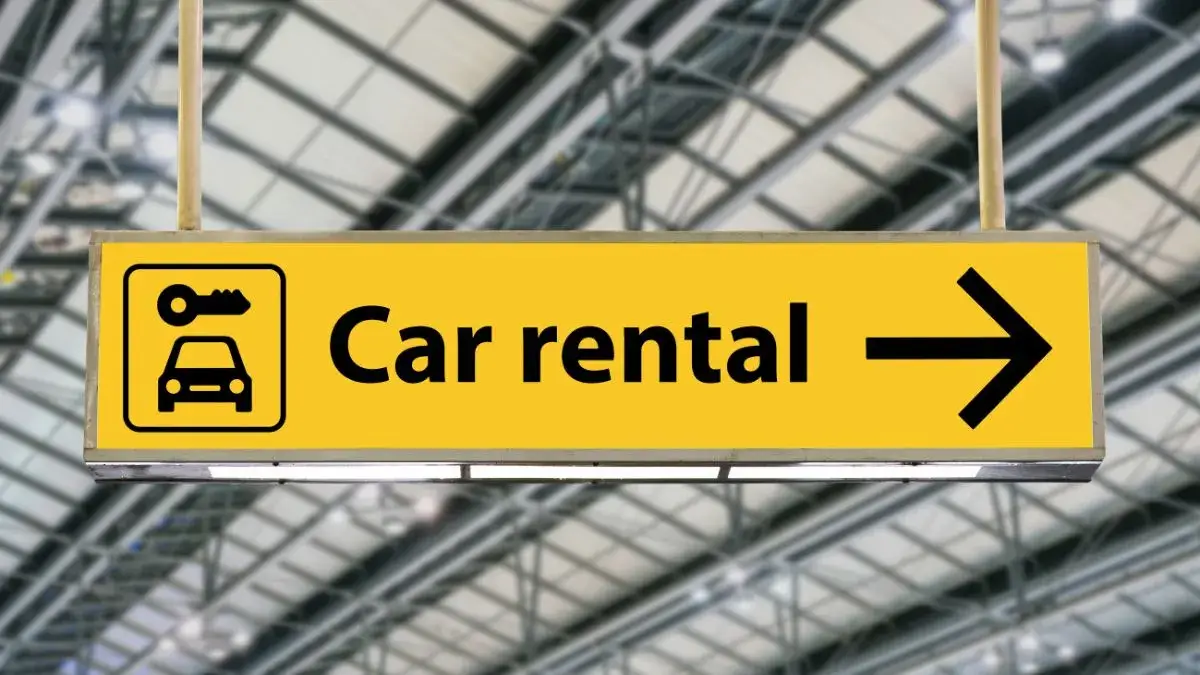
Renting a car looks simple until you see the final bill. You compare a few daily rates, pick a car that suits the trip and expect to pay roughly what was advertised. Then the total comes in higher, sometimes a lot higher, and you are left working out where it all went. The gap between the advertised price and the real one is usually not a mistake. It is fees, and most of them are avoidable once you know they exist.
This guide runs through the charges that push up car hire bills and how to dodge the ones you can. A little time spent reading the terms before you book saves real money at the counter.
Understand what the base price really covers
The daily rate you see online is rarely the whole story. It typically covers the car and not much else. Insurance upgrades, taxes, location surcharges and optional extras are often extra, and the base price is designed to look competitive so the add-ons can do the earning.
Treat the advertised rate as a starting point, not a final figure. Before you book, open the full price breakdown and check what is included. If the terms are not clear, ask. Rental companies rely on people assuming the basics are covered, so the cheapest quote on the comparison site is often the most expensive car by the time you add everything on.
Watch for airport and location surcharges
Picking a car up at the airport is convenient, and you pay for that convenience. Airport branches commonly add surcharges to cover their operating costs and the fees the airport charges the rental company. These are often buried in the terms and can be a significant slice of the total.
It is worth comparing an airport pickup against a nearby off-airport branch. A short taxi or shuttle ride to a city branch can sometimes save more than the transfer costs. The trade-off is time, so weigh the saving against the hassle, but do the comparison rather than defaulting to the airport counter.
Extra driver fees add up
Sharing the driving makes sense on a long trip, but many companies charge a daily fee for each additional driver. That fee can apply even to a spouse or a regular travel companion, and over a week it becomes a real cost.
Ask before you book how much extra drivers cost and whether any are included free. Make sure every person who will drive is listed on the agreement. Letting someone drive who is not registered can void the insurance, and that is a risk no saving is worth.
Age-based surcharges
Younger drivers usually pay more. If you are under 25, expect a daily surcharge on top of the base rate, because insurers consider younger drivers higher risk. Less commonly talked about, some companies also add fees for older drivers above a certain age.
These surcharges rarely appear in the headline price, so factor them in when you compare. If an age-based fee applies to you, it can change which company actually offers the best deal for your situation.
Insurance add-ons are where the real money is
Rental companies make a large part of their profit from insurance upgrades. Basic cover is usually included, but it comes with a high excess, the amount you pay if the car is damaged. At the counter you will be offered upgrades that reduce that excess, often framed as peace of mind.
Before you buy, check what you already have. Your own car insurance, travel insurance or credit card may cover rental car damage, sometimes including the excess. If you are already covered, the upgrade is money for nothing. If you are not, weigh the upgrade against the risk and the excess, and decide with the numbers in front of you rather than under pressure at the counter.
Fuel policies and refuelling charges
Fuel is an easy place to overpay. The most common arrangement is full to full: you collect the car with a full tank and return it full. Other options include prepaying for a tank you may not use, or returning the car and paying the company’s refuelling rate, which is always higher than the servo down the road.
Choose full to full wherever it is offered. Keep the receipt from your last fill as proof, and allow time to refuel before you return the car. Skipping the refill to save ten minutes is how people end up paying rental-company prices for fuel.
Late return and early pickup fees
Time is a fee trigger. Return a car even an hour late and you can be charged for an extra day, because the car is now late for the next booking. Some companies also charge if you pick up early and the car is not ready, or if you return outside opening hours.
Set a reminder for the return time and build in a buffer for traffic. If you are going to be late, call ahead. Many companies will note it or offer a grace period if they know in advance, whereas a silent late return gets the full charge.
Mileage limits and distance charges
Not every rental includes unlimited kilometres. Budget deals sometimes cap your daily distance and charge per kilometre over the limit, which adds up fast on a road trip. Always check the mileage terms before booking.
If you plan to drive a lot, an unlimited-kilometre deal is usually better value even when its base rate is a little higher. Estimate your distance first, then compare the two options with that number in mind.
Cleaning and smoking penalties
Returning a car in a mess can trigger a cleaning fee, and evidence of smoking can bring a heavy penalty on top of it. Companies are strict about this because a smoky or dirty car needs to be taken out of service to be cleaned before the next customer.
A quick tidy before you return saves money. Shake out the mats, bin the rubbish and do not smoke in the car at all. Pet hair counts too, so if you have travelled with a dog, allow time to vacuum.
Tolls and administration charges
Cars often come with a toll device fitted, which is convenient on a trip with toll roads. But using it usually adds a daily fee and an administration charge on top of the tolls themselves. Over several days those fees can exceed the tolls.
If you are comfortable paying tolls yourself, ask whether the device can be removed or opted out. If you keep it, factor the daily charge into your budget. Either way, know before you drive rather than discovering it on the final invoice.
Optional extras that are not optional
GPS units, child seats and roadside assistance packages are often presented as essential. Some genuinely are, especially a child seat if you are travelling with a young child. Others, like a GPS when your phone does the job, are easy to skip.
Bring your own accessories where you can, and only add extras you will actually use. The counter presentation makes each add-on sound small, but three or four of them can add a third to the daily rate.
Read the fine print before you sign
The fine print is not exciting, but it is where the truth about a car hire deal lives. Look for the sections on fees, exclusions and penalties. If anything is unclear, ask before you book rather than assuming.
Ten minutes reading the terms can save hundreds. It also means you know what you agreed to, which matters if there is a dispute later. A rental agreement is a contract, and you are better off knowing its contents before you sign it.
Compare the total, not the daily rate
The single most useful habit is to compare total prices rather than daily rates. When you have two quotes, work out the real cost of each with the same inclusions: the insurance you need, the fuel policy, the kilometres and any surcharges that apply to you. The deal that looks cheapest on paper is often not the cheapest in practice.
Photograph the car at pickup and return so you have a record of its condition, and keep your paperwork until any potential charges have passed. A few minutes of checking now beats a surprise on your credit card statement later.
Rent with your eyes open
Car hire does not have to be a financial trap. The fees that catch people are mostly predictable, and once you know them you can plan around them. Read the terms, compare real totals, check your existing insurance before buying upgrades and return the car the way you collected it.
Do that and the advertised rate stops being a tease and becomes what you actually pay. A rental car is meant to make a trip easier, and knowing what you are paying for is part of that.


- The hardest thing about getting a car in a small town is not the distance and not the fare. It is that everybody wants one at the same time, and there are not many cars.
- A small town’s demand is not spread across the day the way a city’s is, because the town’s rhythms are shared.
- The hard windows are the ones the whole town shares, and they are predictable once you see them.
- Booking ahead is not queuing. It is the town’s equivalent of having your name on one of the few cars.
- And planning around the pattern is a skill, not a compromise.
You ring on a school morning and the answer is that everything is out, and it is hard not to take that personally. It is not personal, and it is not a broken service. A town this size does not really have a transport problem. It has a timing one, and timing is something you can plan for once somebody explains the shape of the day. So here is the shape of it, honestly, from the town’s side.
Why the whole town wants a car at once
Start with why the spikes happen, because the explanation is more interesting than an excuse.
A small town’s demand is not spread across the day the way a city’s is. It arrives in windows, and the windows are shared by everybody, because the town’s rhythms are shared. The school day starts and finishes at set times. The commuter trains run to a timetable in the early morning and again in the evening. The medical centre and the shops keep the same morning hours. Sport and clubs finish at the same time on the same evening. The pubs close when they close.
Every one of those is a window, and in a town of a few thousand people, those windows belong to everyone at once. In a city, a dozen cars absorb a spike without anybody noticing. In a country town, a handful of cars cannot be in two places at the same time, and that is arithmetic rather than a service failure.
There is one more thing worth understanding: the pattern is not a defect of the town. It is what a shared timetable does to a small population, and no amount of anybody being more organised today will change it.
Which hours are the hard ones
This is the reader’s map of the town’s day, and it comes without a single timetable, because the pattern is the point rather than the clock.
Expect the two school runs to be difficult. Expect the first commuter trains of the morning and the one after the last one in the evening to be difficult. Expect the fifteen minutes after the medical centre opens to be difficult, because that is when the day’s appointments begin and a share of them need a lift. Expect the end of the school day when a parent is also finishing work. And expect the hour the pubs close on a Friday and a Saturday to be its own kind of busy, though that side of the subject, the late-night one, belongs to the site’s Top taxi safety tips for night rides rather than this article, which is staying firmly on timing.
The easy windows are just as predictable. The middle of a weekday morning. The early afternoon. Most of a Sunday that is not a long weekend.
And one window catches people who are new to the region: the visitor season. A fine weekend puts more people into the Ranges than the town’s cars were ever sized for, and it is the same arithmetic as a busy morning at a larger scale, which is the point The hidden work behind safe road projects and public events makes about events. If you are planning a Saturday in spring, book rather than ring.
Read the list above as a forecast rather than a complaint. If you know a window is hard, you can plan for it, which makes the fix a matter of timing rather than luck.
What booking ahead actually changes
Here is the practical core, and it is the part that turns the explanation into something you can use.
A booked time is a commitment rather than a queue position. The car is assigned to you rather than to whoever rings first, which is why ringing two days early works when ringing at the moment does not. Nobody is holding cars back; the bookings simply filled the day before you called.
Three things make a booking hold. Give the time you need to arrive, not the time you want to leave. Give the pickup point properly, because a lane off a main road and a farm gate are not addresses a driver can find in the dark. And say if the time is flexible, because a reader who can move by ten minutes is far easier to fit into a busy window than one who cannot. That flexibility is the single most useful thing a caller can offer.
And the honest limit: on a fully committed morning, nothing can be conjured. A booking made early is the only thing that changes the answer. It is also the kind of call a Woodend taxi service that runs around the clock across the Macedon Ranges would rather receive a day early than a day late.
One more thing that helps: ring during the quiet windows even to make a booking for a busy one. The person who answers when the day is calm has time to look properly and find you a car, and that is a much better conversation than the one held against a deadline.
What to ask, and what to tell them
Written as your own list, and it is short on purpose.
Ask what the busiest hours are for what you need. An operator knows their own week better than anybody, and will usually say. Ask whether the return leg can be booked now, because the return is the one that fails. In the morning you are part of the spike going out, and in the evening you are part of the spike coming back, so the return deserves the same booking as the outbound trip.
Then the things to tell them. About a child restraint, a walking frame or a wheelchair if there is one, because those are requests made at booking time rather than at the kerb, and they decide the vehicle. How many people are travelling, because a group may need a bigger car and a bigger car is a different booking. And leave a number that gets answered, because a driver who cannot reach you on a busy morning has to move on to the next job.
It also helps to know what a booking is not. It is not a guarantee that the town will stay quiet, and it is not a promise about anything except your place on the list, which is exactly the thing worth having.
Planning around the town rather than against it
The pattern is only useful if it changes what you do, so here is what it changes.
Move the trip, not the town. If the appointment can be at ten rather than nine, you get a normal morning instead of a race, and nobody has to be a hero about it. Book the return when you book the outbound leg, because it is the leg that fails and one call is easier than two. For the airport, plan from the flight rather than from the town, which puts that particular trip on the book-ahead list without needing anything more from this article.
And for the ordinary local errand, use the quiet hours. A reader who can wait for the quiet window will always find it easier than one who has to travel with the whole town. That is not settling for less. It is reading the town correctly.
When it is genuinely difficult
Written straight, without softening, because the reader already knows.
Some mornings there is nothing, and the reasons are ordinary rather than sinister. Every car is committed. A driver is on a hospital run or a long booking. Somebody is away. The weather has made every trip slower than it should be. None of that is anybody’s fault, and all of it is the small-town arithmetic again.
So here is what you can do rather than what you have to accept. Ring early in the day for an evening trip. Have a second number, because in a town this size there is more than one operator and none of them faults you for it. Ask whether there is a fallback. And say when a booking fails, because an operator who hears “you told me no” has something to work with, and one who hears nothing has nothing.
How to plan around a town’s busy hours
The compressed version, and it is short because the subject is.
Know that the hard windows are the ones the whole town shares. Book the time you need to arrive rather than the time you want to leave. Name the pickup point properly. Say whether the time is flexible, because that is what gets a caller fitted in. Put the return in the same booking as the outbound trip. Mention restraints, frames and wheelchairs when you book, not at the kerb. Use the quiet hours for anything that can move. And keep a second number for the mornings when the answer is no.
In a small town, the cars are not slow and they are not far away. They are simply somewhere else, and the reader who rings a day early is the reader who gets one.
Sources consulted: Macedon Ranges Shire Council transport information.

- In a country town the courier network runs to the bigger centres and stops, and the last part of the journey is the part nobody covers.
- A booked run is one thing, one pickup and one drop-off, arranged by phone, and it goes when you ask rather than when the run is scheduled.
- It makes sense for something small enough to carry in a car and urgent enough that waiting is not an option.
- There are four things to have ready before you ring, and the first one is the two addresses, said the way you would say them to a stranger.
- And the run is the easy part. The two handovers are the job.
Something has to be somewhere today, and the usual options are not going to get it there. The part a job is waiting on, the script that has to reach the pharmacy, the keys that are sitting on the wrong kitchen bench. In a country town this situation comes up more often than people expect, because the networks that move parcels for the cities thin out exactly where the last thirty kilometres begin. If you are holding the thing that has to move, this article is about the option that is easy to forget: a local car, one job, arranged by phone.
What a booked run actually is
A local car that does passenger work also runs counter-to-counter jobs, and the shape of it is simple. One thing goes from one place to another, on one trip, arranged by a conversation. It is not a route. It does not go when the truck goes; it goes when you ask, subject to whatever else the car is doing that day.
Three things make it different from the alternatives. It is one job rather than a route, so nothing waits for a depot. The handover is to a person rather than to a counter, so there is somebody to give it to and somebody to ask. And the timing is negotiable in a way a scheduled network is not, because the trip is arranged rather than run.
In practice, that is why the final stretch is the stretch worth solving yourself. A parcel crossing through a network waits its turn at each stop, and a booked run does not.
Two honest consequences sit underneath all of that. It only makes sense for something small enough to carry in a car, and it only makes sense when the timing matters. For anything that can wait, the ordinary post is cheaper and always will be. A booked run is a bridge over a day, not a freight service.
When it is worth it, and when it is not
This is the part worth reading properly, because half the calls a local car service gets are for jobs that are better off elsewhere, and the honest answer saves everybody a wasted trip.
It is worth it for a part that a job is waiting on. For a prescription or a medical item. For a document that has to be signed today. For keys, a wallet or a phone that has been left somewhere and is needed now. For a bag that missed the bus, equipment for a job starting tomorrow, or a sample going to a repairer and coming back.
It is not worth it for anything heavy, anything that is multiple boxes, or anything fragile enough that it should be crated. It is not worth it for something that can go in the post, honestly assessed. And it is not worth it for anything whose value is high enough that you want a signature, an insurance arrangement and a tracking record, because a local car run does not carry those in the way a carrier does. If you are unsure which one you have, that is the first question to ask on the phone, and it is a completely reasonable thing to ask. And notice that nothing on the worth-it list is about speed for its own sake. Every item on it is an errand with a deadline attached, and if yours does not have one, the ordinary post wins on every measure.
There is one more version of this worth naming. If these runs are becoming a weekly habit for a business rather than a one-off favour to yourself, the question quietly changes into a vehicle question, and that is a different decision. Planning to add a truck to your fleet? Here’s what to know first is where that decision starts.
What it will and will not carry
A car takes more than people expect, as long as the expectations are set honestly before the trip rather than at the kerb.
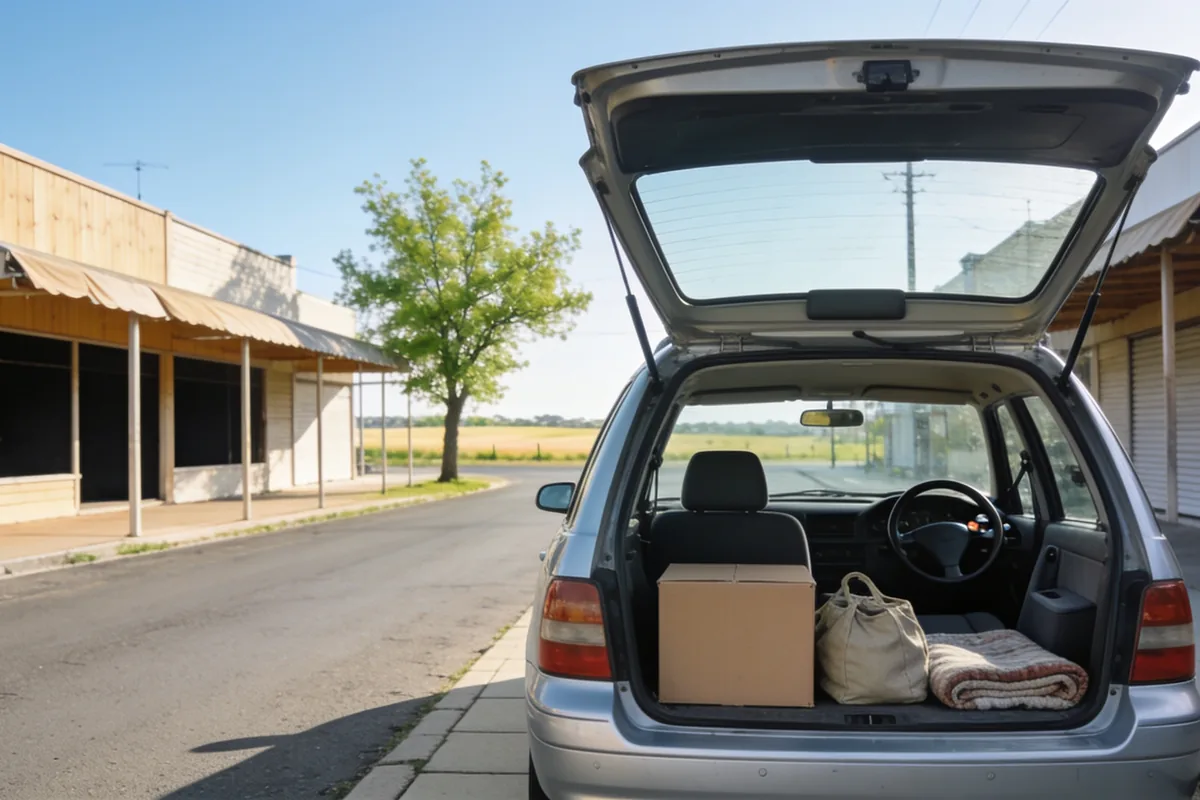
It takes a carton, a toolbox, a small machine part, a folder of documents, a suit bag, a box of plants, and an awkward long item across the back seat. Those are all ordinary passengers in a station wagon.
It does not take anything that needs two people to lift, anything hazardous or flammable, anything alive that needs care in transit, anything illegal, and anything that leaks. Each of those is a real category rather than a caution, and the reason is simple enough: the driver is not a courier and the car is not a van. An item that needs lashing down, a trolley or a tailgate lift is the wrong parcel for this kind of trip, and no amount of planning changes that.
Four things to have ready when you ring
The call itself is short if you have four things in front of you, and long and frustrating if you do not.
The two addresses, properly. Not “the farm” but the road and the gate, and for the destination, which entrance and whether there is anywhere to stop. A driver who is given “the blue house past the bridge” will find it or they will not, and that coin flip is avoidable.
What it is, in one honest sentence. Its size, its weight, whether it is fragile and whether it is in a box. That sentence decides whether the job is possible at all, and it is much better said at the start than discovered at the door. If it is already boxed and sealed, say that too, because a parcel ready to travel and a pile of things that still needs sorting are two different pickups.
When it has to be there, as opposed to when it is ready. Those are two different times, and only the second one is negotiable. Saying “it is ready now but it is needed by the school pickup” gives the person on the other end something to work with.
And who is at each end. A name and a phone number for the person handing it over and the person receiving it, because a parcel that arrives at a closed door is a parcel that has to go somewhere else.
One habit makes all four easier: write the two addresses down as you would say them to a stranger. That is exactly what is happening, and saying them out loud once before you ring catches most of the gaps.
The handover, and why it is the whole job
Two addresses are not enough. The job is two handovers, and each one has a person, a place and a moment, and any of the three can go wrong.
What makes a handover work is simple. Somebody expecting it. A place the vehicle can actually stop. And a phone number that gets answered. What makes it fail is equally simple. An item left on a porch and taken by somebody else. A gate that is locked when the driver arrives. A receiver who did not know anything was coming. A driver circling a street with no verge to pull onto. This is the same arithmetic behind The hidden work behind safe road projects and public events: the thing arriving is the visible half, and the arrangements around it are the half nobody sees.
The advice that costs nothing and prevents most of this: tell the person at the other end, before the car leaves, what is coming and roughly when. The single most common reason a same-day run fails is that only one of the three people involved knew about it.
Agreeing the moment matters too. A handover that lands while somebody is out becomes a phone call, and a phone call at a kerb is ten minutes the driver did not plan for.
What to ask on the phone
Short list, and each question is worth its thirty seconds.
Will you take this? Describe it honestly and let the answer be the answer. Ask it in the first ten seconds, because everything else on the list is worth nothing if the answer is no. When can it go, and when will it arrive, rather than how long it takes. What happens if nobody is there at the other end, because that decides whether the job is a delivery or a trip back. Whether you or the receiver pays, and how, which is a question about method rather than about an amount. And what the driver will ring if something changes, because your phone is the only part of this that cannot be replaced by a system.
A note on that last one: leave a number that gets answered. A driver in a busy day with a gate that will not open is exactly the wrong time for voicemail.
It is also worth remembering that a run is a conversation before it is a trip, and a Seymour cab service that also runs same-day parcel and delivery jobs is the kind of outfit where the conversation is the job.
What to have ready when you ring about a parcel
The compressed version, for when the phone is already in your hand.
The two addresses as you would say them out loud, and the entrance for each. What the item is, roughly how big, and whether it is fragile or awkward. The time it has to be there, as distinct from the time it is ready. The name and number of the person at each end. And whether the receiver knows it is coming, which is a thirty-second call that rescues the whole thing.
The run is the easy part. The two handovers are the job.
Sources consulted: published postal service guidance on sending a parcel.
- A fare looks like one number. It is four or five things added together, and the meter starts before the vehicle moves.
- The parts change with the clock, the route and the day, which is why the same trip at breakfast and at midnight are two different prices.
- In Victoria, a maximum applies to a hail. A booked trip is not regulated at all, and that is not the same as being cheated.
- Most of the extras are ordinary commercial things, and every one of them is easier to ask about before you get in.
- The number is not the problem. The silence around it is.
You have probably met the gap between the number you were quoted and the number you paid. It happens often enough that people have quietly concluded the whole thing is a lottery, and that the only defence is suspicion. The useful correction is smaller and calmer than that: a fare is built from parts, the parts follow published rules for some trips and the operator’s own price for others, and a rider who knows which trip they are on can tell the difference between an expensive journey and a wrong number. Start with the parts.
Build the fare
Put in the numbers your operator has given you and this adds them up. It is your arithmetic, not a quote, and it is only as good as what you were told.
If this does not load: write down the amount the meter starts at, the rate per kilometre, the distance, any rate per minute, the time, and then every extra your operator has mentioned. Add them up and ask which ones the quote includes.
Enter the numbers you were given and your total will appear here.
Nothing above came from this page. Every number is yours.
Not in this total unless your operator told you: a higher rate at night or on a public holiday, a card surcharge, a charge when there are more passengers, a wait, or anything added after the vehicle stopped.
Your own arithmetic, not a quote and not a fare. Ask the operator what is included before you travel, and check the fare information displayed in the vehicle.
What a fare is actually made of
Four things, and none of them is mysterious once you have heard them named.
The flag fall is the amount the meter starts at before the vehicle moves. It is why a very short trip still costs something, and it is the part people react to first when the meter clicks over before they have left the kerb. It is also the same on every trip, whether the journey takes five minutes or fifty, which makes it the fairest part of the whole arrangement and the one nobody argues about.
Then the distance component, which is the rate that runs while the vehicle is moving, and the time component, which is the rate that runs while it is not. The second one is the part passengers never think about. A trip sitting in slow traffic is a trip being paid for in minutes as well as kilometres, which is why the same journey can cost more at five in the afternoon than at five in the morning.
And then the tariff, because the rate is not a single rate. It changes with the time of day, and with the day itself: weekends and public holidays are their own case, and the meter knows the difference even when nobody in the car does. That is why nine in the morning and one in the morning are two different prices for the same road. The honest one-line version of the whole section: the fare is designed to charge for the vehicle’s time, not just for your distance.
Why two identical trips cost different amounts
The same journey, twice, will rarely produce the same number, and there are four reasons.
The clock is the first. A trip at a busy hour is measured in minutes as much as distance, so the vehicle earns the same way a tradesperson does: by the hour, on top of the distance.
The route is the second, and it deserves an honest word. A driver who takes the longer road because the short one is stopped is not necessarily costing you more. The meter may be running either way, and the extra distance can be cheaper than the extra time. Route complaints are worth making where the meter clearly should not have been running, not where the roads were simply awful.
The tariff is the third. The rate changes with the time of day, so two identical trips taken six hours apart are priced under different rates.
And the extras are the fourth, which is a section of its own below. The sentence to hold on to from all this: a fare is an estimate until the vehicle stops. The only trips where the number is fixed before the vehicle moves are the booked ones, and that is the next section. Every trip also has a running cost behind it, and the site’s How much does it cost to charge an electric car at home in Australia? works through that arithmetic for the other kind of vehicle.
Booked, or hailed, and this is the crux
Here is the distinction every page of numbers leaves out, and it answers the reader’s real question: should this number have been fixed?
In Victoria, maximum fares apply to unbooked services. An unbooked service is one hailed on the street or taken from a rank, and for those trips the meter must be used and the fare is worked out from distance, journey duration and the time of travel. The maximums cover defined metropolitan and large regional zones, and the Mornington Peninsula is one of them, along with Frankston and Dandenong, Geelong, Ballarat and Bendigo. If your trip was a hail inside one of those zones, the meter was not optional and the fare was not an invention.
A booked service is a different thing. Fares for booked services, and for services provided outside those zones, are not regulated. The operator sets their own price, and a quoted or fixed fare is that price. It is not the meter under another name, and the two will only ever line up by coincidence. That is not a loophole and it is not a sign that something improper happened. It is simply a different commercial arrangement, and it is the one most trips to the airport and most pre-dawn rides are made under.
Which gives the reader two clean rules. If the trip is booked, ask what the price is before the vehicle arrives, and get the answer in writing if you can. If the trip is hailed, the meter is what applies, and it has to be on. One more thing in the same direction: fare information for unbooked services must be displayed inside the vehicle, clearly visible, and on the outer left-hand side. You are allowed to look at it. Very few people ever do. And for the late trip home itself, rather than its price, the site’s Top taxi safety tips for night rides is the place to look.
The extras, and which ones are legitimate
The list of extras is not a list of tricks. It comes from the rules, and it is short.
Some public holidays can carry a different rate. Electronic payments can carry a surcharge, and the cap on that surcharge is set rather than invented. Toll roads are passed through, because the toll was real. Airport rank fees exist at airports, for the same reason. And higher-occupancy charges can apply when there are more passengers in the vehicle, which is the one that most surprises a group booking a night out.
There is also a rule worth knowing on the meter itself: for an unbooked trip the meter must be used, and the tariff is meant to select itself. A driver choosing a tariff by hand is not doing what the rules require, and that is the single most useful compliance detail a passenger can carry.
Now the honest other side, because the article is not asking anyone to assume bad faith. A quoted price, a booking fee and a charge for waiting are ordinary commercial things, and a business that sets them is doing what every other business does. Your protection is not suspicion. It is asking first, and asking specifically, which is the same rule the site’s Avoid these sneaky fees when you rent a car applies to the other kind of hire.
What to ask, and when to ask it
These are things to say rather than things to check, because the asking is what fixes the number.
Is this a booked trip or a hail, because the answer decides which rules apply. What is the price, and is it for the vehicle or per person. Is there a booking fee, a toll on this route, an airport charge, or a surcharge for paying by card. Does the price change if the trip takes longer than expected, and what happens if you stop somewhere else on the way. How many passengers is that price for. And where is the fare information displayed, because on an unbooked trip you are entitled to see it.
None of those questions takes more than a minute, and all of them are easier at the start of the trip than at the end. A rider who has asked them is not being difficult or distrustful. They are doing what any sensible customer does before paying for something: finding out what the thing costs. They are ordinary questions, the kind a Mount Martha taxi and transfer service on the Mornington Peninsula answers before every booked trip. The fare is agreed, not discovered. The time to ask is before the doors close, not at the destination.
If it goes wrong
Written straight, without a threat, because the calm version is the useful one.
If the number seems wrong, note the time, the route, the vehicle and the fare, while the details are still fresh. The route matters less than the running meter, but it is worth writing down which way the vehicle went. Then start where the rules start: the operator or the network, because that is where a complaint begins. If it is not resolved there, the state regulator takes it further, and its name sits in the sources line at the foot of this article.
One honest limit, and it is the reason the rest of this piece exists. A fare that felt high is not evidence of anything on its own. Some trips genuinely cost more, and a rider who knows what a fare is made of is the rider who can tell the difference between an expensive trip and a wrong number.
What to ask before you get in
The compressed version, kept short because the asking is the whole point.
Booked or hailed. The price for the vehicle rather than per person. What is included in it and what is not. How many passengers it covers. Whether there is a booking fee. What happens if the trip runs longer. And, for a booked car, a phone number for the operator that will be answered if plans change.
A number will never be a mystery to a rider who has asked those questions. All a fare can be is agreed.
Sources consulted: Safe Transport Victoria fares and levies information; the Commercial Passenger Vehicle Act 2017 (Vic).

How Much Ham Per Person? The Bone-In Leg Needs More Weight and Still Costs Less

Schoolies 2026: The Plan to Agree With Your Teen Before They Leave

Booked Times: Why a Small Town’s Cars Are Busy at the Same Hours

The Science Behind Melbourne’s Unpredictable Climate: What’s Really Going On?

Plastic-Free Coffee Makers: Myth or Must-Have?

Zero Waste Toothpaste: What’s Worth the Switch and What to Look For
-
 Melbourne2 years ago
The Science Behind Melbourne’s Unpredictable Climate: What’s Really Going On?
-
Eco Friendly4 years ago
Plastic-Free Coffee Makers: Myth or Must-Have?
-
Eco Friendly4 years ago
Zero Waste Toothpaste: What’s Worth the Switch and What to Look For
-
 Automotive1 year ago
Wet Weather Tyres in Australia: What to Look For and When to Replace Them
-
 Eco Friendly4 years ago
Plastic Free Packaging: How to Keep Your Business Plastic Free
-

 Food1 year ago
The 9 Best Foods and Drinks to Enjoy Before Bed for Restful Sleep
-

 Financial2 years ago
How to Secure the Best Car Finance Deal: Tips for Negotiating and Saving Money
-
 Eco Friendly4 years ago
How Aussie Businesses Can Reduce Plastic Pollution