Electric Vehicles & Transport
The Hidden Work Behind Safe Road Projects and Public Events

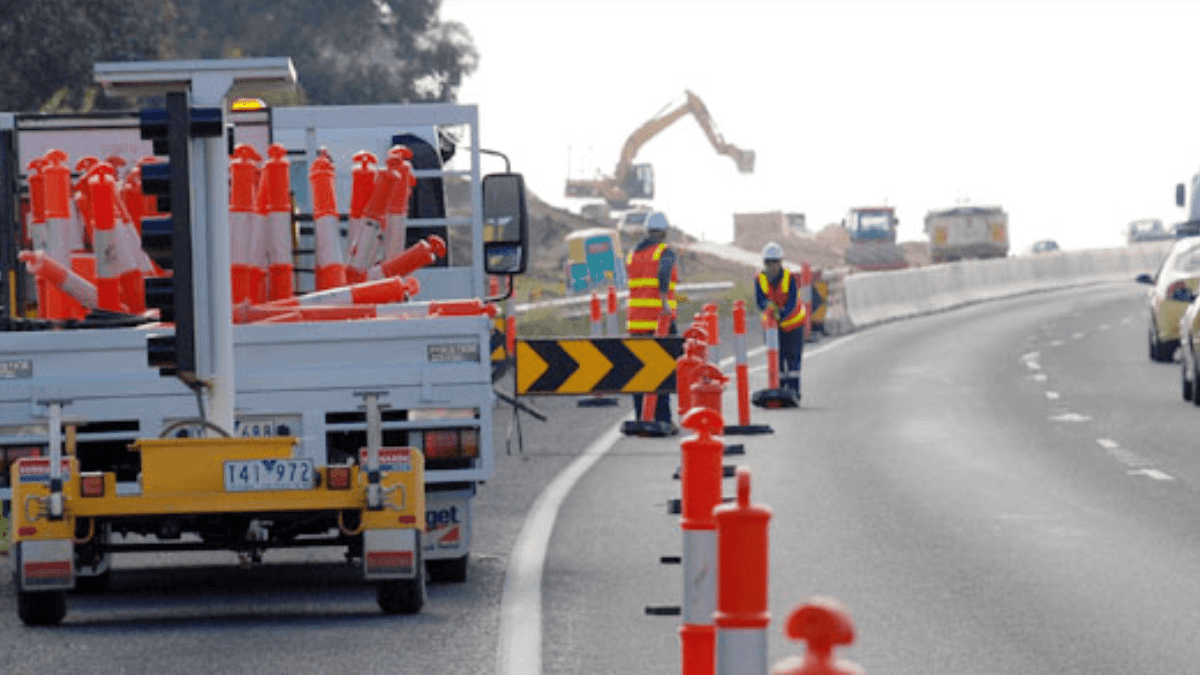
When you drive past a roadworks site or through the crowd control around a big event, what you notice is the obvious stuff: cones, barriers, detour signs and people in high-visibility vests waving traffic through. What you do not see is the planning that put all of it in the right place. Keeping vehicles, pedestrians and workers safe when normal traffic flow is disrupted takes a surprising amount of behind-the-scenes work.
That work is traffic management. It is the reason a construction zone does not dissolve into chaos and a festival does not gridlock the streets around it. This guide explains how it works, from the planning that happens long before the first cone is placed to the people and equipment that keep it running.
What traffic management actually is
Traffic management is the practice of planning and controlling the movement of vehicles and pedestrians whenever normal road conditions change. That covers road construction, maintenance work, utility installations, and large public events like festivals, parades and sporting matches.
Its purpose is straightforward: keep everyone safe while keeping traffic moving as smoothly as conditions allow. Where a road is narrowed, closed or redirected, someone has to work out how drivers will know where to go, how workers will stay protected and how pedestrians will cross safely. That is the job traffic management does.
The planning that happens before the first cone goes down
Traffic management does not begin when the barriers are placed on the road. It begins well before, with a careful look at the site and the traffic around it.
Planners assess traffic volumes, peak travel times, nearby intersections and pedestrian routes. They identify where congestion is likely to build and design detour routes that keep disruption to a minimum. They prepare the signage and road markings that will guide drivers, and they coordinate with local authorities where the work affects public roads.
This preparation is what makes the difference between a site drivers move through calmly and one that produces confusion, queues and close calls. When the work finally starts, drivers should meet clear guidance rather than guesswork.
Keeping roadworks safe for drivers and workers
Road construction almost always changes the way traffic flows. Lanes close, speed limits drop and vehicles are redirected around the work area. In those conditions, the risk to both drivers and the people doing the work goes up, which is exactly why traffic management matters.
During construction, you will typically see safety barriers and cones separating traffic from the work zone, reduced speed limits that give drivers time to react, directional signage for detours and traffic controllers guiding vehicles through the site. Each element has a job: barriers protect, signs inform and controllers respond to what is happening in real time.
The aim is to keep traffic moving steadily enough that it does not back up dangerously, while giving workers a protected space to do their job.
How events change the traffic picture
Public events bring a different set of challenges. A festival or sporting match draws large crowds into a small area, which means more vehicles and pedestrians moving around at the same time. The traffic management plan has to cope with that surge without blocking residents in or stopping emergency vehicles from getting through.
Event traffic management often involves temporary road closures, designated parking areas, clear pedestrian routes and organised entry and exit points. Done well, it lets thousands of people arrive and leave safely while the surrounding streets keep functioning.
Without that planning, an event can quickly create gridlock, frustrated drivers and safety risks as people improvise their own routes.
The people on the ground: traffic controllers
Traffic controllers are the visible face of this work. They stand at the critical points near work zones and events, directing vehicles and making sure drivers follow the temporary arrangements.
Their job involves monitoring the flow of traffic, stopping and releasing vehicles where the road narrows to one lane, guiding drivers through unfamiliar layouts and responding when something unexpected happens. Good communication between controllers and drivers keeps things moving and prevents the small misunderstandings that lead to accidents.
Because they work close to moving traffic, traffic controllers are trained to strict standards. The training covers safety procedures, how to control traffic effectively and how to respond in an emergency, and it is not optional. Someone directing traffic on a public road has to be properly qualified.
The equipment that makes it work
Modern traffic management uses more than cones and signs. The right equipment makes the difference between instructions drivers notice and instructions they miss.
Reflective signs and digital message boards give drivers advance warning of what is ahead. Temporary traffic lights can manage single-lane sections and controlled intersections. High-visibility barriers physically separate traffic from workers, and portable lighting keeps night works visible and safe.
The common thread is visibility. A driver approaching a changed road condition needs to understand it quickly and from a distance, because they only have a few seconds to react safely.
Why the effort pays off long after the work finishes
Traffic management might look temporary, but its effects last. Every road project and public event that runs without a serious incident is a small win for the road network, and the benefits accumulate.
Fewer accidents around work zones, less disruption for commuters, smoother handling of major events and better compliance with road safety rules all flow from getting the planning right. When traffic is managed well, infrastructure projects and community events can happen without turning the surrounding streets into a hazard or a bottleneck.
Safe roads are built on invisible planning
The next time you drive through a roadworks site or past an event, it is worth remembering that the cones and signs are the last part of a much longer process. Someone assessed the site, mapped the detours, positioned the signage and put trained people where they could keep traffic moving.
That invisible work is what makes the visible work safe. Whether it is a highway upgrade that runs for months or a one-day festival, the goal is the same: let the project or event happen while protecting the drivers, workers and pedestrians around it. When it is done properly, you barely notice it, which is the surest sign it is working.


The honest answer is that it depends on two things you already know: your electricity tariff and how far you drive. Any article that gives you one flat number is guessing at your situation. In most Australian homes with an off-peak or EV-specific plan, charging overnight costs a few dollars per 100 km, which is usually well under the cost of petrol. On a standard residential tariff it still tends to win, just by a smaller margin.
Put your own numbers into the calculator below and you will get an answer for your car and your plan, not a national average. Home charging is not free, and this article does not pretend otherwise. It covers the rates you will pay, what setup costs, how solar changes the picture, and how it all compares with petrol.
Home charging cost calculator
Put in your own numbers and compare with petrol.
The panels cost money either way; the real cost is the feed-in credit you give up.
Home charging saves you about $1,702 a year.
How home charging works in plain terms
An electric car stores energy in a battery measured in kilowatt-hours, or kWh. Think of it as the size of the fuel tank. A home charger draws power from your house supply and feeds that battery, usually overnight while the car sits in the garage or on the driveway.
Charging overnight suits the way most people drive, because the car sits idle for hours at a time. You plug in when you get home, the charger draws power in your cheap window, and you unplug in the morning with a full battery.
The cost maths has three parts, and none of them is complicated. Battery size is how much energy a full charge holds. Your electricity rate is what you pay for each kWh. Efficiency is how far the car travels on each kWh, expressed as kWh per 100 km. Multiply your rate by your efficiency and you have the cost per 100 km. Multiply that by how far you drive and you have your weekly and yearly figure. That is the method in full, and it is the same one the calculator runs.
The two numbers that decide the cost
Two inputs drive the calculation, and you can find both in a few minutes.
Your electricity rate, in cents per kWh, is on your bill or your plan. If you are on a time-of-use plan you will have different rates for different times of day, and the overnight rate is the one that matters for home charging. If you are not sure which plan you are on, your bill states it clearly, and a quick call to your provider will confirm the overnight rate.
Your car’s efficiency is the second input. Most EVs sold in Australia use roughly 16 to 18 kWh per 100 km in mixed driving, though the figure varies with the car, your driving style and the season. The official number for your specific model is on its energy consumption label, and many cars show your real-world average on the dashboard.
Those two numbers are all the calculator needs. Everything else in this article is context around them.
What electricity actually costs in Australia
Electricity prices vary by state, provider and plan, but the bands are steady enough to plan around.
Off-peak and EV-specific plans typically sit at roughly 8 to 18 cents per kWh. EV-specific plans exist to keep electric car owners charging at home rather than on the road, which is why their overnight rates undercut the standard tariff. Some advertise lower rates still, and the off-peak window usually runs late at night. A standard residential tariff, the default for most households, is closer to 25 to 35 cents per kWh.
Run those bands against a full charge and the difference shows up fast. A roughly 60 kWh battery, which is a typical size for a modern EV, costs about 5 to 9 dollars to fill at off-peak rates. On a standard tariff the same charge runs to 15 to 21 dollars. Same car, same battery and same distance, and the plan alone can swing the weekly cost by a factor of two or three. Your rate is the single biggest lever on the running cost, which is why the calculator starts there.
The Australian Energy Regulator publishes electricity price information, and your state energy body is the place to check local numbers, because both change by the month. The ranges above are safe to plan with.
What that means per 100 km and per year
Take a typical EV doing 17 kWh per 100 km. At 12 cents per kWh, which sits inside the off-peak band, the cost is about $2.04 per 100 km. At 30 cents per kWh, the same car costs about $5.10 per 100 km. Those two numbers are the running cost in a nutshell.
Annualise it for a driver covering a typical 300 km a week and the gap becomes a real budget line. Off-peak charging at 12 cents lands at about $318 a year. On a standard residential tariff the same driving costs somewhere between about $660 and $930 a year, depending on where your rate sits in the band. The yearly figure is the one to plan around, and it is the number the calculator returns.
Compare that with petrol and the picture is calm and clear. A mid-size petrol car using about 7 litres per 100 km, at a fuel price around $1.85 a litre, costs roughly $13 per 100 km. That assumption matters, because a small hybrid will use far less than 7 litres and a large ute will use more. Against the mid-size figure, the EV cost is several times lower at off-peak rates and still less than half at the standard tariff. EVs win on per-kilometre fuel cost in most cases. That is fuel cost only, and the full ownership picture comes later.
What it costs to set up
The running cost is the cheap part. Setting up has an upfront price, and it is worth knowing before you commit.
You need a home charger unit and a licensed electrician to install it. A typical job runs from a few hundred dollars for a basic charger up to a couple of thousand for a faster unit and a more involved installation. Solar Victoria’s “getting your home EV-ready” guidance covers what a typical home needs, and it is a sensible place to start. Some states run their own guidance and, in places, rebate programs, so an hour spent checking your state’s current offerings is time well spent. The unit also does the scheduling for you, so the charge happens in your cheap window without you plugging and unplugging at 2 am.
That upfront figure is the counterweight to the cheap per-kilometre running cost. Spread over the years you own the car it is modest, but it is still a real outlay on day one, and it belongs in the decision. Some buyers only price it after they buy the car, which is why it is worth costing the install before you commit.
If you have solar, the maths changes again
Rooftop solar changes the picture, and it is worth being precise about how.
Charging from your panels during the day can approach zero marginal cost, because the sun is free and the panels are already on your roof. The catch is that you paid for the panel system either way, whether or not you ever charge the car from it. Every kWh you use to charge during the day is also a kWh you are not exporting to the grid for a feed-in credit, so the true cost is what you give up rather than a flat zero.
None of this makes solar charging a bad idea. It makes it a maths question like everything else in this article. If your feed-in rate is low and your car sits at home during the day, daytime charging can work out very cheap in practice. On a high feed-in tariff the maths is less attractive, because every kWh you use for the car is a kWh you are not selling back to the grid.
Home versus public charging
Home overnight charging is generally the cheapest way to run an EV, because residential off-peak rates are low and you are not paying to maintain a charging network. Public fast charging is the reverse: convenient and quick, but usually dearer per kWh. It earns its keep on road trips and whenever you are away from home. As a daily habit it will cost you more than charging overnight, and that is all this section needs to say, because the article is about the home side of the question.
Is it cheaper than petrol? The honest verdict
On fuel cost alone, home-charged EVs usually win, and they win by a wide margin at off-peak rates. On a standard residential tariff the margin narrows but usually still holds. The caveat is that fuel is one line in the ownership budget, not the whole budget.
A car costs you in other ways no matter what powers it. It needs regular servicing, and skipping the logbook service is a false economy. Small problems can grow into large repair bills when they are left alone. And most cars are financed, so the finance deal you negotiate decides a big slice of the total cost. None of those change because the car is electric. What changes is the fuel line, and that is the line the calculator handles.
When the comparison is done properly, home charging on off-peak rates usually beats petrol by a clear margin. On standard tariffs it still tends to win on fuel, just less dramatically. The setup cost and the price of the car are the real variables, and they are yours to weigh. The size of the fuel win also depends on the petrol car you compare against, and the calculator lets you set the litres per 100 km to match your actual alternative. Run it with your numbers and you will see the gap for yourself.
Your tariff, your kilometres, your answer
The honest answer to the headline question is not a single number. It is a method. Find your rate per kWh, find your car’s efficiency, multiply them, and multiply by the distance you drive. Change any input and the answer changes with it, which is why the calculator above is more useful than any figure in this article.
If you are on an off-peak or EV plan and drive a typical distance, home charging will almost certainly save you money against petrol, and the calculator will show you how much. On a standard tariff the answer is still usually favourable. Your tariff, your kilometres, your answer. That is not a slogan. It is the whole method.
Sources:
- Australian Energy Regulator – electricity price and tariff information
- Solar Victoria – Getting your home EV-ready (charger and installation guidance)
- NRMA – cost to charge an EV versus petrol (running-cost comparisons)

It Is Not a Holiday: What Short-Term Accommodation Actually Pays For

Booking, Not Hailing: How Accessible Taxis Actually Work, and What Most People Never Ask For

One Car or Two? Working Out How to Move a Group Without the Shuffle

The Science Behind Melbourne’s Unpredictable Climate: What’s Really Going On?

Plastic-Free Coffee Makers: Myth or Must-Have?

Zero Waste Toothpaste: What’s Worth the Switch and What to Look For
-
 Melbourne1 year ago
The Science Behind Melbourne’s Unpredictable Climate: What’s Really Going On?
-
Eco Friendly4 years ago
Plastic-Free Coffee Makers: Myth or Must-Have?
-
Eco Friendly4 years ago
Zero Waste Toothpaste: What’s Worth the Switch and What to Look For
-
 Automotive1 year ago
Wet Weather Tyres in Australia: What to Look For and When to Replace Them
-
 Eco Friendly4 years ago
Plastic Free Packaging: How to Keep Your Business Plastic Free
-
 Eco Friendly4 years ago
How Aussie Businesses Can Reduce Plastic Pollution
-

 Home & Garden1 year ago
Boost Productivity and Mood with a Deep Cleaned Space
-

 Financial1 year ago
How to Secure the Best Car Finance Deal: Tips for Negotiating and Saving Money