
Food
What Fruit Is in Season in Australia This Spring: The Produce Worth Buying Now

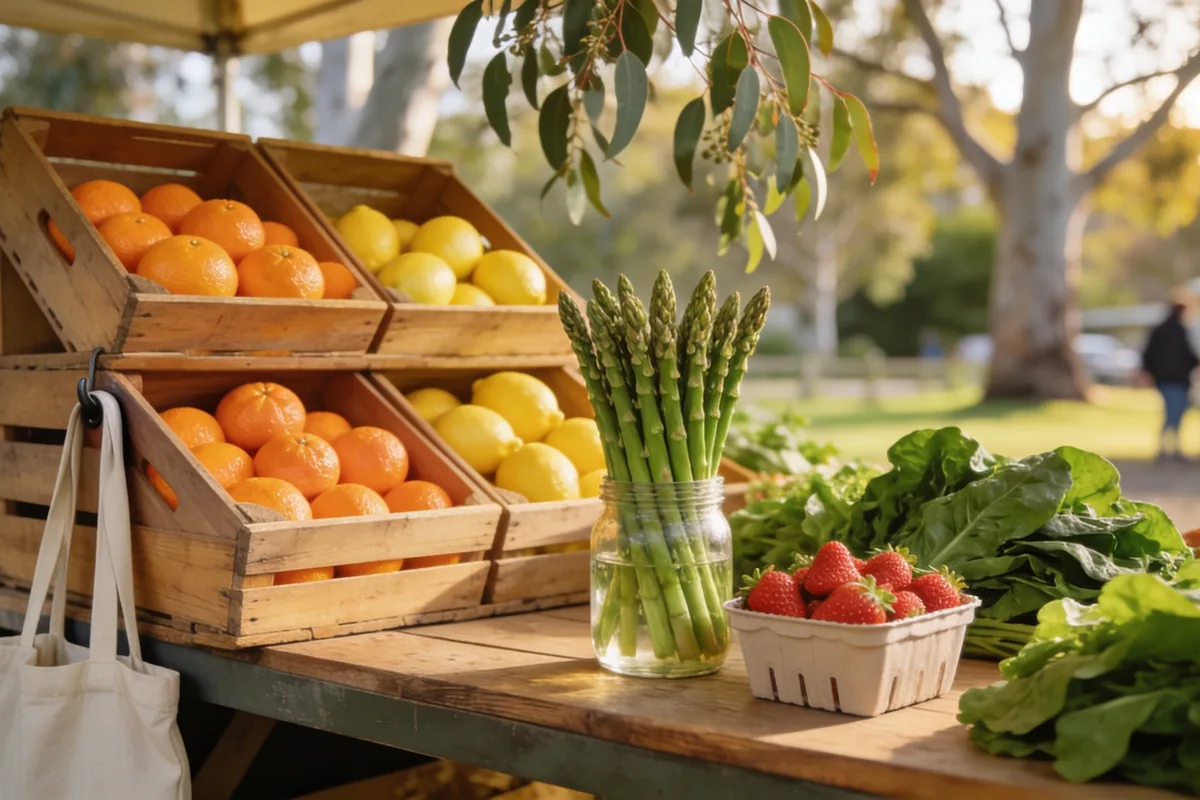
There is a morning, usually some time in September, when the greengrocer changes character overnight. One week you are still reaching for the pumpkin and the potatoes that carried you through winter, and then suddenly the front crate is asparagus standing in a jar of water and there are punnets of strawberries that smell the way strawberries are supposed to smell. It is a small thrill, watching the season turn, and it usually leaves you standing there a beat too long, trying to remember what you are meant to do with broad beans.
The question underneath is simpler than it feels. What do I actually buy this week, and why does the market fruit always taste better than the stuff from the big supermarket? This guide is the plain answer: what is genuinely ripe through an Australian spring, what is worth waiting for, and easy ways to use the good things while they are here.
Spring in Australia runs roughly September to November, and exactly when each crop peaks shifts with your part of the country, so the windows below are ranges rather than dates. Treat them as a rough map, then let your local market correct you.
Why “in season” is worth caring about
Eating in season is not a rule you have to obey, and nobody is going to judge you for buying a mango in July. It is a shortcut, and it works for three boring reasons.
Produce picked in its natural window does not travel as far, so it can stay on the plant longer and actually ripen before it reaches you. It costs less when it is local and abundant, because the grower is not paying to fly it across the world or grow it under lights. And it tastes of something, which is the part that shows up on the plate.
The reverse is the strawberry problem. Buy a strawberry out of season, when it has travelled from the other side of the world or been grown under lights, and you often get something that looks right and tastes of almost nothing. The same fruit in late spring, picked nearby and sold the same day, does not need sugar or a dressing to earn its place.
None of this is a lecture. If you want a treat from the other hemisphere, buy it and enjoy it. But if you are deciding what to spend your fruit and vegetable money on this week, the season is the most reliable guide you have. The growers have already done the thinking, and the specials board at your local shop is their answer written down.
There is a geography to it as well. A lot of the citrus on southern markets in spring comes out of the Riverland and the Riverina, the tropical fruit comes up from north Queensland, and the berries come from whichever region is warm enough to be picking. None of it has crossed an ocean to reach you, and that is part of why it tastes the way it does.
The fruit that is actually ripe now
Citrus is still carrying the spring table. Mandarins are the easy one, sweet and simple to peel, and they are the lunchbox fruit of the season for good reason. Lemons are everywhere, which is good timing because you will want them for the salads and dressings coming up. Early oranges are starting to appear as well, so it is a decent window for fresh juice.
Strawberries build through spring rather than arriving all at once. The first local punnets show up as the days warm, and they keep improving as the season goes on. The ones to grab are the ones that smell sweet before you even open the lid, because smell is the only honest test a strawberry passes. They are a buy-and-eat-this-week fruit rather than something to store, so pick them up when you plan to use them.
Apples and pears are at the tail end of their season, and they are still good eating, especially the varieties that store well. Avocados are in good supply through spring, which makes them a reliable base for lunches without much thought. Passionfruit start coming back as the weather warms, and rhubarb is right at home in the cooler end of spring, which is handy if you like it baked with the early citrus.
If you live in the tropical north, add pineapple and pawpaw to that list. They are in their element up there while the southern states are still shaking off the cold.
The vegetables worth buying now
The fruit list answers the “what fruit is in season” question, but spring vegetables are where the season really shows off.
Asparagus is the poster child. It is a spring vegetable through and through, and the bunch that snaps cleanly when you bend it will be the best thing on your plate all week. If it is new to your kitchen, the simplest entry point is a hot pan, a little oil and a pinch of salt, because asparagus does not need a sauce to be good.
Peas come in three useful forms: snow peas and sugar snap peas that you eat whole, and garden peas that need shelling. All three are worth buying now, and all three are at their best with very little done to them.
Broad beans are the other spring classic. They ask for a little work, shelling them and then popping the bright green beans out of their grey skins, but that ten minutes of effort is rewarded. A bowl of broad beans with a little salt is one of the cheapest good meals of the season.
Radishes are quick, peppery and make everything look finished. Spring onions are the quiet workhorse of the spring kitchen, good in salads, scrambled eggs and anything that wants a gentle onion flavour. Leafy greens, from spinach to silverbeet to the good loose-leaf lettuces, are plentiful while the weather is still mild. Herbs are having their moment too, and a handful of mint or parsley is what turns all of the above into a salad.
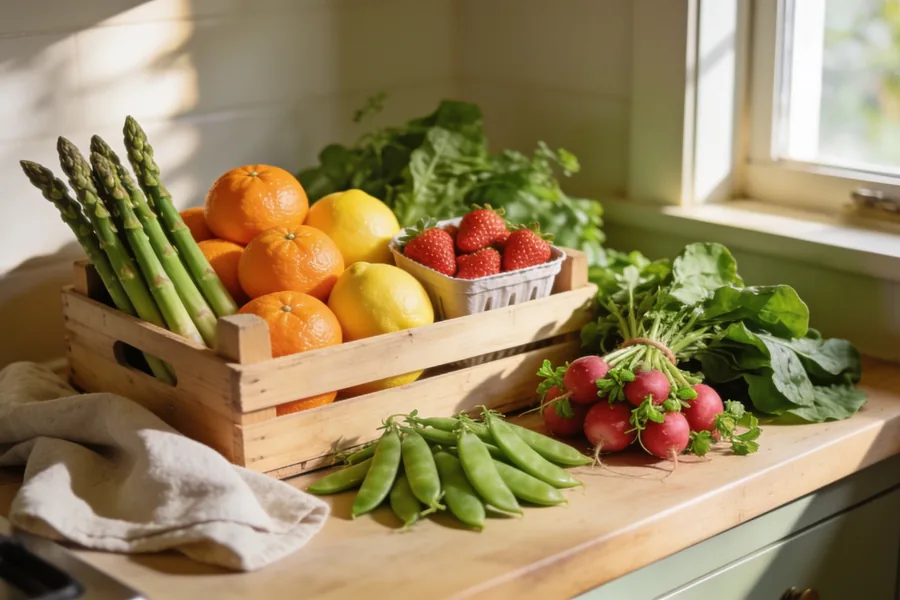
And as the weeks warm up, the first zucchini and capsicum start to appear. Be honest about those: early ones are more of a promise of summer than the main event, but they are welcome in a pan with the asparagus.
One honest note on the list as a whole. A few of these are end-of-winter stragglers still going strong rather than brand-new season arrivals, but that does not make them less worth buying. Good is good, whatever week it shows up.
How to tell without a chart
You do not need a seasonality chart to shop well. You need one rule of thumb.
If it is locally grown and on special, it is probably in season. That is not a coincidence. When a crop is at its peak there is plenty of it, and when there is plenty of it the price drops to move it. The reverse holds too. If something has been flown in from the other hemisphere, the price and the flavour both say so.
Beyond that, use your hands and ask questions. Fruit should smell of itself rather than of nothing, and a punnet of strawberries that does not smell like strawberries will not taste like them either. Asparagus should snap, not bend. Citrus should feel heavy for its size, because that weight is juice. And the person running the stall usually knows what arrived that morning, so it costs nothing to ask what is good today.
What to wait for
Part of trusting a “buy now” list is knowing what is not ready yet, so here is the patience part. Knowing what is coming also helps you plan, because the fruit you skip this week is the fruit that will be better next month.
Mangoes are not here yet. Cherries are not here yet. Stone fruit, the peaches, nectarines and plums, is not here yet. They arrive later in spring and into summer, and they are worth waiting for, because a mango picked early and shipped is a sad thing next to one that ripens in its own time.
The main berry flush is the same story. Strawberries are building now, but the full summer berries, the raspberries and blueberries at their peak, are still to come. Tomatoes and corn are summer food too, so the warm-weather cooking you are daydreaming about gets its turn soon enough.
None of that is a reason to be disappointed. It is a reason to eat the citrus and the asparagus while they are the ones in the spotlight. The one-pot dinners that got you through winter have earned a rest, though the habit is worth keeping. My six easy winter one-pot meals are the ones to reach for on the nights that are still cool, and most of them take a spring vegetable swap happily.
Simple ways to use the spring haul
You do not need recipes for any of this. You need a few ideas, because good produce does not want to be fussed over.
Asparagus on toast with a poached egg is a full meal, and asparagus in a frittata is the same idea for a crowd, using up whatever else is sitting in the crisper. Snow peas and sugar snaps are best raw or barely cooked, thrown into a salad or dropped into a hot pan for thirty seconds. Garden peas smashed onto toast with lemon and mint make a spring lunch that costs almost nothing, and a salad of broad beans, peas, radish and lemon is the season on one plate. If broad beans feel like too much effort on a weeknight, buy the pods anyway and shell them while you listen to something, because the beans freeze and the work is a one-off.
Citrus makes the dressing that ties it all together: lemon juice, olive oil and a little salt works on every green thing listed above. Strawberries belong with yoghurt at breakfast or straight out of the punnet, and the slightly imperfect ones are the ones to chop into a salad. Broad beans and peas also freeze well if you buy too many, which is the one bit of forward planning worth doing.
The whole point of buying in season is that it gets eaten, and that is where storage matters. If half of what you bring home still ends up limp at the back of the crisper, my guide to stopping fruit and vegetables from dying early in the fridge is the natural next step. The best season in the world does not help if the produce never makes it to the plate.
The market is the calendar
Eating with the season is the laziest way to eat well, and that is exactly why it works. You do not have to plan a menu around what you feel like cooking. You let the market decide, and the market is rarely wrong.
So next Saturday, wander past the citrus and the asparagus, pick up whatever is piled highest and priced lowest, and take it home to do very little to. The spring table sets itself. All you have to do is show up for it.
Sources:
- NSW Health – seasonal fruit and vegetable guide
- Foodtree – Australian seasonal produce guide
- Cancer Council – seasonality guide for buying fruit and vegetables







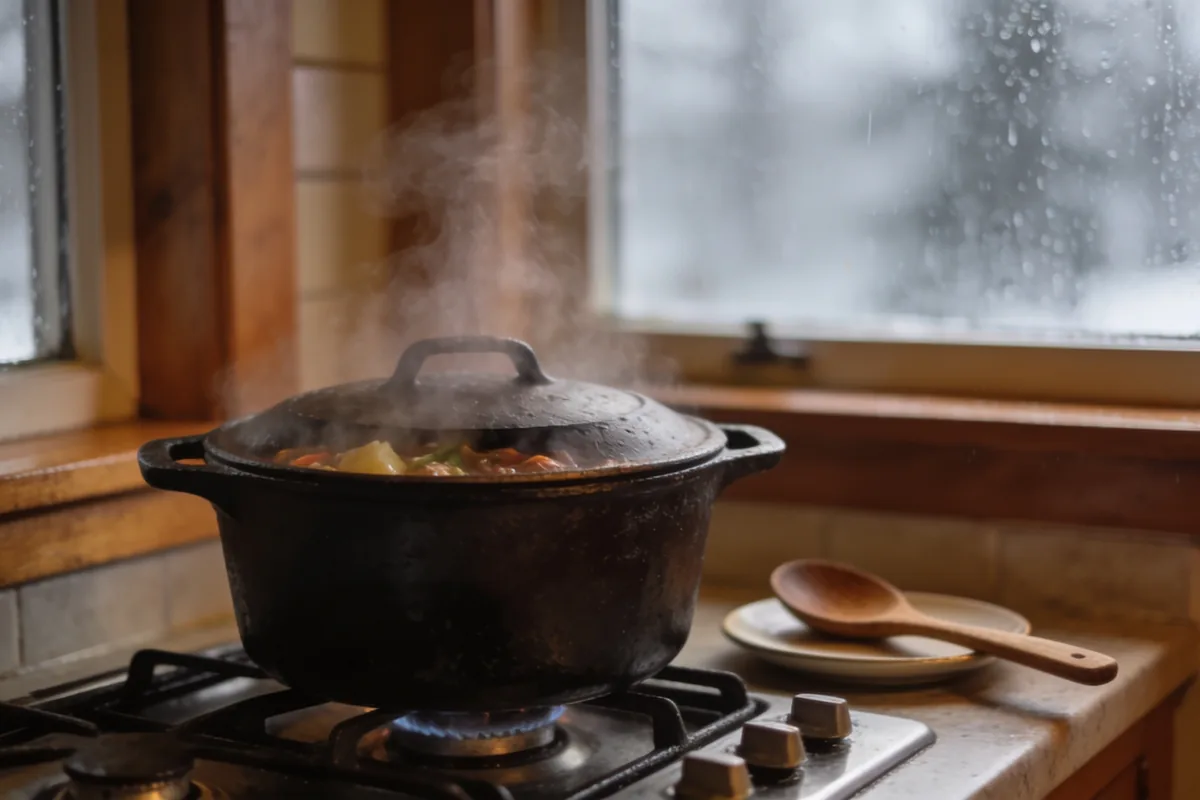
The winter dinner problem
You know the feeling. It is cold, it is dark by six, and the last thing you want to do after a long day is cook a meal that uses every pot you own. Then comes the washing-up mountain, and suddenly dinner has cost you two hours instead of one.
This is the case for one-pot cooking, and it is not complicated. Six warm, simple dinners, each one cooked in a single pot, and the whole meal comes out of the same thing it went into. Less cooking, less mess, and something hearty on the table when the weather is doing its worst outside.
None of these are chef recipes. They are honest, everyday meals with realistic estimates, and you should absolutely change them to suit what you have in the fridge. That is the whole point. Cooking should bend around your week, not the other way round.
A winter dinner does not need to be fancy to be good. It needs to be warm, filling and achievable on a weeknight, and a single pot delivers all three. If you are cooking for one or two, most of these also make enough for lunch the next day, which is really two meals for the price of one pot and barely any extra effort.
Why one pot works
There is a reason slow cooked meals taste like they have been going all day, even when they have only simmered for an hour. Cooking low and slow builds flavour in a way that fast cooking cannot, and it does something wonderful to cheaper cuts of meat, turning them tender instead of tough.
The rhythm is the same for most one-pot dinners. Brown or soften the first things in the pot, add your liquid, pop the lid on and let it simmer, then finish. That is it. You do not need special equipment, just a sturdy pot with a lid that can handle a bit of heat.
There is also the washing-up math, which is the real reason most of us reach for a one-pot recipe on a cold night. One pot, one wooden spoon, maybe a chopping board and a knife. Compare that with a stir-fry that uses a wok, a rice cooker, a chopping board and three little bowls for the sauce ingredients, and suddenly the one-pot version is saving you a whole extra trip to the sink.
If you own a slow cooker, these meals translate beautifully to it. Brown the meat in a pan first, then let the slow cooker do the long, lazy work while you get on with your day. And if you are the kind of person who eats dinner a little later in the evening, it is worth knowing which foods and drinks are best before bed for restful sleep, because a heavy meal right before sleep is never a great idea.
Dinner 1 and 2: the classic winter warmers
Start with the two dinners that basically define winter. A simple beef stew with carrots and potato is the first. Cut your gravy beef into chunks and brown it in the pot with a little oil. Add chopped onion, garlic, a couple of carrots and a potato or two, then pour in enough beef stock to almost cover everything. Lid on, low heat, and let it simmer for an hour and a half. The gravy beef goes beautifully tender, and you will have a dinner that tastes like it cost far more than it did.

The second is a chicken and vegetable soup with barley or pasta. Soften an onion in the pot, add chicken thighs, then whatever vegetables you have, carrots, celery, a bit of pumpkin. Add stock and a handful of barley or pasta, and simmer until the chicken is cooked through and the barley is soft. Shred the chicken, season, and serve with crusty bread. Both of these keep well, which makes them perfect for the nights you cannot be bothered cooking at all.
Do not be precious about the vegetables in either of these. A stew does not care whether it has carrots or parsnips, and a soup will happily accept whatever is wilting in your crisper drawer. That is the beauty of a one-pot dinner, it is less a precise recipe and more a reliable formula you can point at whatever needs using up.
Dinner 3 and 4: the budget-friendly, veg-heavy ones
These two stretch a small grocery shop further than you would believe. A pumpkin and chickpea curry is the first. Soften an onion with curry paste in the pot, add diced pumpkin, a tin of chickpeas and a tin of coconut milk, and let it simmer until the pumpkin is soft. Whatever veg is in the crisper can go in too, and you will end up with a rich, warming curry that costs almost nothing per serve. Serve it with rice or flatbread, and a spoonful of yoghurt on top if you have some, because it cuts through the richness nicely.
Then there is the one-pot sausage, lentil and tomato dish. Brown some sausages in the pot, then add a tin of crushed tomatoes, a cup of dried lentils and a splash of stock. Lid on, simmer for half an hour, and the lentils soak up all the flavour. It is the kind of dinner that fills the house with a smell that makes everyone ask when it will be ready.
Both of these freeze well, which is a quiet superpower. Make a double batch on the weekend and you have two future dinners waiting in the freezer for the nights when cooking is the last thing on your mind.
Dinner 5 and 6: the quicker weeknight ones
Not every winter night has time for a long simmer, so here are two one-potters that come together fast. A creamy chicken and mushroom one-pan is the first. Brown chicken thighs in the pot, add sliced mushrooms and a little garlic, then pour in some cream or a creamy sauce at the end. The trick is to add the cream near the end and keep the heat gentle, because boiling cream can make it split. Serve with pasta or rice to soak up the sauce.
The second is a simple fish chowder. Soften an onion and some potato in the pot, add stock and a little milk, and simmer until the potato is soft. Then add your fish in the last few minutes, so it cooks gently without falling apart. Any firm white fish works, and a few prawns on top feel fancy for almost no effort. These are the dinners for the nights when you want cosy but you are short on time, and both come together in about the time it takes to boil the pasta to go with them.
Leftovers, done properly
One of the best things about one-pot cooking is that most of these meals taste even better the next day, once the flavours have had a chance to mingle. But there is a right way to handle leftovers, and it is worth getting right.
Cool leftovers quickly and get them into the fridge or freezer within a couple of hours. Do not leave a pot of stew sitting on the stove overnight, no matter how tired you are. When you reheat, make sure it is steaming hot all the way through, and only reheat once. If you have made a big batch, portion it out and freeze what you will not eat soon, and label the containers with the date so you actually use them. A frozen meal with no label is a mystery you will not trust, and a mystery you will not trust tends to stay in the freezer until next winter.
If you are trying to cut down on single-use plastic, you can store and cover leftovers the eco-friendly way with safe food wrapping, using reusable covers, beeswax wraps or simply a plate on top of the bowl. Small swaps like that add up, and they keep your fridge a little kinder to the planet.
What is simmering at yours tonight?
Here is the thing about one-pot cooking. Once you have the basic rhythm, you can turn almost any recipe into a one-pot version. Brown the meat in the same pot you will cook in, add your liquid, put the lid on and let it simmer. The pot does the work while you get on with your evening, and at the end there is one pot to wash instead of five.
Start with the beef stew. It is the most forgiving dinner in this list, hard to get wrong and deeply satisfying on a cold night. Make it your own, throw in whatever veg needs using up, and do not be precious about the amounts. That is how every good cook actually cooks, and it is how you will end up with a version of the stew that is properly yours rather than a copy of someone else’s recipe.
So what is simmering at yours tonight? Whether it is the stew, the curry or a pot of soup you invented on the spot, I hope it is warm, easy and kind to your sink. Winter dinners do not need to be a production. They just need to be good, and one pot is more than enough for that.
Sources:
- Food Standards Australia New Zealand, Storing and reheating leftovers safely
- National Health and Medical Research Council, Australian Dietary Guidelines


Booking a restaurant for a group is one of those jobs nobody volunteers for. You are trying to please eight or twelve or twenty different people, each with their own tastes, dietary rules and ideas about what makes a good night out. Get it right and you are the person who organised everything. Get it wrong and you spend the evening apologising.
Mediterranean restaurants keep coming up in that conversation, and it is not hard to see why. The food is built around sharing, the menus are wide enough to cover most preferences, and the atmosphere tends to suit a table that wants to stay a while. This guide explains what makes them such a reliable choice when you are feeding a crowd.
Shared plates change how a table works
The biggest reason Mediterranean food suits groups is the way it is eaten. Instead of everyone ordering a separate plate and staying in their own lane, the meal is designed to be passed around. Mezze platters, dips, grilled meats, seafood, salads and fresh bread all arrive in the middle of the table and everyone helps themselves.
That simple change makes a group meal easier and more sociable at the same time. People taste more than their own dish, conversation flows naturally and nobody feels locked into a single choice they made an hour ago. For a table where tastes differ, sharing also takes the pressure off ordering. You are not trying to find one perfect meal for every person. You are building a spread that covers everyone.
A menu with room for everyone
Every group has its complications. Someone is vegetarian, someone is avoiding gluten, someone wants to eat light and someone else has come ready for a big feed. A menu that only offers a couple of options makes one of those people the difficult guest. A Mediterranean menu rarely does.
The cuisine naturally spans a wide range: vegetable dishes, legumes, grilled fish and chicken, rich meat dishes, rice and bread. That range means the person eating lightly and the person celebrating with something indulgent can both be happy at the same table. Vegetarians and gluten-free diners usually find more to choose from than they would at a venue built around a single style of cooking, which takes a lot of the stress out of organising the meal.
An atmosphere built for lingering
Group meals are about more than the food. They are about the people you are with, and that works best in a room that does not make you feel rushed. Mediterranean venues tend to lean warm and relaxed rather than stiff and formal. The lighting, the music, the layout of the tables and often an outdoor seating area all point the same way: sit down, take your time, stay a while.
That matters for a group. A birthday dinner, a family catch-up or a work celebration is not something you want to feel like a quick turnaround. A room that encourages people to linger makes the occasion feel bigger than the meal, and it gives the conversation room to actually happen.
Food that feels lighter without tasting like a compromise
A lot of group bookings end up split between people who want a proper night out and people who want to eat reasonably. Mediterranean cooking tends to solve that argument before it starts. Fresh vegetables, olive oil, seafood, grilled proteins, legumes and herbs are the backbone of the menu, so a lot of the cooking is lighter than heavy sauces and deep frying.
The result is food that is full of flavour without leaving everyone feeling weighed down. People who are watching what they eat do not have to order a plain salad and feel left out. Everyone else does not have to feel guilty about enjoying themselves. That balance is rarer in group dining than it should be.
Ordering that keeps the bill sensible
A large table is an expensive table, and the bill is often the part nobody wants to think about until it arrives. Shared dining gives a group more control over that than separate meals do. Big platters and mix-and-match dishes let the table order generously without stacking up one individual meal after another.
That flexibility is part of why Mediterranean restaurants work for business lunches and family events as well as social catch-ups. When someone is paying for the whole table, a menu built around sharing makes the cost easier to manage and easier to predict. When everyone is chipping in, it also feels fairer, because the table is eating together rather than ordering wildly different amounts.
What to ask when you book
A Mediterranean restaurant is a strong starting point, but the venue still needs to fit your group. When you call, tell them how many people you are bringing and ask a few practical questions. Do they offer a set menu or a shared menu for large tables? How do they handle dietary needs such as vegetarian, gluten-free or allergy requirements? Can they seat you together in one area rather than scattered across the room? Is a deposit required for a bigger booking?
A good venue will talk through these options rather than rushing you towards the most expensive package. If the person on the phone is vague about how a large table is managed, that is usually a sign the room will be vague on the night too.
A restaurant that works for the whole table
The real test of a group restaurant is simple: did everyone get what they wanted, and did the table still feel like one table at the end of it? Mediterranean dining tends to pass that test, because the food is made to be shared, the menu covers the awkward eaters and the room lets the evening stretch out.
So next time you get volunteered to book, a Mediterranean restaurant is a safe answer. Pick one that will talk you through a shared menu, confirm it can manage your group comfortably, and let the table order a spread. The food gives everyone something, the sharing does the social work, and you get to enjoy the night instead of managing it.

Some nights sleep comes easily and some nights it does not, and most of us have tried the usual remedies. One thing that is easy to overlook is what you eat and drink in the hour or two before bed. It will not fix every bad night, but the right snack can help you settle, while the wrong one can leave you wired or uncomfortable.
There is no magic food that guarantees sleep. What these nine options have in common is that they are light, easy to digest and unlikely to leave you buzzing, and plenty of people find they make the wind-down easier. Portion size matters more than you might think, so keep each one small.
Oats: a slow-burn bowl that settles well
A small bowl of porridge before bed works for a lot of people, and not because oats are a miracle food. They are a slow-release carbohydrate, which means they digest steadily instead of spiking your blood sugar, and that steadiness can help you feel calm rather than restless.
Oats are also naturally low in anything stimulating. Make a small bowl with dairy or plant milk, add a sprinkle of cinnamon or a little honey if you like, and keep the portion modest. A huge bowl before bed will just leave you sluggish.
Kiwi: a light fruit with a decent track record
Kiwi is one of those fruits that turns up in sleep research now and then, and the findings tend to be positive. It is rich in vitamin C and antioxidants, and it contains some serotonin, which is involved in the sleep cycle.
Most importantly it is light, so it sits well in the evening. Slice one or two kiwis about an hour before bed, on their own or with a small spoonful of natural yoghurt. Two is plenty.
Almonds: a small handful of magnesium
Almonds are a convenient pre-bed snack because they are portable, need no prep and are easy to keep to a sensible serving. They contain magnesium, which plays a part in muscle relaxation, along with healthy fats and a little protein that take the edge off late-night hunger.
A small handful is the right amount. Almond butter on a slice of whole-grain toast is another good option if you want something a bit more filling, but skip it if a big snack keeps you awake.
Chamomile tea: the classic wind-down drink
Chamomile has been used for generations as a calming tea, and there is a reason it has stuck around. It is naturally caffeine-free, warm and gently soothing, which makes it a good signal to your body that the day is ending.
Chamomile contains an antioxidant called apigenin that binds to receptors in the brain and may promote sleepiness, and the ritual of a warm cup half an hour before bed helps you slow down. If you add honey, keep it to a small spoonful, and do not drink so much that you are up in the night.
Bananas: potassium, magnesium and a little sweetness
Bananas are easy to digest and bring potassium and magnesium, both of which help muscles relax. The natural sugars give a mild lift rather than a sharp spike, which can ward off the hungry feeling that sometimes interrupts sleep.
A ripe banana about an hour before bed is a simple choice. For something more substantial, spread a little peanut butter on it for protein and healthy fat, but keep it to one banana and a modest amount of spread.
Turkey: a small serve of protein
Turkey gets mentioned in the same breath as sleep because it contains tryptophan, an amino acid the body uses to make serotonin, which is part of the sleep pathway. It is also a lean protein that keeps you satisfied through the night without sitting heavy.
You do not need a full roast dinner. A couple of slices of turkey with some whole-grain bread makes a light, filling snack, and the carbohydrate in the bread helps the tryptophan do its job. Keep it small.
Warm milk: the old remedy with some science behind it
Warm milk is not just an old wives’ tale. Milk contains tryptophan too, and it also has the calming effect of a warm, familiar drink at the end of the day. There is something about the ritual that tells your body it is safe to slow down.
Heat a small glass of milk about half an hour before bed. If you are lactose intolerant, lactose-free milk or a plant-based milk such as almond or soy works just as well for the calming effect, even if the nutrients differ.
Cherries: one of the few natural sources of melatonin
Cherries, especially tart cherries, are one of the few foods that contain melatonin, the hormone that helps regulate your sleep-wake cycle. That makes them a genuinely sensible choice for a bedtime snack.
A handful of fresh cherries works, or a small glass of tart cherry juice about an hour before bed. Watch the portion on the juice, because even natural sugars add up, and a small glass is enough.
Herbal teas: caffeine-free options to unwind with
If chamomile is not your taste, there are plenty of other caffeine-free herbal teas that people use to wind down. Lavender is known for its calming scent and can be drunk as a tea, while lemon balm and valerian root are both traditional options that some people find help them relax.
The main thing is to check the label and make sure the tea is caffeine-free. A warm, unsweetened cup of herbal tea half an hour before bed is a gentle way to end the evening, whatever blend you choose.
Questions about eating before bed
How long before bed should you eat? Around 30 to 60 minutes is a good window. It gives your body time to start digesting without the discomfort of lying down on a full stomach.
Can you combine these foods? Yes, and some pairings work well together, such as whole-grain toast with almond butter and a cup of chamomile tea.
Are these suitable for children? Most are fine for kids in smaller portions, though it is always worth checking with a healthcare provider if you have concerns about a child’s sleep or diet.
Can I drink warm milk if I am lactose intolerant? Yes, try lactose-free milk or a plant-based alternative. The warm, soothing effect is the main benefit.
How much tart cherry juice should I have? A small glass of around 240 ml about an hour before bed is enough. More is not better when it comes to sugar.
A bedtime bite that earns its keep
None of these foods will knock you out on their own, and that is not the point. Sleep is built from the whole evening: what you eat, how much light you are getting, whether you are wired from caffeine and screens. A small, sensible snack before bed is one supportive piece of that routine, not a cure. Pick the option that sounds most like something you would actually enjoy, keep it light, and give it a fair go for a couple of weeks. Sweet dreams are usually the result of a good routine rather than one perfect food.

What Fruit Is in Season in Australia This Spring: The Produce Worth Buying Now
What NBN Speed Do I Need? A Guide to the Tiers for Australian Homes

Daylight Saving 2026: When Australia’s Clocks Go Forward and How to Protect Family Sleep

The Science Behind Melbourne’s Unpredictable Climate: What’s Really Going On?

Plastic-Free Coffee Makers: Myth or Must-Have?

Zero Waste Toothpaste: What’s Worth the Switch and What to Look For
-
 Melbourne1 year ago
The Science Behind Melbourne’s Unpredictable Climate: What’s Really Going On?
-
Eco Friendly4 years ago
Plastic-Free Coffee Makers: Myth or Must-Have?
-
Eco Friendly4 years ago
Zero Waste Toothpaste: What’s Worth the Switch and What to Look For
-

 Automotive1 year ago
Wet Weather Tyres in Australia: What to Look For and When to Replace Them
-
 Eco Friendly4 years ago
Plastic Free Packaging: How to Keep Your Business Plastic Free
-
 Eco Friendly4 years ago
How Aussie Businesses Can Reduce Plastic Pollution
-

 Home & Garden1 year ago
Boost Productivity and Mood with a Deep Cleaned Space
-

 Food1 year ago
The 9 Best Foods and Drinks to Enjoy Before Bed for Restful Sleep